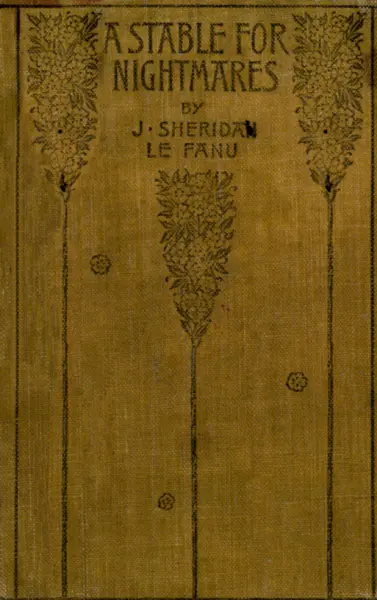
A Stable for Nightmares; or, Weird Tales
Joseph Sheridan Le Fanu & Charles L. (Charles Lawrence), Sir Young
THE CLASSIC COLLECTION · 1864
"Wylder's Hand" by Joseph Sheridan Le Fanu is a novel written during the mid-19th century. The story unfolds with the protagonist, Charles de Cresseron, as he journeys to Gylingden while carrying a letter from Mark Wylder, hinting at a complex interplay of family relations and an impending marriage. The narrative is characterized by its rich descriptions of the English countryside and a focus on the entangled lineage of Wylders and Brandons, which sets the stage for themes of madness, inheritance, and the intricacies of interpersonal relationships. The opening of "Wylder's Hand" introduces us to Charles de Cresseron as he reflects upon his past while driving through Gylingden. He encounters memories of his childhood, particularly connected to the Brandon family, which are laced with a sense of nostalgia and foreboding. The letter from Mark Wylder reveals his recent inheritance and his plans to marry Dorcas Brandon, stirring apprehension in Charles as he remembers the intertwined histories of their families. As Charles arrives at Brandon Hall, the dynamics between characters become clear, highlighting the complexities at play, including the impending marriage and potential conflicts that could arise from it. This opening sets a tone of mystery and tension, inviting the reader to delve deeper into the unfolding drama.
Introduction adapted from the source catalogue; source summaries may be automatically generated.
Free to read · English · 173,466 words · No account needed
MAKE TIME FOR A GOOD BOOK
On by default. Untick to stop anonymous reading totals. Each page counts after 10 seconds in view. How this works.
Anonymous counting is on unless you have switched it off.
'Aye, so we are, I dare say; at any rate, some things don't please us as we calculated. I remember when this bit of luck would have made me a devilish happy fellow--twice as happy; but, you see, if a fellow hasn't his liberty, where's the good of money? I don't know how I got into it, but I can't get away now; and the lawyer fellows, and trustees, and all that sort of prudent people, get about one, and persuade, and exhort, and they bully you, by Jove! into what they call a marriage of convenience--I forget the French word--you know; and then, you see, your feelings may be very different, and all that; and where's the good of money, I say, if you can't enjoy it?'
And Mr. Wylder looked poetically unhappy, and trundled over a little bit of fricandeau on his plate with his fork, desolately, as though earthly things had lost their relish.
'Yes; I think I know the feeling,' said Miss Lake, quietly. 'That ballad, you know, expresses it very prettily:--"Oh, thou hast been the cause of this anguish, my mother?"'
It was not then as old a song as it is now.
Wylder looked sharply at her, but she did not smile, and seemed to speak in good faith; and being somewhat thick in some matters, though a cunning fellow, he said--
'Yes; that is the sort of thing, you know--of course, with a difference--a girl is supposed to speak there; but men suffer that way, too--though, of course, very likely it's more their own fault.'
'It is very sad,' said Miss Lake, who was busy with a pate.
'She has no life in her; she's a mere figurehead; she's awfully slow; I don't like black hair; I'm taken by conversation--and all that. There are some men that can only really love once in their lives, and never forget their first love, I assure you.'
Wylder murmured all this, and looked as plaintive as he could without exciting the attention of the people over-the-way.
Mark Wylder had, as you perceive, rather vague notions of decency, and not much experience of ladies; and thought he was making just the interesting impression he meditated. He was a good deal surprised, then, when Miss Lake said, and with quite a cheerful countenance, and very quickly, but so that her words stung his ear like the prick of a bodkin.
'Your way of speaking of my cousin, Sir, is in the highest degree discreditable to you and offensive to me, and should you venture to repeat it, I will certainly mention it to Lady Chelford.'
Your reading position is saved on this browser. Take it to another device with a library code. Reading pages adapt to text, rather than matching a printed edition.
Joseph Sheridan Le Fanu & Charles L. (Charles Lawrence), Sir Young
Joseph Sheridan Le Fanu
Joseph Sheridan Le Fanu
Joseph Sheridan Le Fanu
BEHIND THE BOOK
This eBook is for the use of anyone anywhere in the United States and most other parts of the world at no cost and with almost no restrictions whatsoever. You may copy it, give it away or re-use it under the terms of the Project Gutenberg License included with this eBook or online at www.gutenberg.org. If you are not located in the United States, you will have to check the laws of the country where you are located before using this eBook. Read the source licence.
The original source file, including credits and licence, is retained by this library. Request an original-format copy at no charge. Please include the book title and Project Gutenberg identifier #9983.
KEEP YOUR CURIOSITY GOING
Coulson Kernahan

Maurice Baring
Frances Wright
Cécile Tormay

Frederic Jesup Stimson

W. H. P. (William Henry Pope) Jarvis