THE CLASSIC COLLECTION✦My larger educationCLASSIC FREE BOOKS
My larger education
Booker T. Washington
THE CLASSIC COLLECTION · 1904
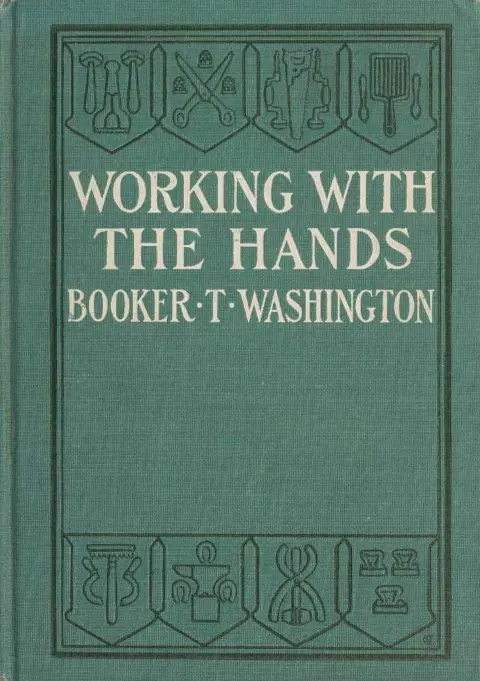
"Working With the Hands" by Booker T. Washington is a motivational work that emphasizes the importance of industrial training and manual labor, written in the early 20th century. The text primarily serves as a sequel to Washington's earlier autobiography, "Up from Slavery," showcasing his experiences and philosophies related to education and labor at the Tuskegee Institute. The book advocates for a balanced education that combines practical skills with moral and intellectual growth, targeting not just the academic development but also the empowerment of individuals through hands-on work. The opening of the book presents Washington's reflections on the dignity of manual labor and its role in education, drawing from his own life experiences as a young boy and later as an educator. He recalls his early days after emancipation, highlighting the societal notions that equated education with a dismissal of physical work. Washington shares anecdotes, such as his experience living with a demanding employer who taught him the values of discipline and hard work. He emphasizes that true education should link mental and manual skills, ultimately aiming to uplift the African American community through practical training while fostering a sense of self-respect and personal achievement.
Introduction adapted from the source catalogue; source summaries may be automatically generated.
Free to read · English · 58,922 words · No account needed
MAKE TIME FOR A GOOD BOOK
On by default. Untick to stop anonymous reading totals. Each page counts after 10 seconds in view. How this works.
Anonymous counting is on unless you have switched it off.
Market Gardening.--Botany of the field and garden; physical analysis of soils and the improvement of clay and sandy soils; the depletion of plant food and its replacement by direct and indirect fertilisers; the source of carbon, nitrogen and oxygen. Draining.
Live Stock.--How to hitch and unhitch horses, the care of vehicles and harness, how to drive, the names of common diseases and treatment of sick animals; swine for profit.
Winter Term.--Dairying.--The weighing and recording of milk in a commercial dairy; the Babcock and other methods of testing milk; composition of cheese and its value as a food.
Poultry Raising.--Composition of the animal body; a special study of
ducks and geese; brooders, ponds, runs, etc., by-products and their
value.
Horticulture.--Forestry, botany, cryptogamic and systematic; nut culture; preservation of timber, the economic value of different woods; the relation of forests to climate, water supply, floods and erosion.
Market Gardening.--A study of the life-history of insects, injuries to stored grain, peas, beans, meal, flour, dried fruits; botany of the greenhouse, cold frame and hotbeds; the use of thermometers. A study of markets, library work.
Spring Term.--Dairying.--Cottage and Cheddar cheese-making, scoring of butter, bacteriology of milk, butter, and cheese. Judging of dairy animals by the score-card method, diseases of cows and their treatment; analysis of food stuffs.
Poultry Raising.--Physical and chemical study of foods, library work, fancy breeds, what and how to exhibit, the history and development of the industry. Heredity and the effects of in-breeding.
Horticulture.--Origin of new varieties by cross-fertilisation, hybrids, sports, atavisms and reversion, correlation between plants and animals, rejuvenating by pruning, grafting and scraping the bark, special diseases of both trees and fruit, and their treatment. Knot-growth, blight, gum excrescences and frost injuries; drying, preserving, making fruit syrups, etc.
Horticulture and Landscape Gardening.--Special designing in cultivated flowers. Origin of new species; bees and their relation to the forest and garden; the hiving of bees and after-management. A study of honey-producing plants; the economic value of the honey.
Market Gardening.--Relation of crops, geology of the garden, agricultural chemistry, good roads and their relation to the success and value of the farm, mineralogy and useful birds and insects.
Your reading position is saved on this browser. Take it to another device with a library code. Reading pages adapt to text, rather than matching a printed edition.
Booker T. Washington
Booker T. Washington

Booker T. Washington

Booker T. Washington
BEHIND THE BOOK
This eBook is for the use of anyone anywhere in the United States and most other parts of the world at no cost and with almost no restrictions whatsoever. You may copy it, give it away or re-use it under the terms of the Project Gutenberg License included with this eBook or online at www.gutenberg.org. If you are not located in the United States, you will have to check the laws of the country where you are located before using this eBook. Read the source licence.
The original source file, including credits and licence, is retained by this library. Request an original-format copy at no charge. Please include the book title and Project Gutenberg identifier #64504.
KEEP YOUR CURIOSITY GOING

Charles G. (Charles Griffith) Ross
Hannah Webster Foster

Emily Lawless
Edwin Hamlin Carr

Charles De Lano Hine
Andrew Ure