THE CLASSIC COLLECTION✦My larger educationCLASSIC FREE BOOKS
My larger education
Booker T. Washington
THE CLASSIC COLLECTION · 1904
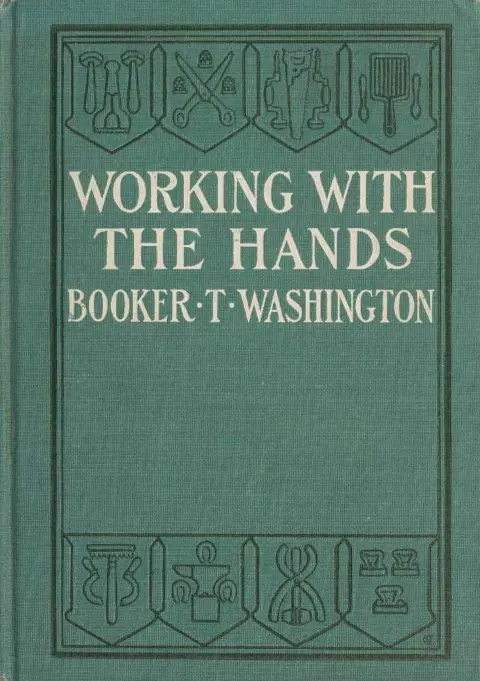
"Working With the Hands" by Booker T. Washington is a motivational work that emphasizes the importance of industrial training and manual labor, written in the early 20th century. The text primarily serves as a sequel to Washington's earlier autobiography, "Up from Slavery," showcasing his experiences and philosophies related to education and labor at the Tuskegee Institute. The book advocates for a balanced education that combines practical skills with moral and intellectual growth, targeting not just the academic development but also the empowerment of individuals through hands-on work. The opening of the book presents Washington's reflections on the dignity of manual labor and its role in education, drawing from his own life experiences as a young boy and later as an educator. He recalls his early days after emancipation, highlighting the societal notions that equated education with a dismissal of physical work. Washington shares anecdotes, such as his experience living with a demanding employer who taught him the values of discipline and hard work. He emphasizes that true education should link mental and manual skills, ultimately aiming to uplift the African American community through practical training while fostering a sense of self-respect and personal achievement.
Introduction adapted from the source catalogue; source summaries may be automatically generated.
Free to read · English · 58,922 words · No account needed
MAKE TIME FOR A GOOD BOOK
On by default. Untick to stop anonymous reading totals. Each page counts after 10 seconds in view. How this works.
Anonymous counting is on unless you have switched it off.
Beginning in a very modest way with a few girls, the outdoor work has grown from year to year, until it is now a recognised part of the work of the school, and the idea that this kind of labour is degrading has almost disappeared. In order to give, if possible, a more practical idea of just what is taught the girls, I give the entire course of study. In reading this it should be borne in mind that the theory is not only given, but in each case the girls have the training in actual work. Since the school year opens in the fall, the work naturally begins with the industries relating to the fall and winter. The course of study is:
First Year.--Fall Term.--Dairying.--The home dairy is first taken up, and a detailed knowledge of the following facts taught: Kinds, use and care of utensils, gravity, creaming. A study of stone, wooden, and tin churns, ripening of cream, churning, working and salting butter, preparation and marketing of same. Feeding and care of dairy cows.
Poultry Raising.--A working knowledge is required of the economic value of poultry on the farm, pure and mixed breeds, plain poultry-house construction, making of yards, nests, and runs.
Horticulture.--Instruction is given as to the importance of an orchard and small fruits, varieties best suited, particular locality, selection and preparation of ground, setting, trimming, extermination of borers, lice, etc., special stress being laid upon the quality and quantity of peaches, pears, apples, plums, figs, grapes, and strawberries that should be planted in a home orchard.
Floriculture and Landscape Gardening.--A study of our door-yards, how to utilise and beautify them. The kinds, care, and use of tools used in floriculture and landscape gardening. Trimming and shaping of beds and borders, and the general care of shrubbery and flowers. The gathering and saving of seed. Special treatment of rose bushes and shrubbery.
Market Gardening.--Importance of proper management of the home garden, its value to the home, selection and preparation of ground; kinds, care and use of tools, planting, gardening and marketing of all vegetables. Gathering of seeds, drying of pumpkins, okra, and fruits.
Live Stock.--Study is limited wholly to ordinary farm animals; the number and kind needed, how, when and what to feed; characteristics and utility of the various animals.
Winter Term.--Dairying.-The commercial dairy is the subject of study, and emphasis is laid upon the following: Use of separators, of which the school has two leading styles; churns, feeding, and care of the dairy herd, breeds of dairy cattle and their selection, butter-making, packing, salting and preparation for market.
Your reading position is saved on this browser. Take it to another device with a library code. Reading pages adapt to text, rather than matching a printed edition.
Booker T. Washington
Booker T. Washington

Booker T. Washington

Booker T. Washington
BEHIND THE BOOK
This eBook is for the use of anyone anywhere in the United States and most other parts of the world at no cost and with almost no restrictions whatsoever. You may copy it, give it away or re-use it under the terms of the Project Gutenberg License included with this eBook or online at www.gutenberg.org. If you are not located in the United States, you will have to check the laws of the country where you are located before using this eBook. Read the source licence.
The original source file, including credits and licence, is retained by this library. Request an original-format copy at no charge. Please include the book title and Project Gutenberg identifier #64504.
KEEP YOUR CURIOSITY GOING

Charles G. (Charles Griffith) Ross
Hannah Webster Foster

Emily Lawless
Edwin Hamlin Carr

Charles De Lano Hine
Andrew Ure