THE CLASSIC COLLECTION✦Bannertail: The Story of a GraysquirrelCLASSIC FREE BOOKS
Bannertail: The Story of a Graysquirrel
Ernest Thompson Seton
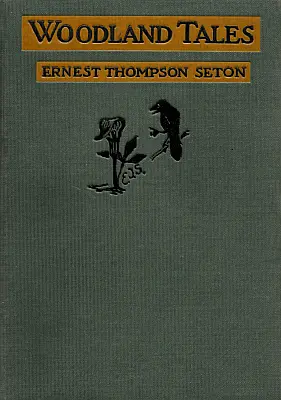
THE CLASSIC COLLECTION · 1905
"Woodland Tales" by Ernest Thompson Seton is a collection of whimsical children's stories written in the early 20th century. The book draws upon themes from nature and mythology, featuring enchanting tales that are meant for readers of all ages who still appreciate the magic of fairy tales. The stories feature various characters from the natural world, blending lessons of morality with vivid imagery and characterizations. The opening portion of Woodland Tales begins with the author's preface that establishes the intent behind the collection: to share tales that inspire curiosity about the outdoor world while imparting wisdom. Seton introduces the concept of "Woodcraft," a guiding philosophy through which he hopes readers will explore nature more fully. He includes several stories, such as the love tale of El Sol and Snowroba, the Snow Child, as well as the story of the Dawnsinger and how the Bloodroot flower came to be. Through these narratives, the author seamlessly weaves together elements of folklore, with an aim to evoke wonder and appreciation for the beauty of the natural environment. Each tale not only entertains but serves to educate about the mysteries of nature, making it a captivating read for both children and adults alike.
Introduction adapted from the source catalogue; source summaries may be automatically generated.
Free to read · English · 47,364 words · No account needed
MAKE TIME FOR A GOOD BOOK
On by default. Untick to stop anonymous reading totals. Each page counts after 10 seconds in view. How this works.
Anonymous counting is on unless you have switched it off.
There is another reason, one which you can give to them. It is this: Only the highly trained artist can make a good portrait drawing, while the smallest child, if it sticks to symbols, is sure, in some degree, of a pleasant success in its very first effort.
These that I give, are copied from Indian art, and whether in colour, in raised modelling, or in black lines, can be used successfully to decorate anything that you are likely to make.
Sign Language
All men, especially wild men, and some animals have a language of signs. That is, they talk to each other without making any sounds; using instead, the movements of parts of the body. This is "eye talk," while words are "ear talk."
Among the animals, horses bob their heads when they are hungry and paw with a front foot when thirsty or eager to be off. Dogs wag their tails when pleased, and cows shake their heads when angry.
Policemen, firemen, railway men, and others use signs because there is too much noise to be heard. School children use signs because they are not allowed to talk in school. Most children know the signs for "yes" and "no," "come here," "go away," "hurry up," "you can't touch me," "hush!", "shame on you!", "up," "down," "word of honour," "swimming," etc.
The traffic policeman is using signs all day long. By a movement of the hand he signals:--stop, go on, come here, hurry up, wait, turn around, go by, stay back, over there, you look out, right here, and one or two others.
How many signs can you add to these two lists?
The Language of Hens
Yes; Hens talk somewhat as we do; only they haven't so many words, and don't depend on them as we have to.
There are only ten words in ordinary hen-talk.
The cluck, cluck of the mother means "Come along, kiddies."
The low kawk of warning, usually for a hawk.
The chuck, chuck of invitation means, "Good food."
The tuk-ut-e-ah-tuk means, "Bless my soul, what is that?"
The cut, cut, get your hair cut, of a Hen that has just laid and is feeling greatly relieved; no doubt, saying, "Thank goodness, that's done!" or maybe it is a notice to her mate or friend that "Business is over, let's have some fun. Where are you?"
The soft, long-drawn tawk--tawk--tawk, that is uttered as the Hen strolls about, corresponds to the whistling of the small boy; that is, it is a mere pastime, expressing freedom from fear or annoyance.
The long, harsh, crauk, crauk of fear when captured.
The quick clack, clack, clatter when springing up in fear of capture.
Your reading position is saved on this browser. Take it to another device with a library code. Reading pages adapt to text, rather than matching a printed edition.
Ernest Thompson Seton
Ernest Thompson Seton
Ernest Thompson Seton
Ernest Thompson Seton
BEHIND THE BOOK
This eBook is for the use of anyone anywhere in the United States and most other parts of the world at no cost and with almost no restrictions whatsoever. You may copy it, give it away or re-use it under the terms of the Project Gutenberg License included with this eBook or online at www.gutenberg.org. If you are not located in the United States, you will have to check the laws of the country where you are located before using this eBook. Read the source licence.
The original source file, including credits and licence, is retained by this library. Request an original-format copy at no charge. Please include the book title and Project Gutenberg identifier #23667.
KEEP YOUR CURIOSITY GOING
Cécile Tormay

Moritz Busch
John L. Ransom

Maurice Baring
Frances Wright
Cécile Tormay