
The Writing of News A Handbook with Chapters on Newspaper Correspondence and Copy Reading
Charles G. (Charles Griffith) Ross
THE CLASSIC COLLECTION · 1853
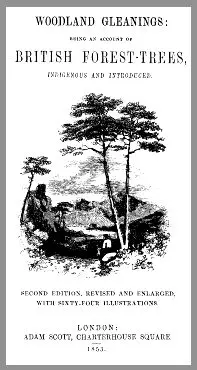
"Woodland Gleanings: Being an Account of British Forest-Trees" by Robert Tyas is a comprehensive account of the timber trees found primarily in the United Kingdom, written in the mid-19th century. This work serves as both an informational guide and an appreciation of Britain’s woodland beauty, focusing specifically on the history, descriptions, botanical characteristics, and cultivation of various indigenous and introduced forest trees. It aims to deepen the reader's understanding of these trees and inspire a greater interest in the natural landscape. The opening of "Woodland Gleanings" introduces the reader to the rich and tranquil beauty of woodland settings, blending poetic reflections on nature with detailed observations about the trees themselves. Tyas begins by inviting readers to explore the charm of forest-dwelling trees, emphasizing their serene and majestic presence. He notes the appeal of different species in various seasons, casting a gaze on how they reflect both the majesty of nature and man's relationship with it. Additionally, the author foreshadows a detailed exploration of each tree species to follow, highlighting their significance to the environment, culture, and economy. Through this opening, Tyas establishes a grounded appreciation for the natural world that encourages a blend of scientific inquiry and aesthetic admiration.
Introduction adapted from the source catalogue; source summaries may be automatically generated.
Free to read · English · 59,693 words · No account needed
MAKE TIME FOR A GOOD BOOK
On by default. Untick to stop anonymous reading totals. Each page counts after 10 seconds in view. How this works.
Anonymous counting is on unless you have switched it off.
There were two trees in Yardley Forest, called Gog and Magog, which demand our notice on account of one of them having been celebrated by the muse of Cowper. The scenery in which they stood is hallowed by his shade. He was fond of indulging his melancholy minstrel musings among the woodland scenery there. Gog, the larger of these two Oaks, measured thirty-eight feet round at the roots, and was twenty-eight feet in circumference at three feet from the ground. It was fifty-eight feet high, and contained one thousand six hundred and sixty-eight feet seven inches of solid timber. Magog was only forty-nine feet in height; but its circumference was fifty-four feet four inches at the ground, and thirty-one feet three at three feet high. These two trees were near each other, and although a good deal bared at the top by age, they were very picturesque. We shall quote here the whole of Cowper's Address to the "Yardley Oak"; from which it would appear that only one of them then remained:--
Survivor sole, and hardly such, of all
That once lived here, thy brethren, at my birth
(Since which I number threescore winters pass'd)
A shatter'd veteran, hollow-trunk'd perhaps,
As now, and with excoriate forks deform,
Relics of ages! Could a mind, imbued
With truth from Heaven, created thing adore,
I might with reverence kneel, and worship thee.
It seems idolatry with some excuse,
When our forefather Druids in their Oaks
Imagined sanctity. The conscience, yet
Unpurified by an authentic act
Of amnesty, the meed of blood Divine,
Loved not the light; but, gloomy, into gloom
Of thickest shades, like Adam after taste
Of fruit proscribed, as to a refuge, fled.
Thou wast a bauble once; a cup and ball,
Which babes might play with; and the thievish jay,
Seeking her food, with ease might have purloin'd
The auburn nut that held thee, swallowing down
Thy yet close-folded latitude of boughs,
And all thine embryo vastness at a gulp.
But Fate thy growth decreed; autumnal rains
Beneath thy parent tree mellow'd the soil
Design'd thy cradle; and a skipping deer,
With pointed hoof dibbling the glebe, prepared
The soft receptacle, in which, secure,
Thy rudiments should sleep the winter through.
So Fancy dreams. Disprove it, if ye can,
Ye reasoners broad awake, whose busy search
Of argument, employ'd too oft amiss,
Sifts half the pleasure of sweet life away I
Thou fell'st mature; and in the loamy clod,
Swelling with vegetative force instinct,
Didst burst thine egg, as theirs the fabled Twins,
Now stars; two lobes, protruding, pair'd exact;
A leaf succeeded, and another leaf;
And, all the elements thy puny growth
Fostering propitious, thou becamest a twig.
Who lived, when thou wast such? O, couldst thou speak,
As in Dodona once thy kindred trees
Oracular, I would not curious ask
The future, best unknown, but at thy mouth
Inquisitive, the less ambiguous past.
By thee I might correct, erroneous oft,
The clock of history, facts and events
Timing more punctual, unrecorded facts
Recovering, and misstated setting right--
Desperate attempt, till trees shall speak again!
Time made thee what thou wast, king of the woods;
And Time hath made thee what thou art--a cave
For owls to roost in. Once thy spreading boughs
O'erhung the champaign; and the numerous flocks
That grazed it, stood beneath that ample cope
Uncrowded, yet safe-sheltered from the storm.
No flock frequents thee now. Thou hast outlived
Thy popularity, and art become
(Unless verse rescue thee awhile) a thing
Forgotten, as the foliage of thy youth.
While thus through all the stages thou hast push'd
Of treeship--first a seedling hid in grass;
Then twig; then sapling; and, as century roll'd
Slow after century, a giant bulk
Of girth enormous, with moss-cushioned root
Upheaved above the soil, and sides emboss'd
With prominent wens globose--till at the last
The rottenness, which time is charged to inflict
On other mighty ones, found also thee.
What exhibitions various hath the world
Witness'd of mutability in all
That we account most durable below!
Change is the diet on which all subsist,
Created changeable, and change at last
Destroys them. Skies uncertain now the heat
Transmitting cloudless, and the solar beam
Now quenching in a boundless sea of clouds--
Calm and alternate storm, moisture and drought,
Invigorate by turns the springs of life
In all that live--plant, animal, and man--
And in conclusion mar them. Nature's threads,
Fine passing thought, ev'n in her coarsest works,
Delight in agitation, yet sustain
The force that agitates, not unimpaired;
But, worn by frequent impulse, to the cause
Of their best tone their dissolution owe.
Thought cannot spend itself, comparing still
The great and little of thy lot, thy growth
From almost nullity into a state
Of matchless grandeur, and declension thence,
Slow, into such magnificent decay.
Time was, when, settling on thy leaf, a fly
Could shake thee to the root--and time has been
When tempests could not. At thy firmest age
Thou hadst within thy bole solid contents,
That might have ribb'd the sides and plank'd the deck
Of some flagg'd admiral; and tortuous arms,
The shipwright's darling treasure, didst present
To the four-quarter'd winds, robust and bold,
Warp'd into tough knee-timber,[1] many a load!
But the axe spared thee. In those thriftier days
Oaks fell not, hewn by thousands, to supply
The bottomless demands of contest, waged
For senatorial honours. Thus to Time
The task was left to whittle thee away
With his sly scythe, whose ever-nibbling edge,
Noiseless, an atom, and an atom more,
Disjoining from the rest, has, unobserved,
Achieved a labour, which had far and wide,
By man perform'd, made all the forest ring.
Embowell'd now, and of thy ancient self
Possessing naught but the scoop'd rind, that seems
A huge throat, calling to the clouds for drink,
Which it would give in rivulets to thy root--
Thou temptest none, but rather much forbidst
The feller's toil, which thou couldst ill requite.
Yet is thy root sincere, sound as the rock,
A quarry of stout spurs and knotted fangs,
Which, crook'd into a thousand whimsies, clasp
The stubborn soil, and hold thee still erect.
So stands a kingdom, whose foundation yet
Fails not, in virtue and in wisdom laid;
Though all the superstructure, by the tooth
Pulverised of venality, a shell
Stands now, and semblance only of itself!
Thine arms have left thee. Winds have rent them off
Long since, and rovers of the forest wild
With bow and shaft have burn'd them. Some have left
A splinter'd stump, bleach'd to a snowy white;
And some, memorial none where once they grew.
Tet life still lingers in thee, and puts forth
Proof not contemptible of what she can,
Even where death predominates. The spring
Finds thee not less alive to her sweet force,
Than yonder upstarts of the neighbouring wood,
So much thy juniors, who their birth received
Half a millennium since the date of thine.
But since, although well qualified by age
To teach, no spirit dwells in thee, nor voice
May be expected from thee, seated here
On thy distorted root, with hearers none,
Or prompter, save the scene--I will perform,
Myself the oracle, and will discourse
In my own ear such matter as I may.
One man alone, the father of us all,
Drew not his life from woman; never gazed,
With mute unconsciousness of what he saw,
On all around him; learn'd not by degrees,
Nor owed articulation to his ear;
But, moulded by his Maker into man
At once, upstood intelligent, survey'd
All creatures, with precision understood
Their purport, uses, properties, assign'd
To each his name significant, and, fill'd
With love and wisdom, render'd back to Heaven,
In praise harmonious, the first air he drew.
He was excused the penalties of dull
Minority. No tutor charged his hand
With the thought-tracing quill, or task'd his mind
With problems. History, not wanted yet,
Lean'd on her elbow, watching Time, whose course
Eventful should supply her with a theme.
Your reading position is saved on this browser. Take it to another device with a library code. Reading pages adapt to text, rather than matching a printed edition.
BEHIND THE BOOK
This eBook is for the use of anyone anywhere in the United States and most other parts of the world at no cost and with almost no restrictions whatsoever. You may copy it, give it away or re-use it under the terms of the Project Gutenberg License included with this eBook or online at www.gutenberg.org. If you are not located in the United States, you will have to check the laws of the country where you are located before using this eBook. Read the source licence.
The original source file, including credits and licence, is retained by this library. Request an original-format copy at no charge. Please include the book title and Project Gutenberg identifier #41175.
KEEP YOUR CURIOSITY GOING
Charles G. (Charles Griffith) Ross
Hannah Webster Foster

Emily Lawless
Edwin Hamlin Carr

Charles De Lano Hine
Andrew Ure