
The Writing of News A Handbook with Chapters on Newspaper Correspondence and Copy Reading
Charles G. (Charles Griffith) Ross
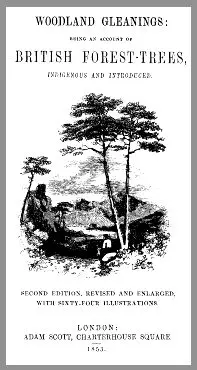
THE CLASSIC COLLECTION · 1853
"Woodland Gleanings: Being an Account of British Forest-Trees" by Robert Tyas is a comprehensive account of the timber trees found primarily in the United Kingdom, written in the mid-19th century. This work serves as both an informational guide and an appreciation of Britain’s woodland beauty, focusing specifically on the history, descriptions, botanical characteristics, and cultivation of various indigenous and introduced forest trees. It aims to deepen the reader's understanding of these trees and inspire a greater interest in the natural landscape. The opening of "Woodland Gleanings" introduces the reader to the rich and tranquil beauty of woodland settings, blending poetic reflections on nature with detailed observations about the trees themselves. Tyas begins by inviting readers to explore the charm of forest-dwelling trees, emphasizing their serene and majestic presence. He notes the appeal of different species in various seasons, casting a gaze on how they reflect both the majesty of nature and man's relationship with it. Additionally, the author foreshadows a detailed exploration of each tree species to follow, highlighting their significance to the environment, culture, and economy. Through this opening, Tyas establishes a grounded appreciation for the natural world that encourages a blend of scientific inquiry and aesthetic admiration.
Introduction adapted from the source catalogue; source summaries may be automatically generated.
Free to read · English · 59,693 words · No account needed
MAKE TIME FOR A GOOD BOOK
On by default. Untick to stop anonymous reading totals. Each page counts after 10 seconds in view. How this works.
Anonymous counting is on unless you have switched it off.
It is used by piano-forte makers for sounding-boards, and by cabinet-makers for a variety of purposes. The wood is also said to make excellent charcoal for gunpowder, even better than alder, and nearly as good as hazel, while baskets and cradles are made with the twigs of the Lime; and of the smoother side of the bark, tablets for writing; for the ancient Philyra is but our Tilia, of which Munting affirms he saw a book, made of the inner bark, written about 1000 years ago; such another was brought to the Count of St. Amant, governor of Arras, 1662, for which there were given 8000 ducats by the Emperor. It contains a work of Cicero, De ordinanda Republica et de Inveniendis Orationum Exordiis, which is still unprinted, and is now in the imperial library of Vienna, after having been the greatest rarity in that of the celebrated Cardinal Mazarin, who died in 1661.
The smoothness of the Lime-tree is thus alluded to by Cowper in the
Task:
Here the gray smooth trunks
Of ash, or Lime, or beech, distinctly shine
Within the twilight of their distant shades,
There lost behind a rising ground, the wood
Seems sunk and shortened to its topmost boughs.
This peculiarity of the bark has also been noticed by Leigh Hunt, in the
story of Rimini:
Places of nestling green for poets made, Where, when the sunshine struck a yellow shade, The slender trunks to inward peeping sight, Thronged, in dark pillars, up the gold-green light.
The leaves of the Lime-tree are also useful, and were esteemed so in common with those of the elm and poplar, both in a dried and green state for feeding cattle, by the Romans.
The other two indigenous or naturalized species of Lime are--
2. The broad-leaved, T. grandifolia. Ehrh. Flowers without nectaries; leaves roundish, cordate, pointed, serrate, downy, especially beneath, with hairy tufts at the origin of the veins; capsule turbinate, with prominent angles, downy.----Flowers in August: found in woods and hedges.
3. The small-leaved, T. parvifolia. Ehrh. Flowers without nectaries; leaves scarcely longer than their petioles, roundish, cordate, serrate, pointed, glaucous beneath, with hairy tufts at the origin of the veins, and scattered hairy blotches; capsule roundish, with slender ribs, thin, brittle, nearly smooth.----A handsome tree, distinguished from the former by its much smaller leaves and flowers: germen densely woolly: flowers in August: grows in woods in Essex, Sussex, &c.: frequent.
[Acer.[L] Nat. Ord.--Aceraceæ; Linn. Octan. Monog.]
[L] Generic characters. Calyx inferior, 5-cleft. Petals 5, obovate. Fruit consisting of 2 capsules, united at the base, indehiscent and winged (a samara). Trees, with simple leaves and flowers, often polygamous, in axillary corymbs or racemes.
Your reading position is saved on this browser. Take it to another device with a library code. Reading pages adapt to text, rather than matching a printed edition.
BEHIND THE BOOK
This eBook is for the use of anyone anywhere in the United States and most other parts of the world at no cost and with almost no restrictions whatsoever. You may copy it, give it away or re-use it under the terms of the Project Gutenberg License included with this eBook or online at www.gutenberg.org. If you are not located in the United States, you will have to check the laws of the country where you are located before using this eBook. Read the source licence.
The original source file, including credits and licence, is retained by this library. Request an original-format copy at no charge. Please include the book title and Project Gutenberg identifier #41175.
KEEP YOUR CURIOSITY GOING
Charles G. (Charles Griffith) Ross
Hannah Webster Foster

Emily Lawless
Edwin Hamlin Carr

Charles De Lano Hine
Andrew Ure