
The Writing of News A Handbook with Chapters on Newspaper Correspondence and Copy Reading
Charles G. (Charles Griffith) Ross
THE CLASSIC COLLECTION · 1853
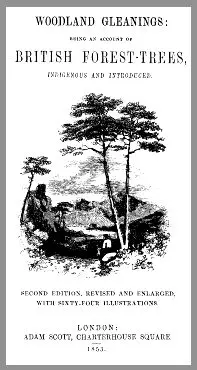
"Woodland Gleanings: Being an Account of British Forest-Trees" by Robert Tyas is a comprehensive account of the timber trees found primarily in the United Kingdom, written in the mid-19th century. This work serves as both an informational guide and an appreciation of Britain’s woodland beauty, focusing specifically on the history, descriptions, botanical characteristics, and cultivation of various indigenous and introduced forest trees. It aims to deepen the reader's understanding of these trees and inspire a greater interest in the natural landscape. The opening of "Woodland Gleanings" introduces the reader to the rich and tranquil beauty of woodland settings, blending poetic reflections on nature with detailed observations about the trees themselves. Tyas begins by inviting readers to explore the charm of forest-dwelling trees, emphasizing their serene and majestic presence. He notes the appeal of different species in various seasons, casting a gaze on how they reflect both the majesty of nature and man's relationship with it. Additionally, the author foreshadows a detailed exploration of each tree species to follow, highlighting their significance to the environment, culture, and economy. Through this opening, Tyas establishes a grounded appreciation for the natural world that encourages a blend of scientific inquiry and aesthetic admiration.
Introduction adapted from the source catalogue; source summaries may be automatically generated.
Free to read · English · 59,693 words · No account needed
MAKE TIME FOR A GOOD BOOK
On by default. Untick to stop anonymous reading totals. Each page counts after 10 seconds in view. How this works.
Anonymous counting is on unless you have switched it off.
Notwithstanding these poetical authorities for the loftiness of the Cedar, we are assured by Evelyn, and others, that it is not lofty, but is rather remarkable for its wide-spreading branches. In Prior's Solomon, we read of
The spreading Cedar that an age had stood,
Supreme of trees, and mistress of the wood,
Cut down and carved, my shining roof adorns,
And Lebanon his ruined honour mourns.
Mason describes it as far-spreading:
--Cedars here,
Coeval with the sky-crowned mountain's self,
Spread wide their giant arms.
The prophet Ezekiel has given us the fullest description of the Cedar: "Behold the Assyrian was a Cedar in Lebanon, with fair branches, and with a shadowing shroud, and of a high stature; and his top was among the thick boughs. His boughs were multiplied, and his branches became long. The fir-trees were not like his boughs, nor the chestnut-trees like his branches, nor any tree in the garden of God like unto him in beauty."
In this description, two of the principal characteristics of the Cedar
are marked.
The first is, the multiplicity and length of his branches. Few trees divide so many fair branches from the main stem, or spread over so large a compass of ground. His boughs are multiplied, as Ezekiel says, and his branches become long, which David calls spreading abroad.
The second characteristic is his shadowing shroud. No tree in the forest is more remarkable than the Cedar for its close-woven leafy canopy. Ezekiel's Cedar is marked as a tree of full and perfect growth, from the circumstance of its top being among the thick boughs. Almost every young tree, and particularly every young Cedar, has what is called a leading branch or two, which continue spiring above the rest till the tree has attained its full size; then the tree becomes, in the language of the nurseryman, clump-headed: but, in the language of eastern sublimity its top is among the thick boughs; that is, no distinction of any spiry head, or leading branch, appears; the head and the branches are all mixed together. This is generally, in all trees, the state in which they are most perfect and most beautiful. Such is the grandeur and form of the Cedar of Lebanon. Its mantling foliage, or shadowing shroud, as Ezekiel calls it, is its greatest beauty, which arises from the horizontal growth of its branches forming a kind of sweeping, irregular penthouse. And when to the idea of beauty that of strength is added, by the pyramidal form of the stem, and the robustness of the limbs, the tree is complete in all its beauty and majesty. In these climates, indeed, we cannot expect to see the Cedar in such perfection. The forest of Lebanon is, perhaps, the only part of the world where its growth is perfect; yet we may, in some degree, conceive its beauty and majesty, from the paltry resemblances of it at this distance from its native soil. In its youth, it is often with us a vigorous thriving plant; and if the leading branch is not bound to a pole (as many people deform their Cedars), but left to take its natural course, and guide the stem after it in some irregular waving line, it is often an object of great beauty. But, in its maturer age, the beauty of the English Cedar is generally gone; it becomes shrivelled, deformed, and stunted; its body increases, but its limbs shrink and wither. Thus it never gives us its two leading qualities together. In its youth, we have some idea of its beauty, without its strength; and in its advanced age, we have some idea of its strength, without its beauty. The imagination, therefore, by joining together the two different periods of its age in this climate, may form some conception of the grandeur of the Cedar in its own climate, where its strength and beauty are united.
Your reading position is saved on this browser. Take it to another device with a library code. Reading pages adapt to text, rather than matching a printed edition.
BEHIND THE BOOK
This eBook is for the use of anyone anywhere in the United States and most other parts of the world at no cost and with almost no restrictions whatsoever. You may copy it, give it away or re-use it under the terms of the Project Gutenberg License included with this eBook or online at www.gutenberg.org. If you are not located in the United States, you will have to check the laws of the country where you are located before using this eBook. Read the source licence.
The original source file, including credits and licence, is retained by this library. Request an original-format copy at no charge. Please include the book title and Project Gutenberg identifier #41175.
KEEP YOUR CURIOSITY GOING
Charles G. (Charles Griffith) Ross
Hannah Webster Foster

Emily Lawless
Edwin Hamlin Carr

Charles De Lano Hine
Andrew Ure