
The Writing of News A Handbook with Chapters on Newspaper Correspondence and Copy Reading
Charles G. (Charles Griffith) Ross
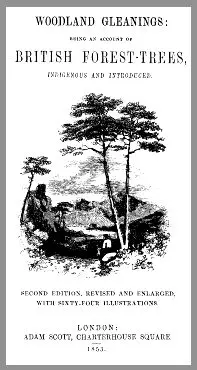
THE CLASSIC COLLECTION · 1853
"Woodland Gleanings: Being an Account of British Forest-Trees" by Robert Tyas is a comprehensive account of the timber trees found primarily in the United Kingdom, written in the mid-19th century. This work serves as both an informational guide and an appreciation of Britain’s woodland beauty, focusing specifically on the history, descriptions, botanical characteristics, and cultivation of various indigenous and introduced forest trees. It aims to deepen the reader's understanding of these trees and inspire a greater interest in the natural landscape. The opening of "Woodland Gleanings" introduces the reader to the rich and tranquil beauty of woodland settings, blending poetic reflections on nature with detailed observations about the trees themselves. Tyas begins by inviting readers to explore the charm of forest-dwelling trees, emphasizing their serene and majestic presence. He notes the appeal of different species in various seasons, casting a gaze on how they reflect both the majesty of nature and man's relationship with it. Additionally, the author foreshadows a detailed exploration of each tree species to follow, highlighting their significance to the environment, culture, and economy. Through this opening, Tyas establishes a grounded appreciation for the natural world that encourages a blend of scientific inquiry and aesthetic admiration.
Introduction adapted from the source catalogue; source summaries may be automatically generated.
Free to read · English · 59,693 words · No account needed
MAKE TIME FOR A GOOD BOOK
On by default. Untick to stop anonymous reading totals. Each page counts after 10 seconds in view. How this works.
Anonymous counting is on unless you have switched it off.
Since the use of the bow has been superseded by more deadly instruments of warfare, the cultivation of the Yew is now less common. This, says Evelyn, is to be deplored; for the barrenest ground and coldest of our mountains might be profitably replenished with them. However, in winter, we may still see some of the higher hills in Surrey clad with entire woods of Yew and cypress, for miles around, as we stand on Box Hill; and might, without any violence to the ordinary powers of imagination, fancy ourselves transported into a new or enchanted country. Indeed, Evelyn remarked, in his day, that if in any spot in England,
--'tis here
Eternal spring and summer all the year.
Our venerable author records a Yew-tree, ten yards in girth, which grew in the church-yard of Crowhurst, in the county of Surrey. And another standing in Braburne church-yard, near Scot's Hall, Kent; which being fifty-eight feet eleven inches in circumference, would be near 20 feet in diameter.
There are several remarkable existing church-yard Yews in this country. The tallest, which is at Harlington, near Hounslow, is fifty-six feet in height; another at Martley, Worcestershire, is about twelve yards in circumference; and at Ashill, Somersetshire, there are two very large trees--one fifteen feet round, extending its branches north and south fifty-six feet; the other dividing into three large trunks a little above the ground, but having many of its branches decayed. There are also eleven Yew-trees in the church-yard of Aberystwith, the largest being twenty-four feet, and the smallest eleven feet six inches, in circumference.
There is also a group of Yews at Fountain's Abbey worthy of remark on their own account, and they are also interesting in a historical view. Burton gives the following notice of them:--"At Christmas the Archbishop, being at Ripon (anno 1132), assigned to the monks some lands in the patrimony of St. Peter, about three miles west of that place, for the erecting of a monastery. The spot of ground had never been inhabited, unless by wild beasts, being overgrown with wood and brambles, lying between two steep hills and rocks, covered with wood on all sides, more proper for a retreat for wild beasts than the human species. This was called Skeldale, or the vale of the Skell, a rivulet running through it from the west to the eastward part of it. The Archbishop also gave to them a neighbouring village, called Sutton Richard. The prior of St. Mary's, at York, was chosen abbot by the monks, being the first of this monastery of Fountain's, with whom they withdrew into this uncouth desert, without any house to shelter them in the winter season, or provisions to subsist on; but entirely depending on Divine Providence. There stood a large elm in the midst of the vale, on which they put some thatch or straw, and under that they lay, eat, and prayed, the bishop for a time supplying them with bread, and the rivulet with drink. Part of the day some spent in making wattles, to erect a little oratory, whilst others cleared some ground, to make a little garden. But it is supposed that they soon changed the shelter of the elm for that of seven Yew-trees, growing on the declivity of the hill, on the south side of the Abbey, all standing at this present time, except the largest, which was blown down about the middle of the last century. They are of extraordinary size; the trunk of one of them is twenty-six feet six inches in circumference, at the height of three feet from the ground; and they stand so near each other, as to form a cover almost equal to a thatched roof. Under these trees, we are told by tradition, the monks resided till they built the monastery, which seems to be very probable, when we consider how little a Yew-tree increases in a year, and to what a bulk these are grown. And as the hill-side was covered with wood, which is now cut down, except these trees, it seems as if they were left standing to perpetuate the memory of the monks' habitation there, during the first winter of their residence."
Your reading position is saved on this browser. Take it to another device with a library code. Reading pages adapt to text, rather than matching a printed edition.
BEHIND THE BOOK
This eBook is for the use of anyone anywhere in the United States and most other parts of the world at no cost and with almost no restrictions whatsoever. You may copy it, give it away or re-use it under the terms of the Project Gutenberg License included with this eBook or online at www.gutenberg.org. If you are not located in the United States, you will have to check the laws of the country where you are located before using this eBook. Read the source licence.
The original source file, including credits and licence, is retained by this library. Request an original-format copy at no charge. Please include the book title and Project Gutenberg identifier #41175.
KEEP YOUR CURIOSITY GOING
Charles G. (Charles Griffith) Ross
Hannah Webster Foster

Emily Lawless
Edwin Hamlin Carr

Charles De Lano Hine
Andrew Ure