
The Writing of News A Handbook with Chapters on Newspaper Correspondence and Copy Reading
Charles G. (Charles Griffith) Ross
THE CLASSIC COLLECTION · 1853
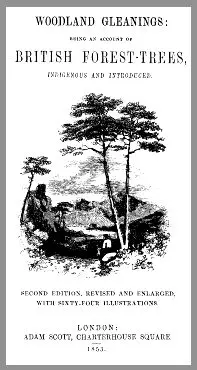
"Woodland Gleanings: Being an Account of British Forest-Trees" by Robert Tyas is a comprehensive account of the timber trees found primarily in the United Kingdom, written in the mid-19th century. This work serves as both an informational guide and an appreciation of Britain’s woodland beauty, focusing specifically on the history, descriptions, botanical characteristics, and cultivation of various indigenous and introduced forest trees. It aims to deepen the reader's understanding of these trees and inspire a greater interest in the natural landscape. The opening of "Woodland Gleanings" introduces the reader to the rich and tranquil beauty of woodland settings, blending poetic reflections on nature with detailed observations about the trees themselves. Tyas begins by inviting readers to explore the charm of forest-dwelling trees, emphasizing their serene and majestic presence. He notes the appeal of different species in various seasons, casting a gaze on how they reflect both the majesty of nature and man's relationship with it. Additionally, the author foreshadows a detailed exploration of each tree species to follow, highlighting their significance to the environment, culture, and economy. Through this opening, Tyas establishes a grounded appreciation for the natural world that encourages a blend of scientific inquiry and aesthetic admiration.
Introduction adapted from the source catalogue; source summaries may be automatically generated.
Free to read · English · 59,693 words · No account needed
MAKE TIME FOR A GOOD BOOK
On by default. Untick to stop anonymous reading totals. Each page counts after 10 seconds in view. How this works.
Anonymous counting is on unless you have switched it off.
The Huntingdon, or Common White Willow, S. alba, grows rapidly, attaining the height of thirty feet in twelve years, and rising to sixty feet in height, or upwards, even in inferior soils; while, in favourable situations, it will reach the height of eighty feet, or upwards. "The bark is thick and full of cracks. The branches are numerous, spreading widely, silky when young. The leaves are all alternate, on shortish foot-stalks, lanceolate, broadest a little above the middle, pointed, tapering towards each end, regularly and acutely serrated, the lowest serrature most glandular; both sides of a grayish, somewhat glaucous, green, beautifully silky, with close-pressed silvery hairs, very dense and brilliant on the uppermost, or youngest leaves; the lowermost on each branch, like the bracts, are smaller, more obtuse, and greener. Stipules variable, either roundish or oblong, small, often wanting. Catkins on short stalks, with three or four spreading bracts, for the most part coming from the leaves, but a few more often appear after midsummer; they are all cylindrical, rather slender, obtuse, near one and a half inch long. Scales fringed, rounded at the end; those of the barren catkins narrower towards the base; of the fertile, dilated and convolute in that part. Two obtuse glands, one before, the other behind the stamens. Filaments hairy in their lower part. Anthers roundish, yellow. Ovary very nearly sessile, green, smooth, ovate, lanceolate, bluntish, longer than the scale. Style short. Stigmas short, thickish, cloven. Capsule ovate, brown, smooth, rather small."
The Goat Willow, Large-leafed Sallow, or Saugh, S. caprea, is distinguished from all the other Willows by its large ovate, or sometimes orbicular ovate leaves, which are pointed, serrated, and waved on the margin; beneath they are of a pale glaucous colour, and clothed with down, but dark green above; varying in length from two to three inches. Foot-stalks stout, downy. Stipules crescent-shaped. Capsules lanceolate, swelling. Style very short. Buds glabrous. Catkins very thick, oval, numerous, nearly sessile, expanding much earlier than the foliage. The ovary is stalked, silky, and ovate in form; the stigmas are undivided, and nearly sessile. In favourable situations this tree attains a height of from thirty to forty feet, with a trunk from one to two feet in diameter. It seldom, however, possesses any considerable length of clean stem, as the branches which form the head generally begin to divide at a moderate height, and diverging in different directions, give it the bearing and appearance of a compact, round-headed tree. It grows in almost all soils and situations, but prefers dry loams, and in such attains its greatest size.
Your reading position is saved on this browser. Take it to another device with a library code. Reading pages adapt to text, rather than matching a printed edition.
BEHIND THE BOOK
This eBook is for the use of anyone anywhere in the United States and most other parts of the world at no cost and with almost no restrictions whatsoever. You may copy it, give it away or re-use it under the terms of the Project Gutenberg License included with this eBook or online at www.gutenberg.org. If you are not located in the United States, you will have to check the laws of the country where you are located before using this eBook. Read the source licence.
The original source file, including credits and licence, is retained by this library. Request an original-format copy at no charge. Please include the book title and Project Gutenberg identifier #41175.
KEEP YOUR CURIOSITY GOING
Charles G. (Charles Griffith) Ross
Hannah Webster Foster

Emily Lawless
Edwin Hamlin Carr

Charles De Lano Hine
Andrew Ure