
The Writing of News A Handbook with Chapters on Newspaper Correspondence and Copy Reading
Charles G. (Charles Griffith) Ross
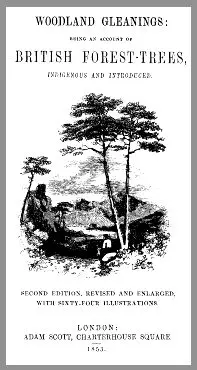
THE CLASSIC COLLECTION · 1853
"Woodland Gleanings: Being an Account of British Forest-Trees" by Robert Tyas is a comprehensive account of the timber trees found primarily in the United Kingdom, written in the mid-19th century. This work serves as both an informational guide and an appreciation of Britain’s woodland beauty, focusing specifically on the history, descriptions, botanical characteristics, and cultivation of various indigenous and introduced forest trees. It aims to deepen the reader's understanding of these trees and inspire a greater interest in the natural landscape. The opening of "Woodland Gleanings" introduces the reader to the rich and tranquil beauty of woodland settings, blending poetic reflections on nature with detailed observations about the trees themselves. Tyas begins by inviting readers to explore the charm of forest-dwelling trees, emphasizing their serene and majestic presence. He notes the appeal of different species in various seasons, casting a gaze on how they reflect both the majesty of nature and man's relationship with it. Additionally, the author foreshadows a detailed exploration of each tree species to follow, highlighting their significance to the environment, culture, and economy. Through this opening, Tyas establishes a grounded appreciation for the natural world that encourages a blend of scientific inquiry and aesthetic admiration.
Introduction adapted from the source catalogue; source summaries may be automatically generated.
Free to read · English · 59,693 words · No account needed
MAKE TIME FOR A GOOD BOOK
On by default. Untick to stop anonymous reading totals. Each page counts after 10 seconds in view. How this works.
Anonymous counting is on unless you have switched it off.
And in referring to profane authors, we find Milton speaking of
--the rushy-fringed bank
Where grows the Willow.
An anonymous writer, too, mentions
The thirsty Salix bending o'er the stream,
Its boughs as banners waving to the breeze.
The pastoral poet Rowe places his despairing Shepherd under Silken Willows. Thus he sings--(we will give the chorus in the first verse, and not repeat it, as it would occupy too much space):
To the brook and the Willow that heard him complain,
Ah, Willow, Willow;
Poor Colin sat weeping, and told them his pain;
Ah, Willow, Willow; ah, Willow, Willow.
Sweet stream, he cry'd sadly, I'll teach thee to flow, And the waters shall rise to the brink with my woe.
All restless and painful poor Amoret lies,
And counts the sad moments of time as it flies.
To the nymph my heart loves, ye soft slumbers repair, Spread your downy wings o'er her, and make her your care.
Dear brook, were thy chance near her pillow to creep, Perhaps thy soft murmurs might lull her to sleep.
Let me be kept waking, my eyes never close, So the sleep that I lose brings my fair-one repose.
But if I am doom'd to be wretched indeed;
If the loss of my dear-one, my love is decreed;
If no more my sad heart by those eyes shall be cheered; If the voice of my warbler no more shall be heard;
Believe me, thou fair-one; thou dear-one believe, Few sighs to thy loss, and few tears will I give.
One fate to thy Colin and thee shall be ty'd, And soon lay thy shepherd close by thy cold side.
Then run, gentle brook; and to lose thyself, haste; Fade thou, too, my Willow; this verse is my last.
Chatterton, in one of his songs, has the following lines:
Mie love ys dedde,
Gon to ys deathe-bedde,
Al under the Wyllowe-tree.
In Ovid we read of
A hollow vale, where watery torrents gush,
Sinks in the plain; the osier, and the rush,
The marshy sedge and bending Willow nod
Their trailing foliage o'er its oozy sod.
And Churchill speaks of
The Willow weeping o'er the fatal wave,
Where many a lover finds a watery grave.
Shakspeare introduces it in Hamlet, where he describes the place of
Ophelia's death:
Your reading position is saved on this browser. Take it to another device with a library code. Reading pages adapt to text, rather than matching a printed edition.
BEHIND THE BOOK
This eBook is for the use of anyone anywhere in the United States and most other parts of the world at no cost and with almost no restrictions whatsoever. You may copy it, give it away or re-use it under the terms of the Project Gutenberg License included with this eBook or online at www.gutenberg.org. If you are not located in the United States, you will have to check the laws of the country where you are located before using this eBook. Read the source licence.
The original source file, including credits and licence, is retained by this library. Request an original-format copy at no charge. Please include the book title and Project Gutenberg identifier #41175.
KEEP YOUR CURIOSITY GOING
Charles G. (Charles Griffith) Ross
Hannah Webster Foster

Emily Lawless
Edwin Hamlin Carr

Charles De Lano Hine
Andrew Ure