THE CLASSIC COLLECTION✦Handwork in WoodCLASSIC FREE BOOKS
Handwork in Wood
William Noyes
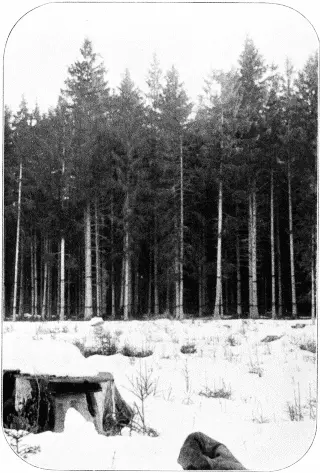
THE CLASSIC COLLECTION · 1912
"Wood and Forest" by William Noyes is a scientific publication written in the early 20th century. This work serves as a detailed examination of American woods, including their structure, properties, growth, and uses. The book is particularly beneficial for students, educators, and woodworkers interested in understanding the fundamentals of wood as a material within both ecological and practical contexts. The opening of the work begins with a foreword where Noyes acknowledges contributions from various individuals who assisted in refining the text. He outlines the organization of the book and its purpose as a companion to his previous volume, “Handwork in Wood.” The first chapter dives into the structure of wood, teaching readers about its classification among plant life, including gymnosperms and angiosperms, and detailing the unique characteristics of wood as a living organism. Noyes emphasizes that understanding wood’s structure is essential for its effective use in woodworking, laying a solid foundation for the more practical information that follows in later chapters.
Introduction adapted from the source catalogue; source summaries may be automatically generated.
Free to read · English · 58,870 words · No account needed
MAKE TIME FOR A GOOD BOOK
On by default. Untick to stop anonymous reading totals. Each page counts after 10 seconds in view. How this works.
Anonymous counting is on unless you have switched it off.
This book has been prepared as a companion volume to the author's Handwork in Wood.[1] It is an attempt to collect and arrange in available form useful information, now widely scattered, about our common woods, their sources, growth, properties and uses.
As in the other volume, the credit for the successful completion of the book is to be given to my wife, Anna Gausmann Noyes, who has made the drawings and maps, corrected the text, read the proof, and carried the work thru to its final completion.
Acknowledgments are hereby thankfully made for corrections and suggestions in the text to the following persons:
Mr. A. D. Hopkins, of the United States Department of Agriculture, Bureau of Entomology, for revision of the text relating to Insect Enemies of the Forest, in Chapter VI.
Mr. George G. Hedgcock, of the United States Bureau of Agriculture, Bureau of Plant Industry, for revision of the text relating to the fungal enemies of the forest, in Chapter VI.
Mr. S. T. Dana and Mr. Burnett Barrows, of the United States Department of Agriculture, Forest Service, for revision of Chapters IV, V, VI, VII, and VIII.
Professor Charles R. Richards, formerly Head of the Manual Training Department of Teachers College, my predecessor as lecturer of the course out of which this book has grown.
Professor M. A. Bigelow, Head of the Department of Botany of Teachers College, for revision of Chapter I, on the Structure of Wood.
Mr. Romeyn B. Hough, of Lowville, N. Y., author of American Woods and Handbook of the Trees of the Northern States and Canada, for suggestions in preparing the maps in Chapter III.
The Forest Service, Washington, D. C., for photographs and maps credited to it, and for permission to reprint the key to the identification of woods which appears in Forest Service Bulletin No. 10, Timber, by Filibert Roth.
The Division of Publications, U. S. Department of Agriculture, for permission to copy illustrations in bulletins.
The Macmillan Company, New York, for permission to reproduce Fig. 86, Portion of the Mycelium of Dry Rot, from Timber and Some of its Diseases, by H. M. Ward.
Mrs. Katharine Golden Bitting, of Lafayette, Indiana, for the photograph of the cross-section of a bud, Figure 5.
Finally and not least I hereby acknowledge my obligations to the various writers and publishers whose books and articles I have freely used. As far as possible, appropriate credit is given in the paged references at the end of each chapter.
[Footnote 1: William Noyes, Handwork in Wood, Peoria, Ill. The Manual Arts Press, 231 pp., $2.]
Index 304
Your reading position is saved on this browser. Take it to another device with a library code. Reading pages adapt to text, rather than matching a printed edition.
BEHIND THE BOOK
This eBook is for the use of anyone anywhere in the United States and most other parts of the world at no cost and with almost no restrictions whatsoever. You may copy it, give it away or re-use it under the terms of the Project Gutenberg License included with this eBook or online at www.gutenberg.org. If you are not located in the United States, you will have to check the laws of the country where you are located before using this eBook. Read the source licence.
The original source file, including credits and licence, is retained by this library. Request an original-format copy at no charge. Please include the book title and Project Gutenberg identifier #35419.
KEEP YOUR CURIOSITY GOING
John Muir
Asa Gray
Asa Gray
Florence Nightingale
Elizabeth Robins Pennell
Denison Olmsted