THE CLASSIC COLLECTION✦An outlaw’s diary: the CommuneCLASSIC FREE BOOKS
An outlaw’s diary: the Commune
Cécile Tormay
THE CLASSIC COLLECTION · 1920
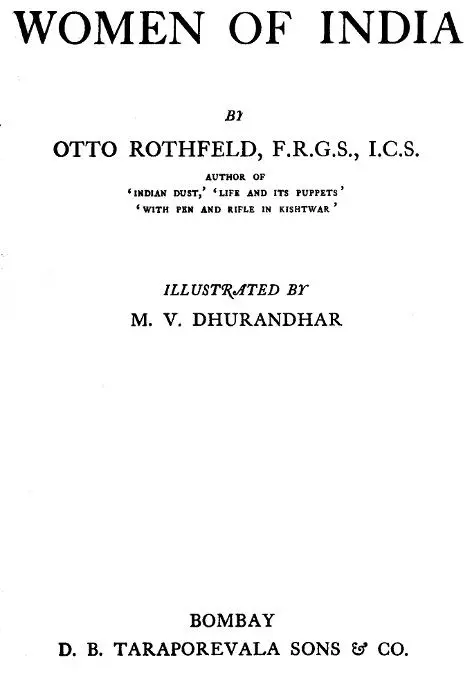
"Women of India" by Otto Rothfield is a historical account written in the early 20th century. The book explores the roles, lives, and experiences of women in India, reflecting on how their identities have been shaped by various cultural, social, and religious influences throughout history. It offers insight into different classes of women, from those in aristocracy to working-class women, shedding light on their strengths, struggles, and societal expectations. The opening of the text sets a vivid scene that intertwines historical context with an exploration of women's identities in India. Rothfield draws from ancient texts, referencing Vatsyana to categorize women into different types based on their attributes and virtues. He contrasts these classical ideals with the modern reality of Indian women, emphasizing their resilience and beauty amidst changing societal norms, especially in the bustling environment of contemporary Bombay. The narrative begins to delve into the profound significance of marriage in Indian culture, suggesting that for women, it represents the pinnacle of their existence and identity, a theme that is likely to evolve in the subsequent chapters. The initial portion establishes a blend of admiration and critique, reflecting both on traditional values and the transformations being witnessed in Indian society.
Introduction adapted from the source catalogue; source summaries may be automatically generated.
Free to read · English · 54,978 words · No account needed
MAKE TIME FOR A GOOD BOOK
On by default. Untick to stop anonymous reading totals. Each page counts after 10 seconds in view. How this works.
Anonymous counting is on unless you have switched it off.
The daily lives of these Rajput ladies of Mewár and Márwár may not have many deep interests but they are by no means empty. Among the greater chiefs, the woman’s life is the usual life of palaces, with luxuries at command and with corresponding duties. There are servants to order and affairs to manage. Most ladies read and hear recitations; maid-servants sometimes sing; and children have to be cared for and tended. Sewing is a common amusement in which most Rajput women are expert. Occasionally a Rajput girl is heard of who, in the remoter districts, goes out riding or even shooting, dressed sometimes as a man, though seldom indeed can such amusements, in a caste which follows the seclusion of women, be entertained after childhood. There are, however, among advanced chiefs with modern ideas not a few instances in which there is a tennis-court in the palace grounds for the ladies, where the wives play together or with their husband and his nearest relations. And there are some rare States where even the semblance of seclusion is being discarded and the ladies drive abroad or shoot big game in the jungle.
These, however, are the liberties of the great. Among the lesser nobility, where riches are usually wanting and position has to be maintained by a stricter observance of traditional rule, the manner of life is busier, with less need of pleasure-seeking. In such a minor country-house, the wife will usually rise with the sun. If her mother-in-law is alive, she goes first to her room and wishes her a good morning. Then comes, what is in all such households a duty of first importance, the care of the dairy-farm with its noble white cows. The milk and whey is always distributed to servants and dependents by the lady herself. That done, she has a bath and says a short prayer for her husband, sees the children have their breakfast, and visits the kitchen. The proudest nobleman’s wife would think shame of herself, if she did not superintend the cooking and at need take a hand in the baking of cakes and special delicacies. She sees to it that her husband and all male guests--usually numerous--have their breakfast before she herself eats her meal with her women. In that hot land, all sleep who can in the middle of the day, and the Rajput woman is no exception. When a couple of hours later she rises, she seeks for some amusement for the afternoon. All Rajput ladies are brought up from childhood to the strictest care of their persons and are taught even physical exercises. Before they are married they have learnt every device by which they can preserve or heighten their beauty and every art by which to sharpen their husbands’ zest and devotion. For this purpose there are many things they learn which in Europe would be disapproved. But it is largely due to this care that they are faultlessly neat, fair, and attractive, and that so often their beauty lasts to advanced years. Thus in the quiet afternoon hours one of the frequent amusements is to inspect and brush clothes. Ladies keep large wooden chests, hasped and bolted with iron and often beautifully carved, very like the bridal chests of the Italian Renaissance. In them are stored the clothes in whose neatness and beauty they place their vanity. One by one they are taken out by the maid-servants and dusted and shown to the mistress and refolded and put back. It is a poor woman indeed who does not have at least fifteen to twenty skirts, from the cheaper cotton or red Turkey cloth to the richest silks and gold embroidery. Mantles (Saris) are at least as many and of bodices there may be forty or fifty. The maid-servants who fold the clothes are a notable institution. Rather household slaves than servants, born and bred in the house, and almost of pure Rajput blood themselves, they are the intimates of their mistress. One or two of them there will always be who have been her affectionate companions since childhood and have, on marriage, accompanied her to her new home. Such a girl is the lady’s confidant and constant comrade, who looks to all her comforts, rubs her down after her bath and does skilful massage, knows all her secrets, brings her all rumours of the world, sleeps at her side in her husband’s absence, and is her much cherished friend. Often, especially in youth, the two spend their afternoons sewing together. Amongst the Rajputs of Káthiawád, besides the pretty bodices that they often sew themselves, it is the custom for girls to embroider fringed strips of cloth for hanging across doors or squares to fasten upon walls for use as ornament at marriages and festivals. Little pieces of glass or mica are let into the embroidery and the patterns very much resemble those still sewn by peasant women in Hungary, whither they were also brought from the same tribal centres of Asia. Reading, visiting, chatting take up the rest of the day till evening approaches. Then the Rajput woman puts on her richer dresses and her jewelry and gets ready for dinner and the night.
Your reading position is saved on this browser. Take it to another device with a library code. Reading pages adapt to text, rather than matching a printed edition.
BEHIND THE BOOK
This eBook is for the use of anyone anywhere in the United States and most other parts of the world at no cost and with almost no restrictions whatsoever. You may copy it, give it away or re-use it under the terms of the Project Gutenberg License included with this eBook or online at www.gutenberg.org. If you are not located in the United States, you will have to check the laws of the country where you are located before using this eBook. Read the source licence.
The original source file, including credits and licence, is retained by this library. Request an original-format copy at no charge. Please include the book title and Project Gutenberg identifier #50346.
KEEP YOUR CURIOSITY GOING
Cécile Tormay

Moritz Busch
John L. Ransom
Frances Wright
Cécile Tormay

Mabel Potter Daggett