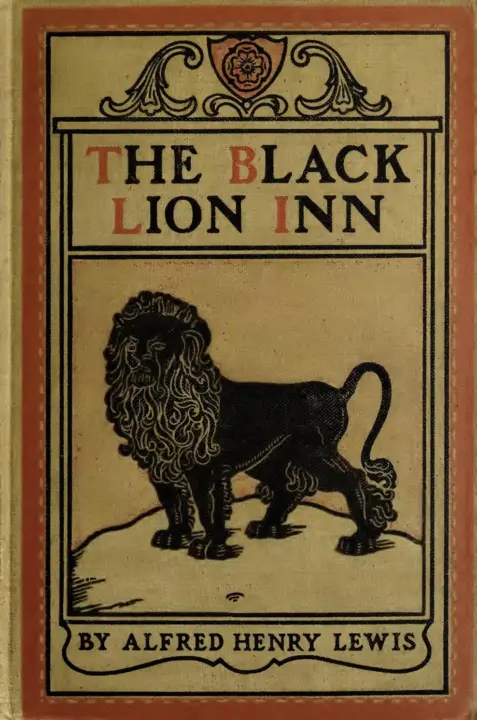
The Black Lion Inn
Alfred Henry Lewis
THE CLASSIC COLLECTION · 1902
"Wolfville Nights" by Alfred Henry Lewis is a novel set in the early 20th century, continuing the tales from his earlier works "Wolfville" and "Wolfville Days." The book dives into the lively and often tumultuous life of the American Southwest, focusing on colorful characters like Silver Phil, a criminal described as a "degen'rate," and various residents of the town of Wolfville, showcasing their interactions, conflicts, and the rough-and-tumble world they inhabit. The opening of "Wolfville Nights" introduces Silver Phil through the eyes of the Old Cattleman, who recounts Phil's troublemaking ways and his eventual confrontation with Dan Boggs. Silver Phil's storyline unfolds as a mix of mischief and malice, documenting his attempts to cheat at gambling and his violent tendencies. In an unexpected twist, after being identified as a criminal, he tries to escape, leading to his ultimate demise at the hands of Boggs. The narrative sets a vivid atmosphere of the frontier and hints at the dangers as well as the camaraderie found within the ranching community, laying the groundwork for the adventures and tales that will follow throughout the book.
Introduction adapted from the source catalogue; source summaries may be automatically generated.
Free to read · English · 82,083 words · No account needed
MAKE TIME FOR A GOOD BOOK
On by default. Untick to stop anonymous reading totals. Each page counts after 10 seconds in view. How this works.
Anonymous counting is on unless you have switched it off.
In offering this book to you I might have advantage of the occasion to express my friendship and declare how high I hold you as a journalist and a man. Or I might speak of those years at Washington when in the gallery we worked shoulder to shoulder; I might recall to you the wit of Hannum, or remind you of the darkling Barrett, the mighty Decker, the excellent Cohen, the vivid Brown, the imaginative Miller, the volatile Angus, the epigrammatic Merrick, the quietly satirical Splain, Rouzer the earnest, Boynton the energetic, Carson the eminent, and Dunnell, famous for a bitter, frank integrity. I might remember that day when the gifted Fanciulli, with no more delicate inspiration than crackers, onions, and cheese, and no more splendid conservatory than Shoemaker's, wrote, played and consecrated to you his famous "Lone Star March" wherewith he so disquieted the public present of the next concert in the White House grounds. Or I might hark back to the campaign of '92, when together we struggled against national politics as evinced in the city of New York; I might repaint that election night when, with one hundred thousand whirling dervishes of democracy in Madison Square, dancing dances, and singing songs of victory, we undertook through the hubbub to send from the "Twenty-third street telegraph office" half-hourly bulletins to our papers in the West; how you, accompanied of the dignified Richard Bright, went often to the Fifth Avenue Hotel; and how at last you dictated your bulletins--a sort of triumphant blank verse, they were--as Homeric of spirit as lofty of phrase--to me, who caught them as they came from your lips, losing none of their fire, and so flashed them all burning into Texas, far away. But of what avail would be such recount? Distance separates us and time has come between. Those are the old years, these are the new, with newer years beyond. Life like a sea is filling from rivers of experience. Forgetfulness rises as a tide and creeps upward to drown within us those stories of the days that were. And because this is true, it comes to me that you as a memory must stand tallest in the midst of my regard. For of you I find within me no forgetfulness. I have met others; they came, they tarried, they departed. They came again; and on this second encounter the recollection of their existences smote upon me as a surprise. I had forgotten them as though they had not been. But such is not your tale. Drawn on the plates of memory, as with a tool of diamond, I carry you both in broadest outline and in each least of shade; and there hangs no picture in the gallery of hours gone, to which I turn with more of pleasure and of good. Nor am I alone in my recollection. Do I pass through the Fifth Avenue Hotel on my way to the Hoffman, that vandyked dispenser leans pleasantly across his counter, to ask with deepest interest: "Do you hear from the Old Man now?" Or am I belated in Shanley's, a beaming ring of waiters--if it be not an hour overrun of custom--will half-circle my table, and the boldest, "Pat," will question timidly, yet with a kindly Galway warmth: "How's the Old Man?" Old Man! That is your title: at once dignified and affectionate; and by it you come often to be referred to along Broadway these ten years after its conference. And when the latest word is uttered what is there more to fame! I shall hold myself fortunate, indeed, if, departing, I'm remembered by half so many half so long. But wherefore extend ourselves regretfully? We may meet again; the game is not played out. Pending such bright chance, I dedicate this book to you. It is the most of honour that lies in my lean power. And in so doing, I am almost moved to say, as said Goldsmith of Johnson in his offering of She Stoops to Conquer: "By inscribing this slight performance to you, I do not mean to so much compliment you as myself. It may do me some honour to inform the public that I have lived many years in intimacy with you. It may serve the interests of mankind also to inform them that the greatest wit may be found in a character without impairing the most unaffected piety." I repeat, I am all but moved to write these lines of you. It would tell my case at least; and while description might limp in so far as you lack somewhat of that snuffle of "true piety" so often engaging the Johnsonian nose, you make up the defect with possession of a wider philosophy, a better humour and a brighter, quicker wit than visited or dwelt beneath the candle-scorched wig of our old bully lexicographer.
Your reading position is saved on this browser. Take it to another device with a library code. Reading pages adapt to text, rather than matching a printed edition.
Alfred Henry Lewis
Alfred Henry Lewis
Alfred Henry Lewis
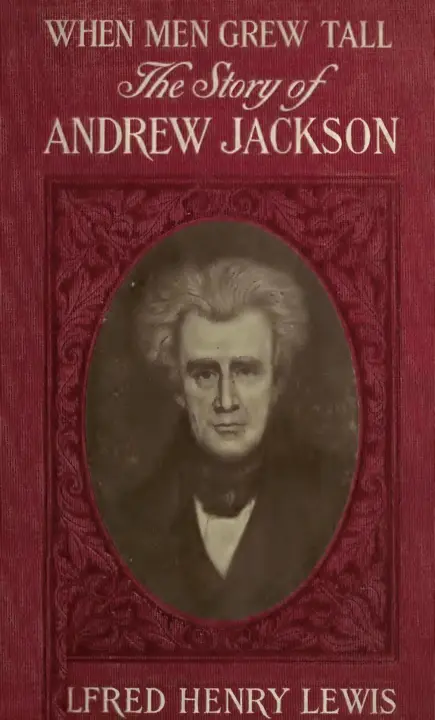
Alfred Henry Lewis
BEHIND THE BOOK
This eBook is for the use of anyone anywhere in the United States and most other parts of the world at no cost and with almost no restrictions whatsoever. You may copy it, give it away or re-use it under the terms of the Project Gutenberg License included with this eBook or online at www.gutenberg.org. If you are not located in the United States, you will have to check the laws of the country where you are located before using this eBook. Read the source licence.
The original source file, including credits and licence, is retained by this library. Request an original-format copy at no charge. Please include the book title and Project Gutenberg identifier #13709.
KEEP YOUR CURIOSITY GOING
Coulson Kernahan

Maurice Baring
Frances Wright
Cécile Tormay

Frederic Jesup Stimson

W. H. P. (William Henry Pope) Jarvis