THE CLASSIC COLLECTION✦Building the pacific railwayCLASSIC FREE BOOKS
Building the pacific railway
Edwin L. (Edwin Legrand) Sabin
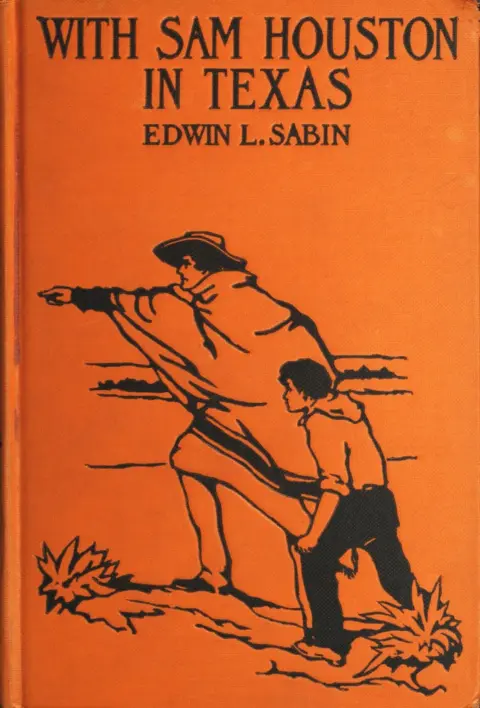
THE CLASSIC COLLECTION · 1916
"With Sam Houston in Texas" by Edwin L. Sabin is a historical account written in the early 20th century. The book focuses on the adventurous tales surrounding the life of Sam Houston during the Texas struggle for independence from Mexico, highlighting the events of 1835-1836 through the eyes of a young volunteer named Ernest Merrill. The narrative endeavors to depict the heroic actions and pivotal decisions that led to the establishment of Texas as an independent republic. The opening of the story introduces readers to Ernest Merrill, who is traveling on a steamboat named "Arkansas" headed to Fort Gibson. The boat becomes stuck on a mud-bar, showcasing the challenges of travel during that era. Among the passengers is Lieutenant Neal, who takes an interest in Ernest's journey. Their encounter with a Texan named Dick Carroll reveals the escalating tensions in Texas and the lure of land and opportunity, setting the stage for Ernest's involvement in the struggles for Texas independence. Moreover, the early chapters establish the character of Sam Houston, referenced as a figure of great importance and destiny for the future of Texas. As Ernest navigates through his adventures, the reader gains insight into the historical significance and colorful personalities of this critical time in American history.
Introduction adapted from the source catalogue; source summaries may be automatically generated.
Free to read · English · 99,392 words · No account needed
MAKE TIME FOR A GOOD BOOK
On by default. Untick to stop anonymous reading totals. Each page counts after 10 seconds in view. How this works.
Anonymous counting is on unless you have switched it off.
A young man issued from the corral and with a word to Mr. Carroll led the two horses away. Ernest was introduced to Captain Burnam; and in the house to the rest of the family. At supper there was another boy, of dark eyes and hair, whose name was James Hill――or James Monroe, they called him, by his middle name, when they didn’t call him plain Jim.
He was older than Ernest, being fourteen, but he was a boy, just the same; and although there were boys in the Burnam family, Ernest was glad to meet as many boys as possible. It would have been pretty stupid, in Texas, without boys.
“I live out just a small piece,” explained James Monroe. “You going to Gonzales, I reckon?”
“I guess so,” responded Ernest.
“Mr. Carroll some of your kin?”
“No. I’m looking for my uncle.”
“Who’s he?”
“Sergeant John Andrews, of the United States Army. But he’s been discharged, and he’s somewhere in Texas.”
“Wasn’t that an army sergeant named Andrews who was killed by the Karankawas down on the Trinity, couple of months ago, dad?” blurted one of the Burnam boys.
“Sh!” warned his mother; but it was too late.
“That so?” queried Mr. Carroll of Captain Burnam. “Hadn’t heard. What about it?” And Ernest waited, breathless.
“So’s the tell,” acknowledged Captain Burnam, slowly. “There was a party of traders massacred by the Karankawas, and a man by name of John Andrews, from the United States Army, was among ’em. He was a newcomer. They all were newcomers or they wouldn’t have been so careless.”
Silence fell.
“That’s sure too bad,” volunteered Jim Hill, to Ernest. “Maybe ’twasn’t your uncle. Did you know him well?”
“No, I never saw him; but he was to take care of me,” faltered Ernest.
“Well,” said Mr. Carroll, quickly, “don’t you mind, boy. You’re no worse off. I’d sort of adopted you, anyway. So you come along to Gonzales, and I’ll see you don’t suffer, you bet.”
“Of course. Never mind. You stay with Dick Carroll and he’ll make a Texan of you,” spoke Mrs. Burnam. “Just forget your uncle and those Injuns.”
Ernest gulped.
“I guess I will,” he said. They all were trying to be so kind to him that he could not say anything else. And he did like Dick Carroll.
James Monroe Hill left, after supper, to ride over to his home. He told Ernest he’d see him again; and he did.
Your reading position is saved on this browser. Take it to another device with a library code. Reading pages adapt to text, rather than matching a printed edition.
Edwin L. (Edwin Legrand) Sabin

Edwin L. (Edwin Legrand) Sabin

Edwin L. (Edwin Legrand) Sabin

Edwin L. (Edwin Legrand) Sabin
BEHIND THE BOOK
This eBook is for the use of anyone anywhere in the United States and most other parts of the world at no cost and with almost no restrictions whatsoever. You may copy it, give it away or re-use it under the terms of the Project Gutenberg License included with this eBook or online at www.gutenberg.org. If you are not located in the United States, you will have to check the laws of the country where you are located before using this eBook. Read the source licence.
The original source file, including credits and licence, is retained by this library. Request an original-format copy at no charge. Please include the book title and Project Gutenberg identifier #62898.
KEEP YOUR CURIOSITY GOING
Cécile Tormay

Moritz Busch
Coulson Kernahan
John L. Ransom

Maurice Baring
Frances Wright