THE CLASSIC COLLECTION✦Building the pacific railwayCLASSIC FREE BOOKS
Building the pacific railway
Edwin L. (Edwin Legrand) Sabin
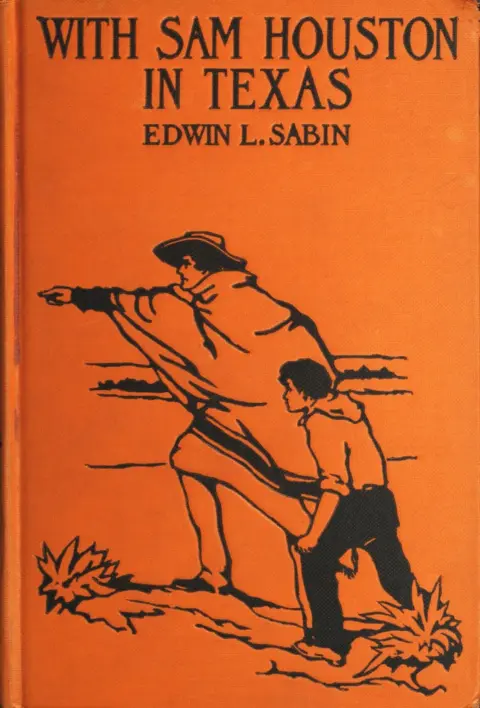
THE CLASSIC COLLECTION · 1916
"With Sam Houston in Texas" by Edwin L. Sabin is a historical account written in the early 20th century. The book focuses on the adventurous tales surrounding the life of Sam Houston during the Texas struggle for independence from Mexico, highlighting the events of 1835-1836 through the eyes of a young volunteer named Ernest Merrill. The narrative endeavors to depict the heroic actions and pivotal decisions that led to the establishment of Texas as an independent republic. The opening of the story introduces readers to Ernest Merrill, who is traveling on a steamboat named "Arkansas" headed to Fort Gibson. The boat becomes stuck on a mud-bar, showcasing the challenges of travel during that era. Among the passengers is Lieutenant Neal, who takes an interest in Ernest's journey. Their encounter with a Texan named Dick Carroll reveals the escalating tensions in Texas and the lure of land and opportunity, setting the stage for Ernest's involvement in the struggles for Texas independence. Moreover, the early chapters establish the character of Sam Houston, referenced as a figure of great importance and destiny for the future of Texas. As Ernest navigates through his adventures, the reader gains insight into the historical significance and colorful personalities of this critical time in American history.
Introduction adapted from the source catalogue; source summaries may be automatically generated.
Free to read · English · 99,392 words · No account needed
MAKE TIME FOR A GOOD BOOK
On by default. Untick to stop anonymous reading totals. Each page counts after 10 seconds in view. How this works.
Anonymous counting is on unless you have switched it off.
In the fall of 1845 he is elected United States senator from the state of Texas. Arrives at Washington to take his seat, March, 1846. While in Congress wears his well-known broad-brimmed white wool hat, and Mexican blanket, whittles industriously at cedar shingles while listening to the debates, and bears prominent part in national affairs. He opposes the extension of slavery in new territories, and is denounced, by the South, as a traitor. He remains a firm advocate of the rights of the Indians.
January, 1853, re-elected to congress, from Texas.
Attends the Baptist church regularly, in Washington. In 1854 is received into the Baptist faith, at Independence, Texas.
March 3, 1854, delivers a great speech against Senator Stephen A. Douglas’s Kansas-Nebraska bill, which repealed the Missouri Compromise bill, prohibiting slavery north of latitude 36° 30´, and opened Kansas and Nebraska territories to the extension of slavery into the North.
In 1856 is candidate for the Presidency, but at the nominating convention of the “American” party receives only three votes, his opposition to the repeal of the Missouri Compromise bill having aroused bitter enmity toward him.
In 1857 defeated for the United States senate.
In the fall of 1857 defeated for the governorship of Texas.
February, 1859, concludes his term in the United States senate and
returns to Texas.
Fall of 1859 triumphantly elected, for a third time, governor of Texas. Is inaugurated on December 21.
In the troublous days of 1860 he stands stoutly for the preservation of the Union, and is threatened by the Southern sympathizers by whom he is surrounded. He advises appeal to the constitution rather than to arms.
March 14, 1861, Texas having seceded, he refuses to take the oath of allegiance to the Confederacy; is deposed from the governorship, and retires to Huntsville, his home.
Although opposing secession, he firmly advocates the defense of the South against invasion by the Federal troops, and says that he is willing to enter the Texas ranks. In his San Jacinto suit he reviews, at Galveston, the Texas regiment in which his son, Sam Houston, Jr., has enlisted, and is cheered.
Lives at Cedar Point, Texas; becomes very feeble, from his old wounds and other disabilities, and walks with the aid of a crutch and a cane.
January, 1863, congratulates Texas for having driven the Northern
forces from her soil.
March 18, 1863, makes his last public speech, at Houston, Texas, and bids Texas keep up its courage and its hopes of success of the Southern cause.
Your reading position is saved on this browser. Take it to another device with a library code. Reading pages adapt to text, rather than matching a printed edition.
Edwin L. (Edwin Legrand) Sabin

Edwin L. (Edwin Legrand) Sabin

Edwin L. (Edwin Legrand) Sabin

Edwin L. (Edwin Legrand) Sabin
BEHIND THE BOOK
This eBook is for the use of anyone anywhere in the United States and most other parts of the world at no cost and with almost no restrictions whatsoever. You may copy it, give it away or re-use it under the terms of the Project Gutenberg License included with this eBook or online at www.gutenberg.org. If you are not located in the United States, you will have to check the laws of the country where you are located before using this eBook. Read the source licence.
The original source file, including credits and licence, is retained by this library. Request an original-format copy at no charge. Please include the book title and Project Gutenberg identifier #62898.
KEEP YOUR CURIOSITY GOING
Cécile Tormay

Moritz Busch
Coulson Kernahan
John L. Ransom

Maurice Baring
Frances Wright