To Herat and Cabul: A Story of the First Afghan War
G. A. (George Alfred) Henty
THE CLASSIC COLLECTION · 1901
"With Roberts to Pretoria: A Tale of The South African War" by G. A. Henty is a historical novel written in the late 19th century. The story centers around Yorke Harberton, a young man caught in the turbulent backdrop of the South African War, as he navigates personal and societal changes following a disastrous banking failure that affects his family's fortune. The novel explores themes of courage, self-reliance, and the impacts of war on young lives, with Yorke's journey likely unfolding in a setting ripe with historical significance. The opening of the narrative introduces Yorke and his family grappling with the financial fallout from the collapse of a bank, which has significant implications for their lifestyle and expectations. As the family adjusts to their reduced circumstances, Yorke contemplates his future options, expressing a desire to escape the confines of a conventional life. When the conversation shifts to Yorke's potential emigration to South Africa, he is inspired by thoughts of adventure and opportunity. Following his arrival in South Africa, Yorke faces cultural tensions between Dutch farmers and English settlers, culminating in a confrontation that sets the stage for deeper conflicts and personal growth as the political climate becomes increasingly charged leading up to the war.
Introduction adapted from the source catalogue; source summaries may be automatically generated.
Free to read · English · 153,741 words · No account needed
MAKE TIME FOR A GOOD BOOK
On by default. Untick to stop anonymous reading totals. Each page counts after 10 seconds in view. How this works.
Anonymous counting is on unless you have switched it off.
"That will suit me very well, though I should prefer a thousand."
The Boers had all dismounted.
"Then let us go out behind the house, Mr. Allnutt," one of them said, "we can easily choose a mark there."
Yorke went into the house to get his rifle and soon joined them. They went a short distance, and then the Boer said, "That rock there is about two hundred yards away, it will make a very fair mark."
"It would be difficult to judge which is the centre," Yorke said, "and might give rise to dispute."
"That is so," the Boer said gravely. "I saw an empty tin in the yard, the bottom of that will make a very good bull's-eye."
Mr. Allnutt shouted, "Hans!" The lad was standing at the gate of the yard looking after them. He had heard the conversation, but dared not follow them. "Hans, wrench the top off that tin by the kitchen door and bring it here."
They then walked on to the rock, where, in two or three minutes, Hans joined them with the top of the tin. It had been a two-pound tin, and the circle was some four inches across.
"It will stand very well on this projection on the face," the Boer said. "It will then be as nearly as possible in the centre."
"But it will tumble down every time it is hit."
"Hans will stand near and pick it up again," Mr. Allnutt said.
"It had better be fixed," the Boer remarked. "There is a little crack in the rock, a nail driven through the tin would hold it there. It is better to do the thing properly."
Dirck laughed. "By all means do it properly, though I cannot see why we should trouble about such a farce as this."
Mr. Allnutt paid no attention to this speech, but said, "Go and take a hammer, Hans, and a good-sized nail, and cut the bottom out of another tin and bring that here too. If three or four holes are made, the question may arise as to which is the last."
The lad ran off.
"Now, Mr. Van Laun, while he is away we may as well arrange as to how they had better shoot--how many shots each shall fire, whether they shall shoot alternately, or one fire his shots at one of the pieces of tin, and then the other take the new target. I think that will be the best, then no dispute can arise."
"I agree with you. How many times shall each fire?"
After discussion it was agreed that each should fire ten shots.
Your reading position is saved on this browser. Take it to another device with a library code. Reading pages adapt to text, rather than matching a printed edition.
G. A. (George Alfred) Henty
G. A. (George Alfred) Henty
G. A. (George Alfred) Henty
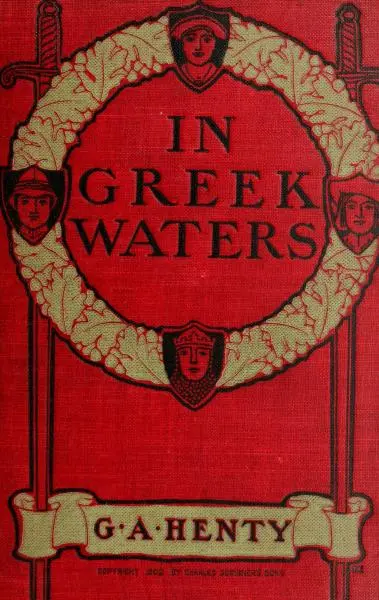
G. A. (George Alfred) Henty
BEHIND THE BOOK
This eBook is for the use of anyone anywhere in the United States and most other parts of the world at no cost and with almost no restrictions whatsoever. You may copy it, give it away or re-use it under the terms of the Project Gutenberg License included with this eBook or online at www.gutenberg.org. If you are not located in the United States, you will have to check the laws of the country where you are located before using this eBook. Read the source licence.
The original source file, including credits and licence, is retained by this library. Request an original-format copy at no charge. Please include the book title and Project Gutenberg identifier #56143.
KEEP YOUR CURIOSITY GOING
Cécile Tormay

Moritz Busch
Coulson Kernahan
John L. Ransom

Maurice Baring
Frances Wright