THE CLASSIC COLLECTION✦Good housing that paysCLASSIC FREE BOOKS
Good housing that pays
Fullerton L. (Fullerton Leonard) Waldo
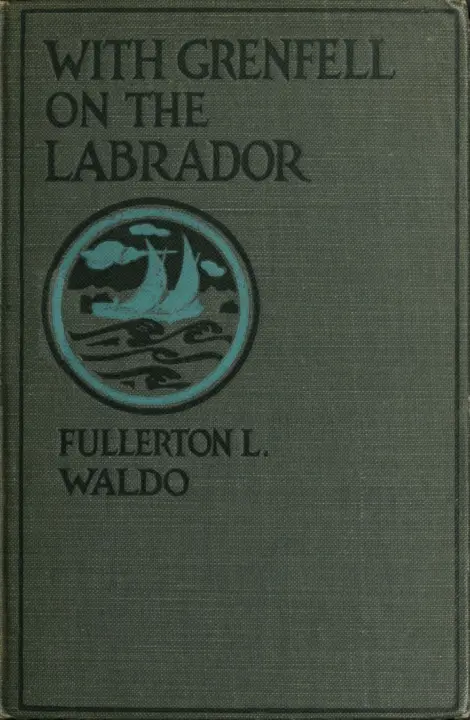
THE CLASSIC COLLECTION · 1920
"With Grenfell on the Labrador" by Fullerton L. Waldo is a nonfiction account written in the early 20th century. This work chronicles the life and humanitarian efforts of Dr. Wilfred T. Grenfell, a medical missionary who dedicated his life to serving the impoverished fishing communities along the Labrador coast. The narrative highlights his commitment to providing medical care and improving the living conditions of the people he serves, showcasing both the challenges he faces and his enduring spirit of compassion. The opening of the book introduces Dr. Grenfell's character and his profound connections to the land and its people. It begins with a foreword from Grenfell himself, reflecting on various initiatives he has undertaken, including medical services and community support systems. The narrative follows Grenfell as he navigates the harsh conditions of Labrador, detailing his encounters with patients, local challenges, and his relentless drive to make a difference. Through vivid descriptions of his daily life and interactions with both patients and colleagues, the reader is drawn into Grenfell's world, where courage, dedication, and a profound sense of service define his mission.
Introduction adapted from the source catalogue; source summaries may be automatically generated.
Free to read · English · 34,987 words · No account needed
MAKE TIME FOR A GOOD BOOK
On by default. Untick to stop anonymous reading totals. Each page counts after 10 seconds in view. How this works.
Anonymous counting is on unless you have switched it off.
A few sentences from the diary of Henry Gordon, the brave missionary at Cartwright, on Sandwich Bay, will suffice to show what a hideous winter his people passed through. Of this man Dr. Grenfell said to me: “Instead of a stick with a collar on it we have a man with a soul in him.” He is always laughing—incurably an optimist, and a great Boy Scout leader. The following are condensed excerpts.
“Wednesday, Oct. 30, 1918. Reached Cartwright 8 a.m. Mail-boat had brought ‘the great Plague’ and nearly half the population was down with it.
“Thursday, Oct. 31. Nearly everybody down now.
“Nov. 1. Whole households stretched inanimate on floors, unable even to feed themselves or keep fires going.
“Nov. 2. Feeling rotten. Head like a bladderful of wind.
“Nov. 7. Busy all a.m. arranging graves and coffins.
“Nov. 8. Gale N. E. with snow-storms.
“Nov. 17. Two of bodies too much doubled up to put in coffin.
“Nov. 21. Will Leaming in from Indian Harbour with news that ten are dead at North River still unburied and only three coffins. The rest are too sick and dismayed to help.
“Nov. 22. (At North River). Some had lain in their beds three weeks and the stench was appalling. Old Mrs. L. W., aged 71, only survivor of five, lived alone for a fortnight with four dead. No fire, no wood, only ice, which she thawed under her arms.
“Nov. 26. Number burials now totals 26. Population little over 100.
“Dec. 14. Find five little orphans living alone in a deserted house in a deserted cove, bread still frozen.
“Dec. 19. 12 dead in North River out of population of 21.
“Dec. 25. (Christmas Day). Service 10.30. Only six communicants, but considerable ‘Communion of saints.’
“Jan. 1, 1919. (At Cape Porcupine, in Herbert Emb’s one-room house). ‘A sort of damp earthy smell met one on entering, but thanks to frost, body was not so bad as expected. More like mouldering clay than anything. Right on his side was his little girl, actually frozen on to him, so that bodies came off the bunk in one piece.’
“Jan. 3. Grave-blasting.
“Jan. 8. Total deaths: Cartwright, 15; Paradise, 20; Separation Point, 7; North River, 13; Strandshore, 9; Grady, 1; Hare Islands, 4; Sandhills, 4; Boulter’s Rock, 5; North, 12.”
These do not seem large figures, but in settlements of half a dozen
houses or less they represent a very large proportion of the
inhabitants.
News of the armistice with Germany did not reach Mr. Gordon until January 9, which shows how far from the world was this region within a hundred miles of the summer hospital at Battle Harbour.
It is to be noted that nearly all the children who died perished of starvation, because their elders could no longer feed them and the “loaf” was too frozen to be eaten.
Your reading position is saved on this browser. Take it to another device with a library code. Reading pages adapt to text, rather than matching a printed edition.
Fullerton L. (Fullerton Leonard) Waldo
Fullerton L. (Fullerton Leonard) Waldo
BEHIND THE BOOK
This eBook is for the use of anyone anywhere in the United States and most other parts of the world at no cost and with almost no restrictions whatsoever. You may copy it, give it away or re-use it under the terms of the Project Gutenberg License included with this eBook or online at www.gutenberg.org. If you are not located in the United States, you will have to check the laws of the country where you are located before using this eBook. Read the source licence.
The original source file, including credits and licence, is retained by this library. Request an original-format copy at no charge. Please include the book title and Project Gutenberg identifier #67551.
KEEP YOUR CURIOSITY GOING
Wilfrid Scawen Blunt
Wilfrid Scawen Blunt

E. W. (Edgar Watson) Howe
Cécile Tormay

Moritz Busch
John L. Ransom