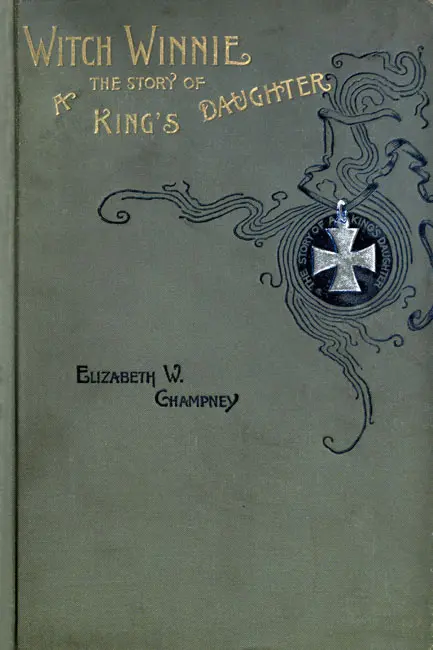
Witch Winnie: The Story of a “King’s Daughter”
Elizabeth W. (Elizabeth Williams) Champney
THE CLASSIC COLLECTION · 1891
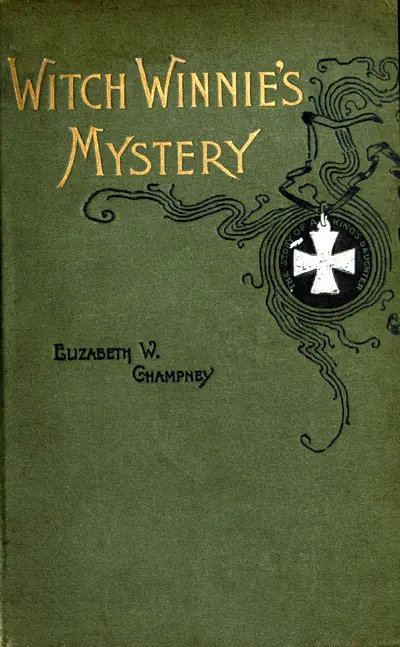
"Witch Winnie's Mystery, or The Old Oak Cabinet: The Story of a King's Daughter" by Elizabeth W. Champney is a novel written in the late 19th century. It narrates the adventures of a group of girls at a boarding school, focusing particularly on their energetic friend Winnie, whose mischievous yet charming personality leads to various escapades. At its core, the story explores themes of friendship, responsibility, and the dilemmas faced by young women navigating their lives and social relations in a structured setting. The opening of the book introduces us to the main characters, a tight-knit group collectively known as the "Amen Corner," who have their lives intertwined through school activities and charity work. As the story unfolds, the friendships among the girls are tested by the arrival of a new student and the subsequent tensions that arise. The central plot conflict revolves around a theft that raises suspicions among the friends, creating an atmosphere of intrigue and prompting the reader to question loyalties. Winnie's bold nature is highlighted as she leads her friends into both playful and contentious situations, setting the stage for a delightful combination of mystery and character growth.
Introduction adapted from the source catalogue; source summaries may be automatically generated.
Free to read · English · 78,904 words · No account needed
MAKE TIME FOR A GOOD BOOK
On by default. Untick to stop anonymous reading totals. Each page counts after 10 seconds in view. How this works.
Anonymous counting is on unless you have switched it off.
"Well, out of doors she likes to wear a boy's jockey cap of white cloth and a jaunty little jacket, and I regret to say that she is not unfrequently seen with her hands in its pockets, and her elbows making aggressive angles."
"And, I presume, she also wears stiffly-laundried shirt waists, with men's ties, and divided skirts, and her hair is short and parted on the side, and she rides a bicycle. I know the type--the young lady who affects the masculine in her attire."
"She has just the loveliest long hair in the world, and her skirts are not divided, and she doesn't ride a bicycle, nor wear shirt waists, at least not horrid, starched, manny ones. She likes the soft, washable silk kind; and she is a great deal more lady-like than you are, and lovely, and just splendid; so there!"
Mr. Van Silver chuckled; he liked to tease Milly.
Adelaide remained at Mrs. Roseveldt's for two weeks. Jim did not gain as fast as the physician had expected. The nervous shock and the great strain of the race after the accident had been more than the boy's slight physique could well endure.
Adelaide read to him, and played endless games of halma and backgammon, and discussed plans for the summer, or told him of the people in her tenement, in whom Jim was even more interested, if that were possible, than Adelaide herself. Polo called and brought a bouquet, for which she had paid seven cents on Fourteenth Street. Jim was glad to meet Polo when he knew that she was Terwilliger's sister, for the trainer had been especially proud of Jim, and had given him many points on bicycling.
One day when Polo was present, Jim suddenly asked Adelaide, "Say, sister, did the boys really go to your cat-combing party?"
"I don't know," Adelaide replied. "There were two suspicious characters there, but we never found out who they were."
"They was boys," Polo insisted; "and one of 'em was fat, and trod on my toe, and one of 'em was little, and smelled of cigarettes."
"If I was only back at school," Jim replied, a little fretfully, "I'd find out for you, fast enough, whether it was Buttertub and Ricos. But what can a fellow do penned up here?"
"Never mind, Jim," Adelaide replied soothingly. "The truth will all come
out at last."
Polo's great eyes snapped. "Albert Edward could find out," she said. "The boys tell him lots of things."
Adelaide did not tell Polo that her brother's testimony would count for little, as he was himself suspected, and the girl went away determined to assist in unravelling the mystery.
Your reading position is saved on this browser. Take it to another device with a library code. Reading pages adapt to text, rather than matching a printed edition.
Elizabeth W. (Elizabeth Williams) Champney
BEHIND THE BOOK
This eBook is for the use of anyone anywhere in the United States and most other parts of the world at no cost and with almost no restrictions whatsoever. You may copy it, give it away or re-use it under the terms of the Project Gutenberg License included with this eBook or online at www.gutenberg.org. If you are not located in the United States, you will have to check the laws of the country where you are located before using this eBook. Read the source licence.
The original source file, including credits and licence, is retained by this library. Request an original-format copy at no charge. Please include the book title and Project Gutenberg identifier #36313.
KEEP YOUR CURIOSITY GOING
Coulson Kernahan

Maurice Baring
Frances Wright
Cécile Tormay

Frederic Jesup Stimson

W. H. P. (William Henry Pope) Jarvis