
Dead letters
Maurice Baring
THE CLASSIC COLLECTION · 1898
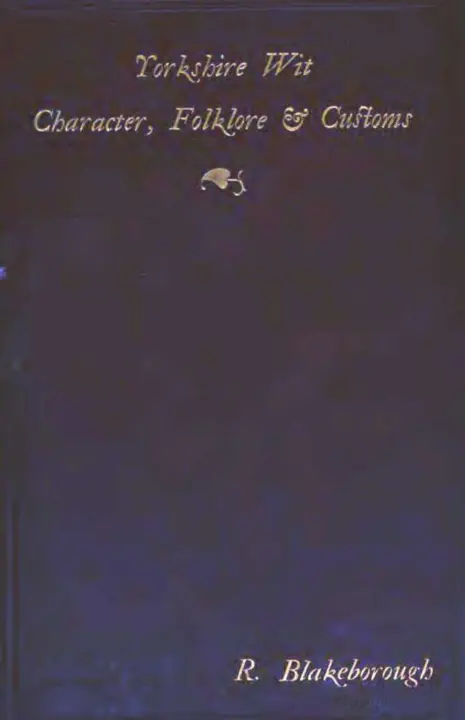
"Wit, Character, Folklore & Customs of the North Riding of Yorkshire" by Richard Blakeborough is a collection of anecdotes and observations reflecting the local wit and customs, likely written in the late 19th century. The work captures the essence of Yorkshire character through various humorous stories, sayings, and reflections on the dialect and social customs of the North Riding, aiming to preserve them from fading into obscurity. At the start of the work, the author introduces his intent to document the unique wit and character of Yorkshire, emphasizing the cautious yet practical mindset of its people. He provides illustrative stories revealing their straightforwardness, humor, and the nuances of their dialect. Through relatable anecdotes, Blakeborough paints a vivid picture of these residents, highlighting how their traditional views often clash with modernity, and illustrating their independent spirit and pride through humorous exchanges. The initial chapters draw readers into the richness of local culture and the distinctively candid personality of Yorkshire folk.
Introduction adapted from the source catalogue; source summaries may be automatically generated.
Free to read · English · 150,771 words · No account needed
MAKE TIME FOR A GOOD BOOK
On by default. Untick to stop anonymous reading totals. Each page counts after 10 seconds in view. How this works.
Anonymous counting is on unless you have switched it off.
Whya, noo, Ah’ll tell tha all aboot it reet away fra t’ starting. Thoo knaws Ah went ti what they call t’ station, an’ Ah seed a young chap stannin’ at t’ back ov a thing leyke a ratten trap, an’ Ah sez tiv him, ‘Noo, then, what’s thoo been efter ti git thisen stuckken theer foor?’ An’ he sez, ‘Naay, nowt; Ah’s nobbut here ti sell t’ tickets, that’s all.’ ‘Oh, whya,’ sez Ah, ‘if that’s all, let’s be ’evving ho’d o’ yan.’ An’ he sez ti me, ‘All reet, wheear are ya gahin’?’ ‘Stop a bit,’ sez Ah; ’that’s neea business o’ thahn.’ ‘Whya,’ sez he, ‘Ah caan’t gi’e ya a ticket if ya deean’t tell uz wheear ya gahin’ tul.’ ‘Well,’ sez Ah, ‘Ah s’all deea nowt o’ t’ sort; an’ if Ah’ve onny mair o’ thi impidence, Ah’ll tak tha byv t’ hair o’ thi heead an’ Ah’ll pull tha thruff t’ larl hoal—that’s what Ah’ll deea.’ An’ then a young lady cam up, an’ sha sez, ‘If Ah war yow, Ah’d tell t’ young chap wheear ya’re gahin’ tul, an’ it’ll mense things up a bit, an’ ya’ll git yer ticket an’ git awaay neycely.’ ‘All reet,’ sez Ah. ‘Noo, then, cu’ thi waays back, impidence; Ah’s gahin’ ti Whidby ti see my dowter. Sha lives on t’ cliff, an’ sha’s gitten a pianner, an’ bowt a pig, an’—— ’ ‘Naay, what!’ sez he; ‘Ah deean’t want ti knaw all t’ family history, hooivver.’ ‘Well,’ sez Ah, ’thoo seeam’d that ’quisitive aboot it, ’at Ah thowt Ah’d best tell tha t’ lot whahl Ah war at it.’ ‘Whya, noo then,’ sez he, ’theear’s yer ticket, an’ it’s yan an’ fow’pence.’ ‘Whya,’ sez Ah, ’thoo needn’t be seea chuff aboot it; theer’s thi yan an’ fow’pence.’ ‘That’s reet,’ sez he; ‘an’ ya mun tak care on ’t.’ ‘Thoo gert dunder-nowle!’ sez Ah; ‘Ah’s nut gahin’ ti fling ’t awaay when Ah git ootsahd. Ah s’all tak care on ’t ti t’ end o’ mah daays.’ ‘Naay,’ sez he, ‘bud ya weean’t.’ ‘What foor?’ sez Ah. ‘‘Coz theer’s a chap ’at t’ tother end ’ll want it.’ ‘Oh, is theer?’ sez Ah; ‘whya, then, he weean’t git it.’ ‘He’ll tak it fra ya,’ sez he. ‘Nut if he’s leyke what thoo is,’ sez Ah, ‘or hauf a dozen on ’em.’ An’ then Ah went ootsahd, on ti what tha call t’ platform. ‘Noo, then,’ sez Ah, ‘is this t’ traan thing?’ An’ a porter chap sez, ‘Aye, that’s it.’ ‘Oh! an’ wheer’s t’ hoss?’ sez Ah. ‘What hoss?’ sez he. ‘Whya, t’ hoss ’at’s gahin’ ti drag t’ thing ti Whidby?’ ‘Bud,’ sez he, ‘it dizn’t gan wiv a hoss.’ ‘Then what diz it gan wiv?’ sez Ah. ‘Whya, that thing ’at’s at t’ front end on ’t.’ ‘Hoo can a thing leyke yon knaw t’ road ti Whidby? Ger away wi’ tha.’ ‘Oh,’ sez he, ‘ya’re gahin’ ti Whidby, are ya?’ ‘Ah is,’ sez Ah; an’ wi’ that he gat at t’ back o’ mah, an’ afore Ah knew wheer Ah war, Ah war hauf lifted an’ hauf thrussen inti ti carridge. An’ ther war nowt bud a young chap sitting up i’ t’ far corner; an’ Ah sez tiv him, ‘Ah, saay, ’ev yow ivver been iv a train afoor?’ ‘Aye, monny a tahm,’ sez he. ‘Is this all reet?’ sez Ah. ‘Aye, it’s reet eneeaf,’ sez he. An’ seea Ah sat ma doon. Ah thowt it ’ud be seea neyce ti leeak oot o’ t’ winder an’ see Tom Robison’s coddy fooals an’ John Williams’s pigs, bud it’s ez trew ez Ah’s sitting byv thi fire-sahd, t’ fo’st thing ’at Ah seed war a chetch run reet across a field, an’ t’ next minit ther war tweea coos, three pigs, a man, an’ a haystack flew past that quick, whahl ya c’u’dn’t keep yer e’es on ’em at all, an’ then ivverything went ez pick dark ez neet. ‘Noo, then,’ Ah shooted, ‘what’s up noo?’ ‘Naay, nowt,’ sez he; ‘wa’ve nobbut gane insahd ov a funnel, that’s all.’ ‘Insahd ov a funnel!’ sez Ah; ’then s’all wa be dragged oot o’ t’ narrer end on ’t?’ ‘Noo, it’s all reet,’ sez he. ‘Ah deean’t knaw sae mich aboot its being all reet,’ sez Ah. ‘Ah’ve neea reet ti be locked up i’ t’ dark wiv a young chap ’at Ah’ve nivver seen afoor.’ ‘Whya, noo, sit ya still,’ sez he; ‘Ah isn’t gahin’ ti mell on ya.’ ‘Thoo’d better nut,’ sez Ah, ‘or else tho’ll git thi hair combed foor nowt.’ An’ then wa flew inti dayleet, afoor Ah knew wheer Ah war. Efter a bit wa began ti slack up a piece. ‘Noo, then,’ sez Ah, ‘what’s up noo?’ ‘Nowt,’ sez he; ‘wa’ve nobbut gitten ti Whidby, that’s all.’ ‘Oh! well,’ sez Ah, ‘if that’s all, that’s wheear Ah want ti be.’ An’ Ah oppen’d t’ deear an’ stepped oot, an’ afoor Ah knew wheer Ah war, Ah war laid flat o’ mah back on t’ platform. When Ah’d gitten mysen upended agaan, Ah seed a chap at t’ far end o’ t’ station clicking ther tickets frev ’em leyke all that, an’ Ah thowt ti mysen, ‘Thoo’ll finnd thisen wrang when Ah cum up.’ Hooivver, he nobbut tried ti git hauf o’ mahn, an’ seea it didn’t matter; bud Ah’ve ta’en ’em in, foor all that. Ah wadn’t ’a’e deean ’t if they’d nobbut behaved thersens, bud tha didn’t, chucking yan in an’ potching yan oot. What diz ta saay, thoo wants ti knaw hoo Ah’ve mannished ti tak ’em in? Whya, noo, Ah’ll tell tha—Ah’ve bowt a return ticket, an’ Ah isn’t gahin’ back. Tha caan’t git t’ best o’ me.
Your reading position is saved on this browser. Take it to another device with a library code. Reading pages adapt to text, rather than matching a printed edition.
BEHIND THE BOOK
This eBook is for the use of anyone anywhere in the United States and most other parts of the world at no cost and with almost no restrictions whatsoever. You may copy it, give it away or re-use it under the terms of the Project Gutenberg License included with this eBook or online at www.gutenberg.org. If you are not located in the United States, you will have to check the laws of the country where you are located before using this eBook. Read the source licence.
The original source file, including credits and licence, is retained by this library. Request an original-format copy at no charge. Please include the book title and Project Gutenberg identifier #62999.
KEEP YOUR CURIOSITY GOING
Maurice Baring
Francis Greenleaf Allinson & Anne C. E. (Anne Crosby Emery) Allinson
Stuart Dodgson Collingwood
Percy Keese Fitzhugh
Mary Macleod & Edmund Spenser

Cooke Don-Carlos