
Dead letters
Maurice Baring
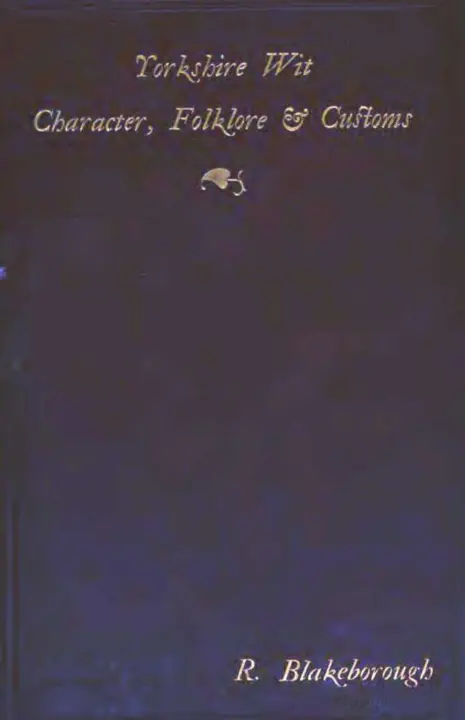
THE CLASSIC COLLECTION · 1898
"Wit, Character, Folklore & Customs of the North Riding of Yorkshire" by Richard Blakeborough is a collection of anecdotes and observations reflecting the local wit and customs, likely written in the late 19th century. The work captures the essence of Yorkshire character through various humorous stories, sayings, and reflections on the dialect and social customs of the North Riding, aiming to preserve them from fading into obscurity. At the start of the work, the author introduces his intent to document the unique wit and character of Yorkshire, emphasizing the cautious yet practical mindset of its people. He provides illustrative stories revealing their straightforwardness, humor, and the nuances of their dialect. Through relatable anecdotes, Blakeborough paints a vivid picture of these residents, highlighting how their traditional views often clash with modernity, and illustrating their independent spirit and pride through humorous exchanges. The initial chapters draw readers into the richness of local culture and the distinctively candid personality of Yorkshire folk.
Introduction adapted from the source catalogue; source summaries may be automatically generated.
Free to read · English · 150,771 words · No account needed
MAKE TIME FOR A GOOD BOOK
On by default. Untick to stop anonymous reading totals. Each page counts after 10 seconds in view. How this works.
Anonymous counting is on unless you have switched it off.
I remember, when this doggerel was repeated, we all sat round the kitchen fire, the maid sitting by the table with her hand near the lighted candle; towards the last few lines her voice would drop, until, on repeating the last line, it almost became a whisper. With ears strained, and eyes nearly out of our heads, we awaited the dramatic dénouement, which most of us well knew; but in those days the excitement never waned, always the same intensity of feeling was duly worked up, as she repeated in a hoarse whisper, ‘dead, dead, dead indeed,’ extinguishing the light, as she uttered the last syllable with a fearful shriek, whilst we all yelled in one mighty chorus. Houses in those days were built, not held together by the tacks in the carpets and the paper on the wall; such a yell as we gave would have shaken the ornaments from off every bracket nailed to the walls of a whole row of modern blown-together domiciles.
There was once a poor old cobbler had twelve children, all girls. He was quite broken down with the hard work of finding food and clothes for them. One night, when he was working very late, he suddenly heard a laugh, and on looking up, saw the queerest little man his eyes had ever beheld sitting by the stove door. ‘And who may you be?’ inquired the cobbler, resting from his work. But the queer little man did nothing but laugh and shake his head. After a while, however, he said, ‘I have a bit of news for you.’ ‘Good, I hope,’ said the cobbler, waxing a thread. ‘You won’t think so; there is another daughter going to be added to your little family,’ chuckled the old chap. On hearing this, the poor old cobbler fainted; the shock was too much for him. He had hoped it would be a boy, who would in time grow up and help him; but a girl! it was too much. However, when he came to himself, the baby was born, and sure enough the queer little old man had been right. It was a sweet babe, and when three years old the wee thing showed promise of growing up to be a most beautiful maiden. One day, whilst the little lass was playing about the shop door, a knight rode by; seeing the child, he was struck with her marvellous beauty. Never before had he seen such beauty and shapeliness of limb in one so young. As he rode along, he consulted his book of fate, for he was a wicked wizard knight, and discovered the child was fated to be the bride of his own son. This he determined should not be. Turning his horse about, he returned to the cobbler’s shop, and after some conversation offered him a sum of money, and promised to take the child along with him, adopt her, and leave her all his wealth. To this the poor old man agreed, and away rode the knight with the lovely child in his arms. Now, he dare not kill the child himself, because the book of fate told him if any one did so before she had been kissed by the man she would wed, the same should die that day. So he determined her death should be an accident. Riding to the banks of the Ouse, he jumped his horse off the bank, leaving hold of the little lass as he did so. As they sank beneath the flood, she was washed away, and the wicked wizard left her to her fate. Her clothes, however, buoyed her up, and as she floated along, she heard a voice call her by name, and a queer little old man, who was fishing, threw his line over her, and dragged her to shore. Taking her to a cottage near by, he gave her in charge of the good wife and her husband, begging them to take great care of her until he came that way again; placing a large sum of money on the table to pay for her keep, he departed on his way. So she lived with these kind people, until she was eighteen. At this time her many charms of form and face had become the talk amongst the courtiers at York. To such an extent was her wondrous beauty famed abroad, that she was even toasted in the castle. A certain wizard knight, hearing her so extolled, rode out one day to where she lived. Seeing her standing by the door, he passed on, and again consulted his book of fate, and discovered she was the very maiden he had looked upon as drowned years ago. Turning back, he offered the good woman a large sum of money if she would permit the maiden to carry a note to his brother who lived at Scarborough Castle. The dame said it was too far for the maiden to walk; however, just then a queer little old man drove by with an ass yoked to a cart, and offered to give the maiden a lift most of the way, so she was permitted to go. When the queer little old man and the maiden rested for the night, he stole into her bedroom, and removed the note, which she had pinned within her chemise for security; so gently was this accomplished, that she never awoke. He broke the seal and read, ‘Let the bearer see my son, command him to kiss her, and then cast her into a dungeon, and let her starve to death.’ ‘I knew,’ muttered the old man. Returning to the sleeping maiden, he gently pinned within her chemise another note, with just the same seal on, and written in exactly the same writing. But written in this note was a command that the brother should at once marry his nephew to the bearer. In the morning, when the girl arose, she found the ass, cart, and little old man had left very early; however, she was quite near to Scarborough, for never had an ass trotted like the queer little old man’s had done. On arriving at the castle, she was speedily married to the wizard knight’s son, and they were as happy as they could be. Two months afterwards, the father-in-law came to stay at the castle. No sooner did he behold the bride, than he saw that he had been baulked again, but he held his peace. Early next day he met his daughter-in-law in a wood: she had been seeing her husband off on a hawking expedition. The wicked knight asked her to walk with him along the shore, and when they came to a lonely place, he told her she must prepare to die. Plunging his sword into the sand, he scratched a mark on the beach, telling her that when its shadow reached that mark, he would draw it from the sand and run it through her heart. So eloquently did she plead, and her beauty was so great, that he relented so far as to offer her her freedom if she would swear to go away and never see his son again, until she wore upon her finger the ring which he held in his hand. She swore she would do as he wished if he would only spare her life. He then by magic art threw the ring into the very middle of the sea, where it sank.
Your reading position is saved on this browser. Take it to another device with a library code. Reading pages adapt to text, rather than matching a printed edition.
BEHIND THE BOOK
This eBook is for the use of anyone anywhere in the United States and most other parts of the world at no cost and with almost no restrictions whatsoever. You may copy it, give it away or re-use it under the terms of the Project Gutenberg License included with this eBook or online at www.gutenberg.org. If you are not located in the United States, you will have to check the laws of the country where you are located before using this eBook. Read the source licence.
The original source file, including credits and licence, is retained by this library. Request an original-format copy at no charge. Please include the book title and Project Gutenberg identifier #62999.
KEEP YOUR CURIOSITY GOING
Maurice Baring
Francis Greenleaf Allinson & Anne C. E. (Anne Crosby Emery) Allinson
Stuart Dodgson Collingwood
Percy Keese Fitzhugh
Mary Macleod & Edmund Spenser

Cooke Don-Carlos