THE CLASSIC COLLECTION✦Sunshine and snowCLASSIC FREE BOOKS
Sunshine and snow
Harold Bindloss
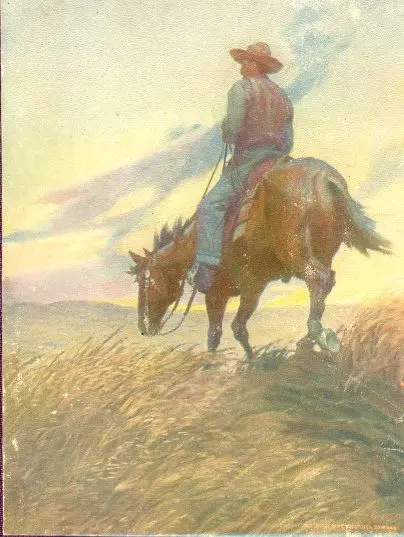
THE CLASSIC COLLECTION · 1907
"Winston of the Prairie" by Harold Bindloss is a novel likely written in the early 20th century. The story centers around Rancher Winston, a young English immigrant struggling to survive in the unforgiving Canadian prairie amidst harsh conditions and financial ruin after losing two consecutive harvests. As Winston grapples with the potential foreclosure of his homestead, he navigates the challenges of frontier life while reflecting on his past and the ambitions that brought him to the West. The opening of the narrative introduces us to a bitter night where Winston stands outside, dealing with the brutal cold and his precarious situation. After receiving discouraging letters regarding his financial struggles, he is faced with the harsh reality that he might lose his farm. Despite his pride and stubborn determination, Winston's situation grows increasingly desperate as he interacts with other settlers and reflects on his hardships. The chapter intricately sets the stage for Winston's journey, hinting at the internal and external conflicts he will face, including the potential for transforming encounters and decisions that may define his fate as he chooses to step into a new role entwined with the notorious character Lance Courthorne.
Introduction adapted from the source catalogue; source summaries may be automatically generated.
Free to read · English · 97,154 words · No account needed
MAKE TIME FOR A GOOD BOOK
On by default. Untick to stop anonymous reading totals. Each page counts after 10 seconds in view. How this works.
Anonymous counting is on unless you have switched it off.
"Yes," said Winston quietly. "There are two people here it is desirable for me to stand well with, and the first of them, your aunt, has, I fancy, already decided to give me a fair trial. She told me it was for my mother's sake. Now, I can deal with your uncle, I think."
The girl smiled a little. "Are you quite sure? Everybody does not find it easy to get on with Colonel Barrington. His code is somewhat Draconic, and he is rather determined in his ways."
Winston nodded. "He is a man, and I hope to convince him I have at least a right to toleration. That leaves only you. The rest don't count. They will come round by and by, you see."
The little forceful gesture, with which he concluded, pleased Maud Barrington. It was free from vanity, but conveyed an assurance that he knew his own value.
"No friendship that is lightly given is worth very much," she said. "I could decide better in another six months. Now it is perhaps fortunate that Colonel Barrington is waiting for us to make up his four at whist."
Winston allowed a faint gesture of dismay to escape him. "Must I play?"
"Yes," said the girl, smiling. "Whist is my uncle's hobby and he is enthusiastic over a clever game."
Winston groaned inwardly. "And I am a fool at whist."
"Then it was poker you played?" and again a faint trace of anger crept
into the girl's eyes.
Winston shook his head. "No," he said. "I had few opportunities of indulging in expensive luxuries."
"I think we had better take our places," said Maud Barrington, with
unveiled contempt.
Winston's forehead grew a trifle hot, and when he sat down Barrington glanced at him. "I should explain that we never allow stakes of any kind at Silverdale," he said. "Some of the lads sent out to me have been a trifle extravagant in the old country."
He dealt out the cards, but a trace of bewildered irritation crept into his eyes as the game proceeded, and once or twice he appeared to check an exclamation of astonishment, while at last he glanced reproachfully at Winston.
"My dear sir! Still, you have ridden a long way," he said, laying his
finger on a king.
Winston laughed to hide his dismay. "I am sorry, sir. It was scarcely fair to my partner. You would, however, have beaten us, any way."
Barrington gravely gathered up the cards. "We will," he said, "have some music. I do not play poker."
Then, for the first time, Winston lost his head in his anger. "Nor do
I, sir."
Your reading position is saved on this browser. Take it to another device with a library code. Reading pages adapt to text, rather than matching a printed edition.
Harold Bindloss
Harold Bindloss
Harold Bindloss
Harold Bindloss
BEHIND THE BOOK
This eBook is for the use of anyone anywhere in the United States and most other parts of the world at no cost and with almost no restrictions whatsoever. You may copy it, give it away or re-use it under the terms of the Project Gutenberg License included with this eBook or online at www.gutenberg.org. If you are not located in the United States, you will have to check the laws of the country where you are located before using this eBook. Read the source licence.
The original source file, including credits and licence, is retained by this library. Request an original-format copy at no charge. Please include the book title and Project Gutenberg identifier #14763.
KEEP YOUR CURIOSITY GOING
Coulson Kernahan

Maurice Baring
Frances Wright
Cécile Tormay

Frederic Jesup Stimson

W. H. P. (William Henry Pope) Jarvis