THE CLASSIC COLLECTION✦Sunshine and snowCLASSIC FREE BOOKS
Sunshine and snow
Harold Bindloss
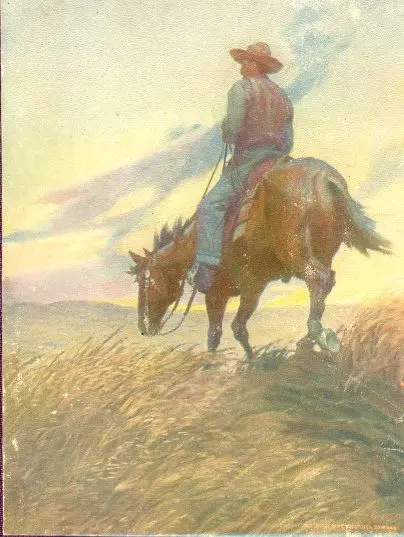
THE CLASSIC COLLECTION · 1907
"Winston of the Prairie" by Harold Bindloss is a novel likely written in the early 20th century. The story centers around Rancher Winston, a young English immigrant struggling to survive in the unforgiving Canadian prairie amidst harsh conditions and financial ruin after losing two consecutive harvests. As Winston grapples with the potential foreclosure of his homestead, he navigates the challenges of frontier life while reflecting on his past and the ambitions that brought him to the West. The opening of the narrative introduces us to a bitter night where Winston stands outside, dealing with the brutal cold and his precarious situation. After receiving discouraging letters regarding his financial struggles, he is faced with the harsh reality that he might lose his farm. Despite his pride and stubborn determination, Winston's situation grows increasingly desperate as he interacts with other settlers and reflects on his hardships. The chapter intricately sets the stage for Winston's journey, hinting at the internal and external conflicts he will face, including the potential for transforming encounters and decisions that may define his fate as he chooses to step into a new role entwined with the notorious character Lance Courthorne.
Introduction adapted from the source catalogue; source summaries may be automatically generated.
Free to read · English · 97,154 words · No account needed
MAKE TIME FOR A GOOD BOOK
On by default. Untick to stop anonymous reading totals. Each page counts after 10 seconds in view. How this works.
Anonymous counting is on unless you have switched it off.
"That," said Winston, "was yours ever since we spent the night in the
snow."
The girl felt his grip upon her shoulder grow almost painful, but her eyes shone softly when she lifted her head again.
"Then," she said, "what I can give is yours--and it seems you have
already taken possession."
Winston drew her towards him, and it may have been by Miss Barrington's arranging that nobody entered the hall, but at last the girl glanced up at the man half-shyly as she said, "Why did you wait so long?"
"It was well worth while," said Winston. "Still, I think you know."
"Yes," said Maud Barrington softly. "Now, at least, I can tell you I am glad you went away--but if you had asked me I would have gone with you."
It was some little time later when Miss Barrington came in and, after a glance at Winston, kissed her niece. Then she turned to the man. "My brother is asking for you," she said. "Will you come up with me?"
Winston followed her, and hid his astonishment when he found Colonel Barrington lying in a big chair. His face was haggard and pale, his form seemed to have grown limp and fragile, and the hand he held out trembled.
"Lance," he said, "I am very pleased to have you home again. I hear you have done wonders in the city, but you are, I think, the first of your family who could ever make money. I have, as you will see, not been well lately."
"I am relieved to find you better than I expected, sir," said Winston quietly. "Still, I fancy you are forgetting what I told you the night I went away."
Barrington nodded, and then made a little impatient gesture. "There was something unpleasant, but my memory seems to be going, and my sister has forgiven you. I know you did a good deal for us at Silverdale, and showed yourself a match for the best of them in the city. That pleases me. By and by, you will take hold here after me."
Winston glanced at Miss Barrington, who smiled somewhat sadly.
"I am glad you mentioned that, sir, because I purpose staying at Silverdale now," he said. "It leads up to what I have to ask you."
Barrington's perceptions seemed to grow clearer, and he asked a few pertinent questions before he nodded approbation.
"Yes," he said, "she is a good girl--a very good girl, and it would be a suitable match. I should like somebody to send for her."
Maud Barrington came in softly, with a little glow in her eyes and a flush on her face, and Barrington smiled at her.
Your reading position is saved on this browser. Take it to another device with a library code. Reading pages adapt to text, rather than matching a printed edition.
Harold Bindloss
Harold Bindloss
Harold Bindloss
Harold Bindloss
BEHIND THE BOOK
This eBook is for the use of anyone anywhere in the United States and most other parts of the world at no cost and with almost no restrictions whatsoever. You may copy it, give it away or re-use it under the terms of the Project Gutenberg License included with this eBook or online at www.gutenberg.org. If you are not located in the United States, you will have to check the laws of the country where you are located before using this eBook. Read the source licence.
The original source file, including credits and licence, is retained by this library. Request an original-format copy at no charge. Please include the book title and Project Gutenberg identifier #14763.
KEEP YOUR CURIOSITY GOING
Coulson Kernahan

Maurice Baring
Frances Wright
Cécile Tormay

Frederic Jesup Stimson

W. H. P. (William Henry Pope) Jarvis