THE CLASSIC COLLECTION✦Sunshine and snowCLASSIC FREE BOOKS
Sunshine and snow
Harold Bindloss
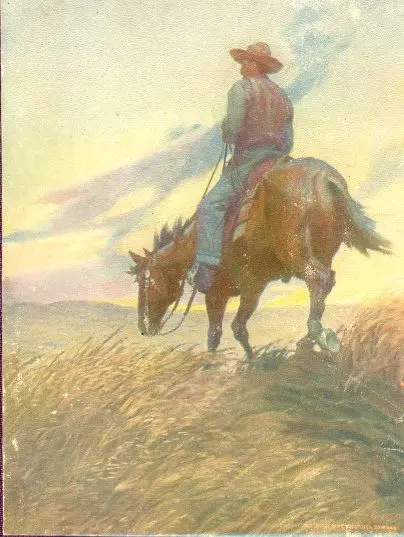
THE CLASSIC COLLECTION · 1907
"Winston of the Prairie" by Harold Bindloss is a novel likely written in the early 20th century. The story centers around Rancher Winston, a young English immigrant struggling to survive in the unforgiving Canadian prairie amidst harsh conditions and financial ruin after losing two consecutive harvests. As Winston grapples with the potential foreclosure of his homestead, he navigates the challenges of frontier life while reflecting on his past and the ambitions that brought him to the West. The opening of the narrative introduces us to a bitter night where Winston stands outside, dealing with the brutal cold and his precarious situation. After receiving discouraging letters regarding his financial struggles, he is faced with the harsh reality that he might lose his farm. Despite his pride and stubborn determination, Winston's situation grows increasingly desperate as he interacts with other settlers and reflects on his hardships. The chapter intricately sets the stage for Winston's journey, hinting at the internal and external conflicts he will face, including the potential for transforming encounters and decisions that may define his fate as he chooses to step into a new role entwined with the notorious character Lance Courthorne.
Introduction adapted from the source catalogue; source summaries may be automatically generated.
Free to read · English · 97,154 words · No account needed
MAKE TIME FOR A GOOD BOOK
On by default. Untick to stop anonymous reading totals. Each page counts after 10 seconds in view. How this works.
Anonymous counting is on unless you have switched it off.
Barrington returned Payne's greeting, and sat down with Dane close beside him, while, when the wounded man raised his head, the doctor spoke softly to the magistrate from the settlement a league or two away.
"I fancy he can talk to you, but you had better be quick if you wish to ask him anything," he said.
Courthorne seemed to have heard him, for he smiled a little as he glanced at Barrington. "I'm afraid it will hurt you to hear what I have to tell this gentleman," he said. "Now, I want you to listen carefully, and every word put down. Doctor, a little more brandy."
Barrington apparently would have spoken, but, while the doctor held a glass to the bloodless lips, the magistrate, who took up a strip of paper, signed to him.
"We'll have it in due form. Give him that book, doctor," he said. "Now repeat after me, and then we'll take your testimony."
It was done, and a flicker of irony showed in Courthorne's half-closed
eyes.
"You feel more sure of me after that?" he said, in a voice that was very faint and strained. "Still, you see, I could gain nothing by deviating from the truth now. Well, I shot Trooper Shannon. You'll have the date in the warrant. Don't know if it will seem strange to you, but I forget it. I borrowed farmer Winston's horse and rifle without his knowledge, though I had paid him a trifle to personate me and draw the troopers off the whisky-runners. That was Winston's only complicity. The troopers, who fancied they were chasing him, followed me until his horse which I was riding went through the ice, but Winston was in Montana at the time, and did not know that I was alive until a very little while ago. Now, you can straighten that up and read it out to me."
The magistrate's pen scratched noisily in the stillness of the room, but, before he had finished, Sergeant Stimson, hot and dusty, came in. Then he raised his hand, and for a while his voice rose and fell monotonously, until Courthorne nodded.
"That's all right," he said. "I'll sign."
The doctor raised him a trifle, and moistened his lips with brandy as he gave him the pen. It scratched for a moment or two, and then fell from his relaxing fingers, while the man who took the paper wrote across the foot of it, and then would have handed it to Colonel Barrington, but that Dane quietly laid his hand upon it.
"No," he said. "If you want another witness take me."
Barrington thanked him with a gesture, and Courthorne, looking round,
saw Stimson.
Your reading position is saved on this browser. Take it to another device with a library code. Reading pages adapt to text, rather than matching a printed edition.
Harold Bindloss
Harold Bindloss
Harold Bindloss
Harold Bindloss
BEHIND THE BOOK
This eBook is for the use of anyone anywhere in the United States and most other parts of the world at no cost and with almost no restrictions whatsoever. You may copy it, give it away or re-use it under the terms of the Project Gutenberg License included with this eBook or online at www.gutenberg.org. If you are not located in the United States, you will have to check the laws of the country where you are located before using this eBook. Read the source licence.
The original source file, including credits and licence, is retained by this library. Request an original-format copy at no charge. Please include the book title and Project Gutenberg identifier #14763.
KEEP YOUR CURIOSITY GOING
Coulson Kernahan

Maurice Baring
Frances Wright
Cécile Tormay

Frederic Jesup Stimson

W. H. P. (William Henry Pope) Jarvis