THE CLASSIC COLLECTION✦Sunshine and snowCLASSIC FREE BOOKS
Sunshine and snow
Harold Bindloss
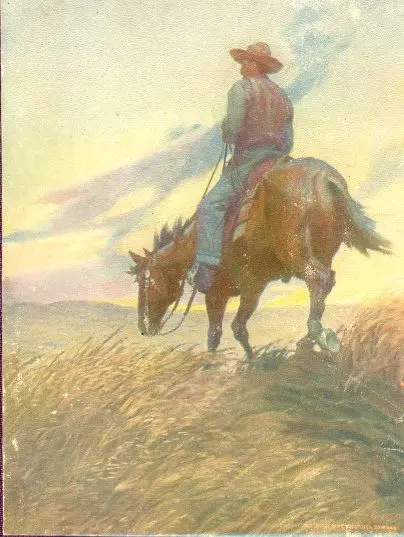
THE CLASSIC COLLECTION · 1907
"Winston of the Prairie" by Harold Bindloss is a novel likely written in the early 20th century. The story centers around Rancher Winston, a young English immigrant struggling to survive in the unforgiving Canadian prairie amidst harsh conditions and financial ruin after losing two consecutive harvests. As Winston grapples with the potential foreclosure of his homestead, he navigates the challenges of frontier life while reflecting on his past and the ambitions that brought him to the West. The opening of the narrative introduces us to a bitter night where Winston stands outside, dealing with the brutal cold and his precarious situation. After receiving discouraging letters regarding his financial struggles, he is faced with the harsh reality that he might lose his farm. Despite his pride and stubborn determination, Winston's situation grows increasingly desperate as he interacts with other settlers and reflects on his hardships. The chapter intricately sets the stage for Winston's journey, hinting at the internal and external conflicts he will face, including the potential for transforming encounters and decisions that may define his fate as he chooses to step into a new role entwined with the notorious character Lance Courthorne.
Introduction adapted from the source catalogue; source summaries may be automatically generated.
Free to read · English · 97,154 words · No account needed
MAKE TIME FOR A GOOD BOOK
On by default. Untick to stop anonymous reading totals. Each page counts after 10 seconds in view. How this works.
Anonymous counting is on unless you have switched it off.
"The Courthorne blood is responsible for a good deal more than discretion," said Miss Barrington, who went out quietly.
Her brother appeared a trifle perplexed. "Now, I fancied your aunt had taken him under her wing, and when I was about to suggest that, considering the connection between the families, we might ask him over to dinner occasionally, she goes away," he said.
The girl looked down a moment, for realizing that her uncle recognized the obligation he was under to the man he did not like, she remembered that she herself owed him considerably more, and he had asked for something in return. It was not altogether easy to grant, but she had tacitly pledged herself, and turning suddenly she laid a hand on Barrington's arm.
"Of course, but I want to talk of something else just now," she said. "You know I have very seldom asked you questions about my affairs, but I wish to take a little practical interest in them this year."
"Yes?" said Barrington, with a smile. "Well, I am at your service, my dear, and quite ready to account for my stewardship. You are no longer my ward, except by your own wishes."
"I am still your niece," said the girl, patting his arm. "Now, there is, of course, nobody who could manage the farming better than you do, but I would like to raise a large crop of wheat this season."
"It wouldn't pay," and the Colonel grew suddenly grave. "Very few men in the district are going to sow all their holding. Wheat is steadily going down."
"Then if nobody sows there will be very little, and shouldn't that put
up the prices?"
Barrington's eyes twinkled. "Who has been teaching you commercial economy? You are too pretty to understand such things, and the argument is fallacious, because the wheat is consumed in Europe; and even if we have not much to offer, they can get plenty from California, Chile, India, and Australia."
"Oh, yes--and Russia," said the girl. "Still, you see, the big mills in Winnipeg and Minneapolis depend upon the prairie. They couldn't very well bring wheat in from Australia."
Barrington was still smiling with his eyes, but his lips were set. "A little knowledge is dangerous, my dear, and if you could understand me better, I could show you where you were wrong. As it is, I can only tell you that I have decided to sell wheat forward and plow very little."
"But that was a policy you condemned with your usual vigor. You really
know you did."
Your reading position is saved on this browser. Take it to another device with a library code. Reading pages adapt to text, rather than matching a printed edition.
Harold Bindloss
Harold Bindloss
Harold Bindloss
Harold Bindloss
BEHIND THE BOOK
This eBook is for the use of anyone anywhere in the United States and most other parts of the world at no cost and with almost no restrictions whatsoever. You may copy it, give it away or re-use it under the terms of the Project Gutenberg License included with this eBook or online at www.gutenberg.org. If you are not located in the United States, you will have to check the laws of the country where you are located before using this eBook. Read the source licence.
The original source file, including credits and licence, is retained by this library. Request an original-format copy at no charge. Please include the book title and Project Gutenberg identifier #14763.
KEEP YOUR CURIOSITY GOING
Coulson Kernahan

Maurice Baring
Frances Wright
Cécile Tormay

Frederic Jesup Stimson

W. H. P. (William Henry Pope) Jarvis