
Dead letters
Maurice Baring
THE CLASSIC COLLECTION · 1890
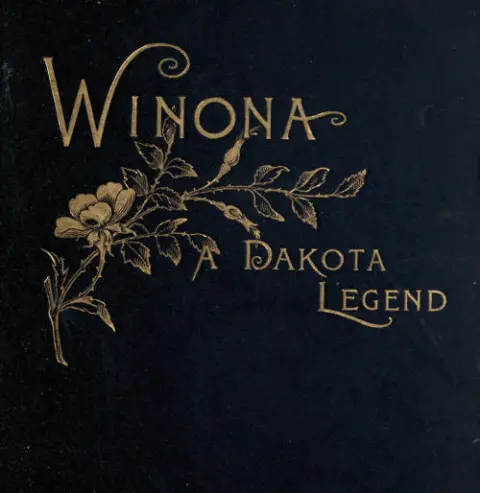
"Winona, a Dakota Legend; and Other Poems" by Captain E. L. Huggins is a collection of poems written in the late 19th century. This work intricately weaves together themes of Native American culture and personal reflection, with a particular focus on the titular character, Winona, a Dakota maiden whose story unfolds against the backdrop of a changing world. Through rich and lyrical verse, the author explores themes of love, loss, and the enduring spirit of indigenous culture in the face of encroaching modernity. The opening of the collection introduces readers to Winona and her idyllic life on the shores of Lake Minnetonka, emphasizing her strength and independence. It paints the vividly transformed landscape, contrasting the serene beauty of nature with the arrival of modern influences. As the narrative progresses, we learn about Winona's upbringing, her connection to her culture, and the intriguing dynamics between her and the figures of her society, such as her stern uncle and the enigmatic conjurer, Gray Cloud. The depth of her character is established through her relationships and the essential choices she must face, setting a dramatic tone for the unfolding legend that intertwines her fate with the spiritual beliefs of her people.
Introduction adapted from the source catalogue; source summaries may be automatically generated.
Free to read · English · 24,169 words · No account needed
MAKE TIME FOR A GOOD BOOK
On by default. Untick to stop anonymous reading totals. Each page counts after 10 seconds in view. How this works.
Anonymous counting is on unless you have switched it off.
The leaf and the bloom
And the fruit of the same,
Leaf, color, and bloom,
Sweet flower and perfume.
Oh, what hast thou done?
My sovereign supreme,
Oh, what hast thou done?
Beneath the fair sun.
An orphan bereft
Of mother and home,
An orphan bereft,
With my grief I am left.
Deserted, alone,
Through the cold world to roam,
Deserted, alone,
But heaven hears my moan.
One day you will muse,
Broken-hearted and old,
One day you will muse
On the love you refuse.
You will seek me one day
But you shall not behold;
You will call me one day,
I shall not obey.
You will come to my door
With penitent head,
A friend, as of yore,
You will knock at my door.
It will coldly be said,
She is gone, she is dead;
Her spirit has fled,
Will coldly be said.
Yes, art with grievous pangs is born
From Nature’s most endearing molds;
The child is torn,
Not wooed, from fierce rebellious folds.
Slay not thy art by false constraint,
Yet know her rules are stern as Fate;
Without complaint
The muse should wear a buskin strait.
Would’st have thy verse endure, thy muse
The common facile forms must shun,
The slipshod shoes
In which so many feet have run.
Sculptor, beware the plastic clay,
Changing at every whim’s command
From day to day,
And marred by every careless hand.
Strive with the marbles pure of Greece,
Wrested from Paros’ snowy mines,
Smite, and release
The deep-imprisoned god-like lines.
The chisel of Praxiteles
Such peerless beauty had not known,
If art in Greece
Had deigned to use a meaner stone.
Let the fierce molten metal fuse
Heroic forms and high contours
Of Syracuse;
Nought but the matchless bronze endures.
Upon the agate’s flinty face
Apollo’s features high and pure
In profile trace,
With touches delicate and sure.
Beware of water and pastel,
Deep on fantastic vase and urn
Thy colors frail
In seven-fold heated furnace burn.
Fashion the writhing, maddening limb
Of nymph and goddess; bring once more
The monsters grim,
Dear to the blazonry of yore.
The virgin mother saintly mild,
Crowned with her nimbus; on her breast
The wondrous child,
The globe beneath the cross of Christ.
Crowns fall and sceptres pass, robust
And radiant art outlives them all.
Torso and bust
Survive the city’s triple wall.
The medal by the ploughman found
Reveals the countenance austere,
The temples crowned,
That filled the antique world with fear.
Even the gods wax old and pass
From high Olympus; verse alone,
Stronger than brass,
Preserves to fallen Zeus his throne.
Your reading position is saved on this browser. Take it to another device with a library code. Reading pages adapt to text, rather than matching a printed edition.
BEHIND THE BOOK
This eBook is for the use of anyone anywhere in the United States and most other parts of the world at no cost and with almost no restrictions whatsoever. You may copy it, give it away or re-use it under the terms of the Project Gutenberg License included with this eBook or online at www.gutenberg.org. If you are not located in the United States, you will have to check the laws of the country where you are located before using this eBook. Read the source licence.
The original source file, including credits and licence, is retained by this library. Request an original-format copy at no charge. Please include the book title and Project Gutenberg identifier #55303.
KEEP YOUR CURIOSITY GOING
Maurice Baring
Francis Greenleaf Allinson & Anne C. E. (Anne Crosby Emery) Allinson

Eric Mackay
Edmund Gosse
Sophia Margaretta Hensley
Stuart Dodgson Collingwood