
Dead letters
Maurice Baring
THE CLASSIC COLLECTION · 1890
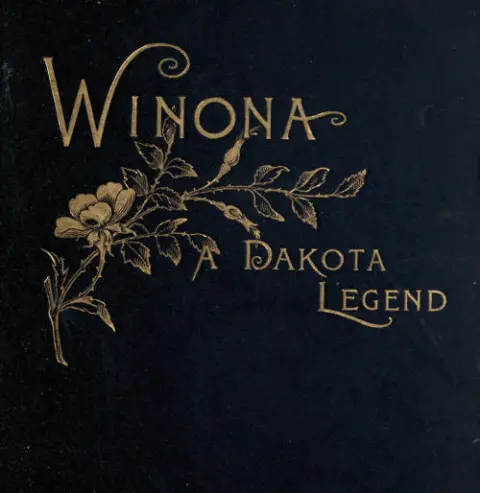
"Winona, a Dakota Legend; and Other Poems" by Captain E. L. Huggins is a collection of poems written in the late 19th century. This work intricately weaves together themes of Native American culture and personal reflection, with a particular focus on the titular character, Winona, a Dakota maiden whose story unfolds against the backdrop of a changing world. Through rich and lyrical verse, the author explores themes of love, loss, and the enduring spirit of indigenous culture in the face of encroaching modernity. The opening of the collection introduces readers to Winona and her idyllic life on the shores of Lake Minnetonka, emphasizing her strength and independence. It paints the vividly transformed landscape, contrasting the serene beauty of nature with the arrival of modern influences. As the narrative progresses, we learn about Winona's upbringing, her connection to her culture, and the intriguing dynamics between her and the figures of her society, such as her stern uncle and the enigmatic conjurer, Gray Cloud. The depth of her character is established through her relationships and the essential choices she must face, setting a dramatic tone for the unfolding legend that intertwines her fate with the spiritual beliefs of her people.
Introduction adapted from the source catalogue; source summaries may be automatically generated.
Free to read · English · 24,169 words · No account needed
MAKE TIME FOR A GOOD BOOK
On by default. Untick to stop anonymous reading totals. Each page counts after 10 seconds in view. How this works.
Anonymous counting is on unless you have switched it off.
So died Winona, and let all beware,
For vengeance follows fast and will not spare,
Nor maid, nor warrior that dares offend
Who hath the cruel Thunder-Bird for friend.
[1] Thunder-Bird, a supernatural winged creature which causes thunder and lightning by the flapping of its wings and the winking of its eyes.
[2] The name given by the Dakotas to the first-born, if a female.
[3] Tipi, skin tent.
[4] An edible root found on the prairies.
[5] The Crow Indians, hereditary foes of the Dakotas, call themselves Absaraka, which means crow in their language.
[6] Each Indian guest at a banquet carries with him his own wooden bowl
and horn spoon.
[7] Many Indians believe in the transmigration of souls, and some of them profess to remember previous states of existence.
[8] A renowned chief formerly living on Lake Pepin.
[9] A supernatural monster inhabiting the larger rivers and lakes, and hereditary foe of the Thunder-Bird.
[10] The falls of St. Anthony.
[11] The name given to the first-born, if a male. Upon becoming a warrior or performing some notable feat, the youth is permitted to select another name.
[12] Hereditary foe of the Dakotas.
[13] The Dakotas formerly disposed of their dead by fastening them to the branches of trees, or to rude platforms. This is still practised to some extent.
[14] The Indians paint and adorn a body before sepulture.
Caress thy pleasures with a reverent touch, Too soon at best their early fragrance flees. Seek not to know, to see, or taste too much: The sweetest, deepest cup hath still its lees; The blushing grape is not too rudely pressed, When gushes forth its richest and its best.
Bird, bubble, butterfly on light wing straying, With changing tints of crimson, blue, and gold, Upon warm waves of summer sunlight swaying, When thy frail, flaming wing the boy shall hold, Alas, how soon its fragile charms expire! E’en so when strong men seize their soul’s desire.
Rend not with ruthless hand the lily’s bell, To gather all its sweetness at a breath; Spill not the pearl deep in its bosom’s cell, The crystal gift Aurora’s tears bequeath. So shall a delicate perfume be thine, Through all the weary hours of day’s decline.
The gentlest spirits of the earth and air— Sweet mysteries to ruder men unknown— Will yield delights as delicate as rare, The secret bowers of Love shall be thy own, The one great bliss, so long thy hope’s despair, Will press with eager feet to find thee there.
In the warm twilight where I mused, there came
A bird of unknown race with breast of flame.
Your reading position is saved on this browser. Take it to another device with a library code. Reading pages adapt to text, rather than matching a printed edition.
BEHIND THE BOOK
This eBook is for the use of anyone anywhere in the United States and most other parts of the world at no cost and with almost no restrictions whatsoever. You may copy it, give it away or re-use it under the terms of the Project Gutenberg License included with this eBook or online at www.gutenberg.org. If you are not located in the United States, you will have to check the laws of the country where you are located before using this eBook. Read the source licence.
The original source file, including credits and licence, is retained by this library. Request an original-format copy at no charge. Please include the book title and Project Gutenberg identifier #55303.
KEEP YOUR CURIOSITY GOING
Maurice Baring
Francis Greenleaf Allinson & Anne C. E. (Anne Crosby Emery) Allinson

Eric Mackay
Edmund Gosse
Sophia Margaretta Hensley
Stuart Dodgson Collingwood