Three girls and especially one
Marion Ames Taggart
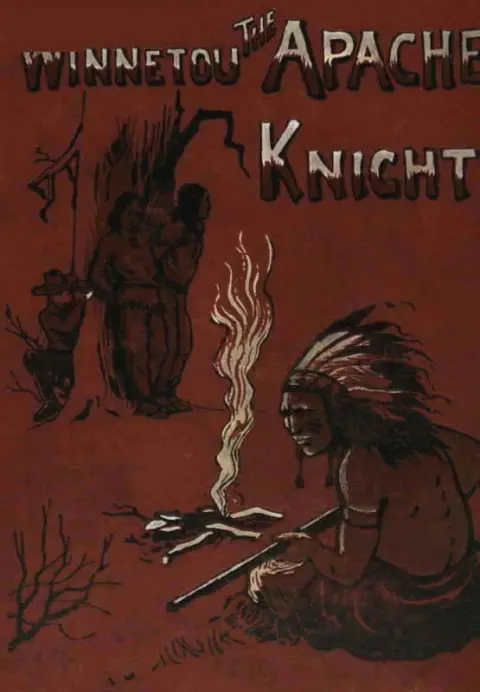
THE CLASSIC COLLECTION · 1898
"Winnetou, the Apache Knight" by Marion Ames Taggart and Karl May is a novel written in the late 19th century. The story revolves around Jack Hildreth, a young engineer who embarks on an adventure in the American West and becomes intertwined with the Apache people, particularly the renowned chief Winnetou. It explores themes of friendship, bravery, and cultural conflict while highlighting the struggles faced by Native Americans during this period of expansion and colonization. The opening of the novel introduces us to Jack Hildreth, a spirited young man eager for adventure, as he sets out to the wild West after being inspired by his uncle. He encounters Sam Hawkins, a seasoned scout who becomes his mentor and protector. The narrative quickly establishes Jack's desire to learn the ways of the West, and we witness his experiences with the vibrant landscapes and the dangers of the frontier. As Jack faces challenges, including encounters with hostile individuals, he begins to forge a bond with the Apache tribe, setting the stage for the deeper interactions and conflicts between cultures that will unfold throughout the story. The first chapters successfully draw readers into the adventurous yet tumultuous world of 19th-century America, laying the groundwork for Jack's growth and the friendships he forms along the way.
Introduction adapted from the source catalogue; source summaries may be automatically generated.
Free to read · English · 57,516 words · No account needed
MAKE TIME FOR A GOOD BOOK
On by default. Untick to stop anonymous reading totals. Each page counts after 10 seconds in view. How this works.
Anonymous counting is on unless you have switched it off.
I felt that I must punish this Indian, not merely for justice’ sake and the effect on the Apaches, but for the benefit of those white men whom he might meet in the future.
“My brother Old Shatterhand is right,” said Winnetou. “If you do not keep your promise you will be a coward, and should be expelled from your tribe. Such things must not happen here, for no man shall reproach the Apaches with having a coward for a guest. What does the Kiowa chief intend to do?”
“I will consider it.”
“For a brave warrior there is nothing to consider. Fight or be called a
coward.”
Tangua drew himself up, saying haughtily: “Tangua a coward! I will bury my knife in the heart of him who says it.”
“I say it—I,” said Winnetou coolly, “if you do not keep your word to Old
Shatterhand.”
“I will keep it.”
“Then are you ready?”
“This moment; I long to taste his blood.”
“Good! Old Shatterhand will decide the weapons, for you insulted him.”
“No; I am a chief, and am greater than he.”
“Let him choose,” I interrupted. “It makes no difference to me what they
are.”
“It shall be guns, two hundred paces apart, and I will shoot first.”
Winnetou shook his head. “Tangua would have all the advantages for himself,” he said. “Old Shatterhand must shoot first.”
“No,” I said. “He shall have his way. Let him shoot once, and I once,
and no more.”
“No,” said Tangua, “we will shoot till one falls.”
“Certainly; for after my first shot you will be down.”
“Boaster!”
“You will see. I could kill you, but I will not. The most severe punishment for you would be to lame you; I will break your right knee. Remember.”
“Do you hear that?” he laughed. “This pale-face, whom his own friends call a greenhorn, announces beforehand where his shot shall go at two hundred paces! Braves, let us laugh at him.”
He looked around invitingly, but no one laughed, and he said: “You are afraid of him, but I will show you how I mock him. Come, let us measure the paces.”
While this was being done I got my gun, examined it, and found it in good condition. Both barrels were loaded, but to be sure of them I discharged and reloaded them. Sam came up, and said: “I have a hundred questions to ask you, and can’t get a chance. However, there’s one thing I must ask you, and that is if you’re really going to shoot this fellow in the knee?”
“Yes.”
“Only there?”
“That is punishment enough.”
Your reading position is saved on this browser. Take it to another device with a library code. Reading pages adapt to text, rather than matching a printed edition.
Marion Ames Taggart
Marion Ames Taggart
Marion Ames Taggart
Marion Ames Taggart
BEHIND THE BOOK
This eBook is for the use of anyone anywhere in the United States and most other parts of the world at no cost and with almost no restrictions whatsoever. You may copy it, give it away or re-use it under the terms of the Project Gutenberg License included with this eBook or online at www.gutenberg.org. If you are not located in the United States, you will have to check the laws of the country where you are located before using this eBook. Read the source licence.
The original source file, including credits and licence, is retained by this library. Request an original-format copy at no charge. Please include the book title and Project Gutenberg identifier #56823.
KEEP YOUR CURIOSITY GOING
Wilfrid Scawen Blunt
Wilfrid Scawen Blunt

E. W. (Edgar Watson) Howe
Coulson Kernahan

Maurice Baring
Frances Wright