THE CLASSIC COLLECTION✦The golden fleeceCLASSIC FREE BOOKS
The golden fleece
A. L. O. E.
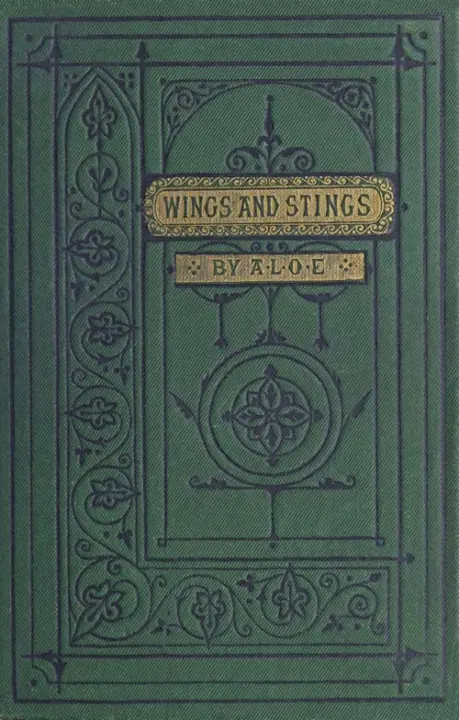
THE CLASSIC COLLECTION · 1872
"Wings and Stings: A Tale for the Young" by A. L. O. E. is a children's story written in the late 19th century. It presents a tale filled with anthropomorphic bees and human characters to explore themes of duty, kindness, and the value of hard work. The narrative likely revolves around young characters such as Polly Bright and Minnie Wingfield, and it illustrates various lessons about responsibility and compassion through their interactions with both their environments and the bee community. The opening of the book introduces us to the schoolroom where two young girls, Polly and Minnie, are caught up in their daily tasks. Polly expresses her frustration about work and responsibilities, while Minnie emphasizes the joy that comes from both work and play. As Minnie keeps her spirits up amid the noise and demands of education, Polly's discontent leads her to watch the bees outside, which sets off a whimsical exploration into the bee's world. The narrative quickly draws a parallel between the industriousness of the bees and the need for responsibility among children, laying the groundwork for the unfolding story where lessons about kindness, duty, and the consequences of their actions will be realized.
Introduction adapted from the source catalogue; source summaries may be automatically generated.
Free to read · English · 21,043 words · No account needed
MAKE TIME FOR A GOOD BOOK
On by default. Untick to stop anonymous reading totals. Each page counts after 10 seconds in view. How this works.
Anonymous counting is on unless you have switched it off.
“Working in wax!” half contemptuously replied Violetta; “a soft thing which you can bend and twist any way, and knead into any shape that you choose. Come and look at my home here, and then ask yourself if you have any reason to complain of your work.”
Honeyball looked forward with her two honey-combed eyes, and upwards and backwards with her three others, but not the shadow of a hive could she perceive anywhere. “May I venture to ask where you live?” said she at last.
“This way,” cried Violetta, waving her feeler, and pointing to a little round hole in the post, which Honeyball had not noticed before. It looked gloomy, and dark, and strange to the bee; but Violetta, who took some pride in her mansion, requested Honeyball to step in.
“You cannot doubt my honour,” said she, observing that the hive-worker hesitated, “or be suspicious of a cousin?”
Honeyball assured her that she had never dreamed of such a thing, and entered the hole in the post.
For about an inch the way sloped gently downwards, then suddenly became straight as a well, so dark and so deep, that Honeyball would have never attempted to reach the bottom, had she not feared to offend her new acquaintance. She had some hopes that this perpendicular passage might only be a long entrance leading to some cheerful hive; but after having explored to the very end, and having found nothing but wood to reward her search, she crept again up the steep narrow way, and with joy found herself once more in the sunshine.
“What do you think of it?” said Violetta, rather proudly.
“I--I do not think that your hive would hold many bees. Is it perfectly finished, may I inquire?”
“No; I have yet to divide it into chambers for my children, each chamber filled with a mixture of pollen and honey, and divided from the next by a ceiling of sawdust. But the boring was finished to-day.”
“You do not mean to say,” exclaimed Honeyball in surprise, “that that long gallery was ever bored by bees!”
“Not by bees,” replied Violetta, with a dignified bow, “but by one bee. I bored it all myself.”
The indolent Honeyball could not conceal her amazement. “Is it possible that you sawed it all out with your teeth?”
“Every inch of the depth,” Violetta replied.
“And that you can gather honey and pollen enough to fill it?”
“I must provide for my children, or they would starve.”
“And you can make ceilings of such a thing as sawdust to divide your
home into cells?”
“This is perhaps the hardest part of my task, but nevertheless this
must be done.”
Your reading position is saved on this browser. Take it to another device with a library code. Reading pages adapt to text, rather than matching a printed edition.
A. L. O. E.
A. L. O. E.
A. L. O. E.
A. L. O. E.
BEHIND THE BOOK
This eBook is for the use of anyone anywhere in the United States and most other parts of the world at no cost and with almost no restrictions whatsoever. You may copy it, give it away or re-use it under the terms of the Project Gutenberg License included with this eBook or online at www.gutenberg.org. If you are not located in the United States, you will have to check the laws of the country where you are located before using this eBook. Read the source licence.
The original source file, including credits and licence, is retained by this library. Request an original-format copy at no charge. Please include the book title and Project Gutenberg identifier #60065.
KEEP YOUR CURIOSITY GOING
Coulson Kernahan

Maurice Baring
Frances Wright
Cécile Tormay

Frederic Jesup Stimson

W. H. P. (William Henry Pope) Jarvis