THE CLASSIC COLLECTION✦The golden fleeceCLASSIC FREE BOOKS
The golden fleece
A. L. O. E.
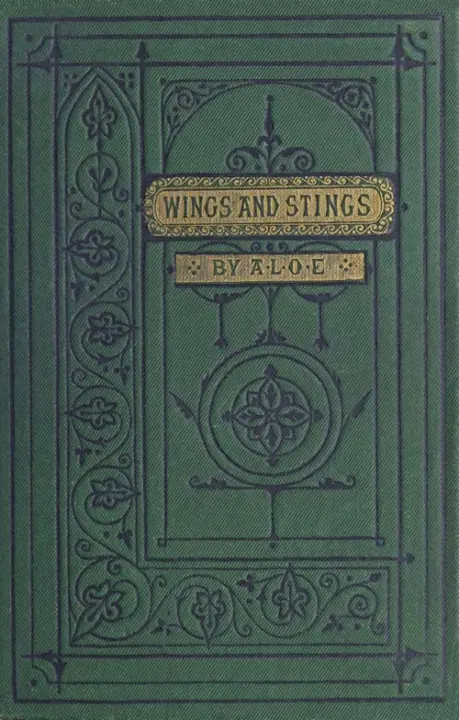
THE CLASSIC COLLECTION · 1872
"Wings and Stings: A Tale for the Young" by A. L. O. E. is a children's story written in the late 19th century. It presents a tale filled with anthropomorphic bees and human characters to explore themes of duty, kindness, and the value of hard work. The narrative likely revolves around young characters such as Polly Bright and Minnie Wingfield, and it illustrates various lessons about responsibility and compassion through their interactions with both their environments and the bee community. The opening of the book introduces us to the schoolroom where two young girls, Polly and Minnie, are caught up in their daily tasks. Polly expresses her frustration about work and responsibilities, while Minnie emphasizes the joy that comes from both work and play. As Minnie keeps her spirits up amid the noise and demands of education, Polly's discontent leads her to watch the bees outside, which sets off a whimsical exploration into the bee's world. The narrative quickly draws a parallel between the industriousness of the bees and the need for responsibility among children, laying the groundwork for the unfolding story where lessons about kindness, duty, and the consequences of their actions will be realized.
Introduction adapted from the source catalogue; source summaries may be automatically generated.
Free to read · English · 21,043 words · No account needed
MAKE TIME FOR A GOOD BOOK
On by default. Untick to stop anonymous reading totals. Each page counts after 10 seconds in view. How this works.
Anonymous counting is on unless you have switched it off.
“You carried off her dinner--she would not thank you for that.”
“Perhaps I did foolishly,” said Minnie with a smile; “but I cannot see a creature suffering and not try to help it.”
“I wish that you saw the green-grocer’s horse with his bones all starting through his skin, and the marks of the blows on his head. What would you say to the master of that horse?”
“Oh, I wish that he would remember that one verse from the Bible, ‘Blessed are the merciful, for they shall obtain mercy.’ Without mercy, what would become of the best--without mercy, we all should be ruined for ever. And if only the merciful can obtain mercy, oh! what will become of the cruel?”
“Pshaw!” cried Tom, not able to dispute the truth of Minnie’s words, but not choosing to listen to them, for he had too many recollections of bird-nesting, cockchafer-spinning, and worrying of cats, to make the subject agreeable. Some find it easier to silence an opponent with a “pshaw!” than by reason or strength of argument; and this was Tom’s usual way. He did not wish to continue the conversation, and, perhaps with a view to change its subject, said in a sudden, abrupt tone, as he stirred his porridge with his pewter spoon--
“You’ve not put a morsel of sugar in my bowl.”
“Yes, indeed, I put some,” replied Minnie.
“But you know that I like plenty; I have told you so a thousand times.”
“But, dear Tom, I have not plenty to give you--we have nearly come to the end of our little store. And you know,” continued she, lowering her voice, “that we cannot buy more until we are paid for these shirts.”
The little girl did not add that for the last three days she had not
tasted any sugar herself.
“Nonsense!” cried Tom, starting up from his seat, and hastily entering the cottage. He took down from the shelf a large broken cup, which was used to contain the store of sugar. Mrs. Wingfield was lying asleep in the back-room, being laid up with a worse headache than usual.
Fearing lest her mother should be roused from her sleep, Minnie followed her brother, her finger on her lip, a look of anxious warning on her face. But both look and gesture were lost upon Tom, who was thinking of nothing but himself.
“Here’s plenty for to-day,” he said in a careless tone, emptying half the supply into his bowl.
“But, Tom--our poor mother--she is ill, you know--”
“Well, I’ve not taken it all.”
“But we cannot afford--”
“Don’t torment me!” cried Tom angrily, helping himself to more.
Your reading position is saved on this browser. Take it to another device with a library code. Reading pages adapt to text, rather than matching a printed edition.
A. L. O. E.
A. L. O. E.
A. L. O. E.
A. L. O. E.
BEHIND THE BOOK
This eBook is for the use of anyone anywhere in the United States and most other parts of the world at no cost and with almost no restrictions whatsoever. You may copy it, give it away or re-use it under the terms of the Project Gutenberg License included with this eBook or online at www.gutenberg.org. If you are not located in the United States, you will have to check the laws of the country where you are located before using this eBook. Read the source licence.
The original source file, including credits and licence, is retained by this library. Request an original-format copy at no charge. Please include the book title and Project Gutenberg identifier #60065.
KEEP YOUR CURIOSITY GOING
Coulson Kernahan

Maurice Baring
Frances Wright
Cécile Tormay

Frederic Jesup Stimson

W. H. P. (William Henry Pope) Jarvis