
Mendel: A Story of Youth
Gilbert Cannan
THE CLASSIC COLLECTION · 1920
"Windmills: A Book of Fables" by Gilbert Cannan is a collection of satirical fiction written in the early 20th century. This work unfolds through a series of fables, examining themes of war, society, and love, likely influenced by the historical context of World War I. The narrative begins with the story of George Samways, a man living on an isolated island who, after a series of encounters with visitors—a bishop and a woman named Arabella—finds himself embroiled in a grander tale of love and war that transcends his solitary existence. The opening of the book introduces George Samways, who experiences unease about the state of his island and ventures to observe a higher peak, discovering a desolate, churning sea surrounding his territory. As he grapples with existential realizations, he meets a Bishop who provides him with biblical teachings alongside Arabella, a woman of enchanting beauty. The interplay between these characters sets the stage for an exploration of complex human relationships against the backdrop of impending societal changes and upheaval. Through George's perspective, the reader is invited to reflect on deep philosophical questions regarding love, identity, and the futility of war, setting a tone that balances levity with poignant commentary.
Introduction adapted from the source catalogue; source summaries may be automatically generated.
Free to read · English · 39,983 words · No account needed
MAKE TIME FOR A GOOD BOOK
On by default. Untick to stop anonymous reading totals. Each page counts after 10 seconds in view. How this works.
Anonymous counting is on unless you have switched it off.
“Funny fellow you are. Eyes just like a baby.”
“Where is Arabella?” asked George. “Where am I?”
“Give you three guesses,” said the man.
“On a ship?”
“Right.”
“The Emperor-King’s ship?”
“No. The King-Emperor’s. You have the honour to be the first prisoner in the great Fattero-Fattish war.”
“War? What is that?”
“War? You don’t know what war is? Have you never read a newspaper?”
“I have only read Tittiker. It tells about a War Office, but I never knew what it was for.”
“My name’s Siebenhaar, engineer and philosophical student, and I fancy you are the man I have been looking for all my life. You should be capable of a pure idea....”
“What,” asked George, “is an idea?”
Siebenhaar flung his arms around him and embraced him and recited a long poem in his own language.
“You shall be presented at the Universities!” he said. “You shall be a living reproach to all writers, thinkers, artists, and I, Siebenhaar, will be your humble attendant.”
“Did I say anything unusual?”
“Unusual? Unique! Colossal! The ultimate question! ‘What is war? What
is an idea?’ Ach?”
George insisted on an explanation of the meaning of war, and then he asked why the Fattish and the Fatters should be intent upon mutual destruction, and also what the difference between them might be.
“Difference?” said Siebenhaar. “The Fattish drink beer that you can hold; the Fatters drink beer that runs through you. That is all there is to it.”
With that he sent for some Fatter beer and drank a large quantity himself and made George taste it. He spat it out.
“Is that why they are making war?”
Siebenhaar smacked his lips.
“Man,” he said, “is the creature of his internal organs, almost, I might say, their slave. The lungs, the heart, the kidneys, the stomach, the bladder, these control a man, and every day refashion him. If they do their work well, so does he. If they do it ill, then so does he. Each of the organs has secretions which periodically choke their interaction, and bring about a state of ill-humour and discomfort in which the difference between man and man is accentuated, and their good relations degenerate into hatred and envy and distrust. At such times murders are committed and horrible assaults, but frequently discretion prevails over those desires, suppresses them but does not destroy them. They accumulate and find expression in war, which has been led up to by a series of actions on the part of men suffering from some internal congestion. Modern war, they say, is made by money, and the lust for it. That is no explanation. No man becomes a victim of the lust for money except something interferes with his more natural lusts: no man, I go so far as to say, could so desire money as to become a millionaire except he were const----”
Your reading position is saved on this browser. Take it to another device with a library code. Reading pages adapt to text, rather than matching a printed edition.
Gilbert Cannan
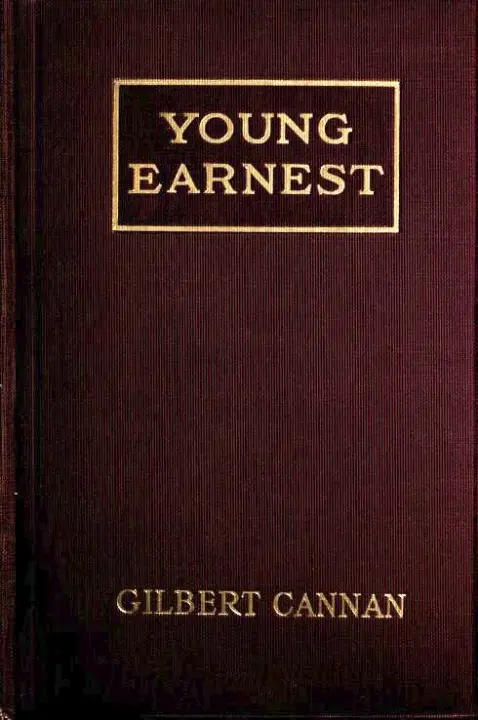
Gilbert Cannan

Gilbert Cannan
Gilbert Cannan
BEHIND THE BOOK
This eBook is for the use of anyone anywhere in the United States and most other parts of the world at no cost and with almost no restrictions whatsoever. You may copy it, give it away or re-use it under the terms of the Project Gutenberg License included with this eBook or online at www.gutenberg.org. If you are not located in the United States, you will have to check the laws of the country where you are located before using this eBook. Read the source licence.
The original source file, including credits and licence, is retained by this library. Request an original-format copy at no charge. Please include the book title and Project Gutenberg identifier #68479.
KEEP YOUR CURIOSITY GOING

Charles G. (Charles Griffith) Ross
Hannah Webster Foster

Emily Lawless
Edwin Hamlin Carr

Charles De Lano Hine
Andrew Ure