THE CLASSIC COLLECTION✦The claims of decorative artCLASSIC FREE BOOKS
The claims of decorative art
Walter Crane

THE CLASSIC COLLECTION · 1911
"William Morris to Whistler" by Walter Crane is a critical collection of essays and addresses concerning art and its societal implications, written in the early 20th century. The work encompasses reflections on prominent figures in the art world, particularly focusing on the influential artist William Morris and his impact on decorative art and socialism. The author aims to delve into the specific styles, philosophies, and societal influences that shaped the trajectory of art during this transformative era. The opening of the work introduces William Morris as a multifaceted artist whose personality and ideals significantly influenced both the arts and socio-political thought of his time. Crane recounts his own encounters with Morris and offers insights into his character—highlighting his poetic nature, craftsmanship, and commitment to socialism. Through a combination of personal reminiscences and scholarly analysis, Crane provides a foundation for understanding Morris's lasting legacy in both art and society, setting the stage for discussions on the English revival of decorative art and the broader context of artistic expression in relation to economic and social issues.
Introduction adapted from the source catalogue; source summaries may be automatically generated.
Free to read · English · 49,428 words · No account needed
MAKE TIME FOR A GOOD BOOK
On by default. Untick to stop anonymous reading totals. Each page counts after 10 seconds in view. How this works.
Anonymous counting is on unless you have switched it off.
One can only feel sorry that so genuine an artist was so consumed by his own opinion of himself, and wasted so much time and energy in litigation, and that he could stoop to be professor of "the gentle art of making enemies" or glory in the distinction of being a past-master in the craft of losing friends. Still, he fought the Philistines.
Mr. and Mrs. Pennell's book is admirably done and well illustrated, and it appears moreover in a form--clad in an arrangement of brown, yellow, and gold--such as might have been approved by its fastidious subject.
The book is peppered with Whistler's smart repartees and sayings;
of the latter the following dictum strikes me as remarkably true and
sound:
"Poverty may induce industry, but it does not produce the fine flower of painting. The test is not poverty, it's money. Give a painter money and see what he will do: if he does not paint his work is well lost to the world."
[Footnote 11: "The Life of J. McNeill Whistler," by E. R.
and J. Pennell, in two volumes, illustrated. London: William
Heinemann, 1908.]
(Note: The Page number is the link to the reference. 123^x indicates that the reference is only in the Footnote; 123,^x indicates that the reference is also in the Footnote).
Ancient Buildings, Society for the Protection of, 42, 43, 217.
Animals, treatment of, in art, 185-204.
Architecture, modern domestic, 48;
arts allied to, 125-146;
of the nineteenth century, 225-227.
Art education, 56, 57, 107-110, 114, 115, 242-245, 250.
Art, study and practice of, 105-122;
of the nineteenth century, 223-237.
"Art Nouveau, L'," 232.
Arts and Crafts Exhibition Society, the, 28, 67, 68, 70, 71, 95,
96, 230, 248, 249.
Art Workers' Guild, the, 59, 60, 70, 93.
Assyrian art, animals in, 187, 188, 190.
Athens, architecture of, 126.
Ball, John, 41.
Bates, Harry, 61, 228.
Bell, R. Anning, 134.
Bellamy, Edward, his "Looking Backward," 10, 11, 214.
Benson, Frank, 236.
Binyon, Laurence, 65.
Birmingham, St. Philip's, 29.
Blake, William, 228.
Bokhara, embroidery from, 154, 155.
Brangwyn, Frank, 92.
Brown, Ford Madox, 17, 28, 92, 230, 253.
Brown, Prof. Frederick, 92.
Bullen, Wentworth, 25.
Burges, William, 50, 51, 227.
Burne-Jones, Sir Edward, 15, 25, 26, 28, 36, 37, 61, 230.
Burne-Jones, Lady, 29.
Butterfield, William, 227.
Cambridge, Jesus College, 28.
Canova, Antonio, 227.
Carlisle, Earl of, 15.
Carlyle, Thomas, 21, 40, 213.
Cennini, Cennino, his "Trattato," 164-176.
Century Guild, the, 67.
Chinese art, 63, 65, 231.
City and Guilds of London Institute, the, 67.
Clausen, George, 69, 92.
Clay, modelling in, 145.
Cleveland, Ohio, mosaic floor for bank at, 132.
Cobden-Sanderson, T. J., 28^2, 34.
Coire, gesso work at, 164.
Courbet, Gustave, 264, 265.
Cowper, F. Cadogan, 78^4.
Crane, Walter, his designs for "The Glittering Plain," 36; associated with the proposal for a National Exhibition of the Arts, 69; President of the Arts and Crafts Exhibition Society, 95; design in mosaic for a bank at Cleveland, 132.
Cretan embroideries, 152, 153.
Darius, frieze from palace of, 139.
Day, Lewis F., 59.
Dearle, H., 25.
Drawing, study of, 242-245.
Dress, modern, 212-214.
Dressler, Conrad, 139.
"Earthly Paradise, The," 7, 8, 16;
projected illustrated edition, 37.
Eastlake, C. L., his "Hints on Household Taste," 53.
Edinburgh, Art Congress at (1889), 29, 74.
Your reading position is saved on this browser. Take it to another device with a library code. Reading pages adapt to text, rather than matching a printed edition.
Walter Crane
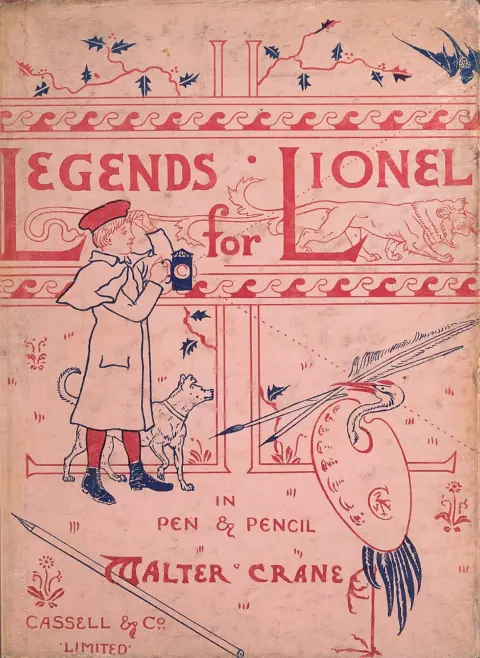
Walter Crane
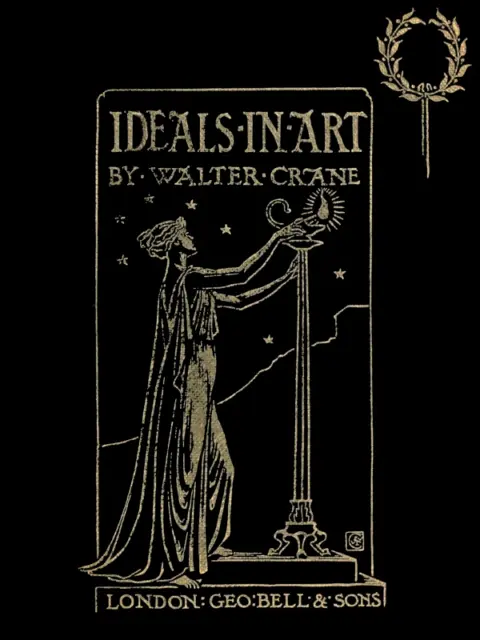
Walter Crane
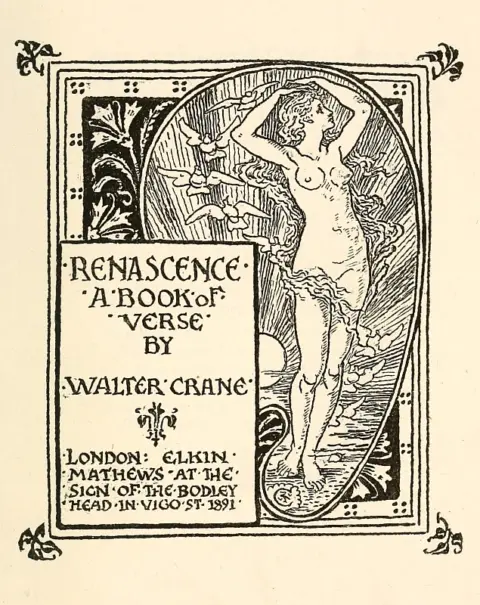
Walter Crane
BEHIND THE BOOK
This eBook is for the use of anyone anywhere in the United States and most other parts of the world at no cost and with almost no restrictions whatsoever. You may copy it, give it away or re-use it under the terms of the Project Gutenberg License included with this eBook or online at www.gutenberg.org. If you are not located in the United States, you will have to check the laws of the country where you are located before using this eBook. Read the source licence.
The original source file, including credits and licence, is retained by this library. Request an original-format copy at no charge. Please include the book title and Project Gutenberg identifier #53954.
KEEP YOUR CURIOSITY GOING

David Patterson (Spirit) Hatch

David Patterson (Spirit) Hatch

David Patterson (Spirit) Hatch

Ralph Waldo Emerson

Maurice Baring

Oscar Wilde & James McNeill Whistler