Dramatis Personæ
Arthur Symons
THE CLASSIC COLLECTION · 1907
"WILLIAM BLAKE" by Arthur Symons is a biographical study written in the early 20th century. This work examines the life, artistic achievements, and philosophical ideas of the renowned poet and artist William Blake, providing a comprehensive account drawn from various contemporary sources. It delves into Blake's profound impact on literature and art, discussing his unique vision that challenges conventional morality and societal norms, while also capturing his creative process. The opening of the biography introduces the author’s inspiration to write it, stemming from his longtime admiration for Blake's poetry and the desire to explore the deeper meanings behind his works. Symons outlines his goal to present not only his own interpretations of Blake’s life and contributions but also to provide verbatim accounts from historical documents and contemporary records. The beginning emphasizes Blake’s role as a visionary artist whose thoughts on morality, the imagination, and the spiritual world resonate with both past and modern ideals, particularly drawing connections to Nietzsche's philosophies and Blake's concept of the imagination being the gateway to a higher reality.
Introduction adapted from the source catalogue; source summaries may be automatically generated.
Free to read · English · 89,194 words · No account needed
MAKE TIME FOR A GOOD BOOK
On by default. Untick to stop anonymous reading totals. Each page counts after 10 seconds in view. How this works.
Anonymous counting is on unless you have switched it off.
Five of Blake's poems, 'To the Muse?, Piping down the valleys wild, Holy Thursday, The Tyger, The Garden of Love,' together with ten lines from the Prophetic Books, are quoted, with German versions in the metres of the original by Dr. Julius, the translator of the article. On p. 101 there is an article, 'Von der neuesten englischen Poesie,' containing notices of 'Poems by W. Cowper' (1803), 'Works of R. Burns,'and 'Southey's Poems' (1801) and 'Metrical Tales' (1803).]
[Footnote 2: 'Like' is first written, and replaced by 'live.']
[Footnote 3: 'Took' crossed out.]
[Footnote 4: 'With an air of feebleness' crossed out.]
[Footnote 5: After 'indifference and' 'the entire absence of anything like blame ['reproach' crossed out], and I do not think that I ever heard him blame anything, then or afterwards crossed out.]
[Footnote 6: 'Pretty much' crossed out.]
[Footnote 7: 'Comparing these fragmentary memoranda' crossed out.]
[Footnote 8: Crossed out:
'Yet this did not appear to affect the truth of his Visions. I could not reconcile this with his blaming Wordsworth for being a Platonist--not a Christian. He asked whether Wordsworth acknowledged the Scriptures as Divine, and declared on my answering in the affirmative that the Introduction to the Excursion had troubled him so as to bring on a fit of illness. The passage that offended Blake was:
'Jehovah with his thunder and the choir
Of shouting Angels and the empyreal throne,
I pass them unalarmed.
"Does Mr. Wordsworth," said Blake, "think his mind can surpass Jehovah's." I tried in vain to rescue Wordsworth from the imputation of being a Pagan or perhaps an Atheist, but this did not rob him of the character of being the great poet. Indeed Atheism meant but little in Blake's mind as will hereafter appear. Therefore when he declared Dante to be an Atheist, etc.'
In the margin: See of Wordsworth as Blake judged of him, p. 46 et seq. (i.e. "1826, 27/2/52" below.)]
[Footnote 9: 'Dante saw Devils where I saw none' crossed out.]
[Footnote 10: 'Most unconscious simplicity' crossed out.]
[Footnote 11: 'It was after my first interview with him that I expressed what I must repeat now--my regret' crossed out.]
[Footnote 12: 'He smiled' omitted.]
[Footnote 13: 'Marks' crossed out.]
[Footnote 14: 'More' crossed out.]
[Footnote 15: 'And yet he afterwards said that he was then with God'
crossed out.]
[Footnote 16: 'The plea' crossed out.]
[Footnote 17: 'And seemingly undisturbed by the' crossed out.]
[Footnote 18: 'Which I have anticipated, and which he characterised as Atheism, that is, in worshipping Nature. See page' crossed out.]
[Footnote 19: 'He gave me a copy of these lines in his hand, with this note at the end' crossed out.]
[Footnote 20: 'An admirable assertion of the ideal' crossed out.]
[Footnote 21: 'Some of Wordsworth's' crossed out.]
[Footnote 22: 'Spirits' crossed out.]
Your reading position is saved on this browser. Take it to another device with a library code. Reading pages adapt to text, rather than matching a printed edition.
BEHIND THE BOOK
This eBook is for the use of anyone anywhere in the United States and most other parts of the world at no cost and with almost no restrictions whatsoever. You may copy it, give it away or re-use it under the terms of the Project Gutenberg License included with this eBook or online at www.gutenberg.org. If you are not located in the United States, you will have to check the laws of the country where you are located before using this eBook. Read the source licence.
The original source file, including credits and licence, is retained by this library. Request an original-format copy at no charge. Please include the book title and Project Gutenberg identifier #60448.
KEEP YOUR CURIOSITY GOING
John L. Ransom
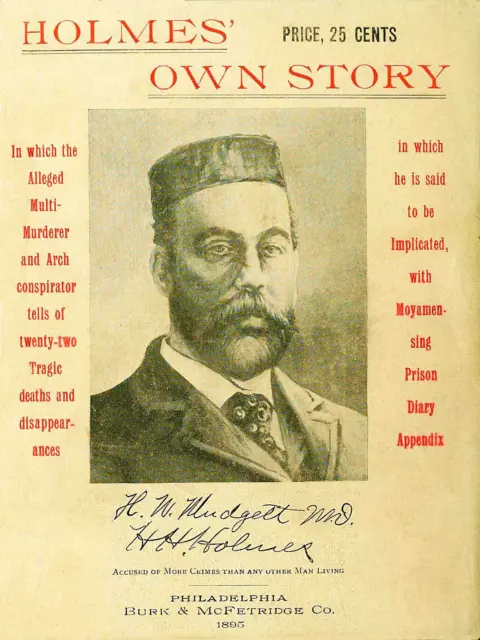
Herman W. Mudgett
Harriet Monroe
Daniel Dulany Addison
Charles Lanman
Harold Rosher