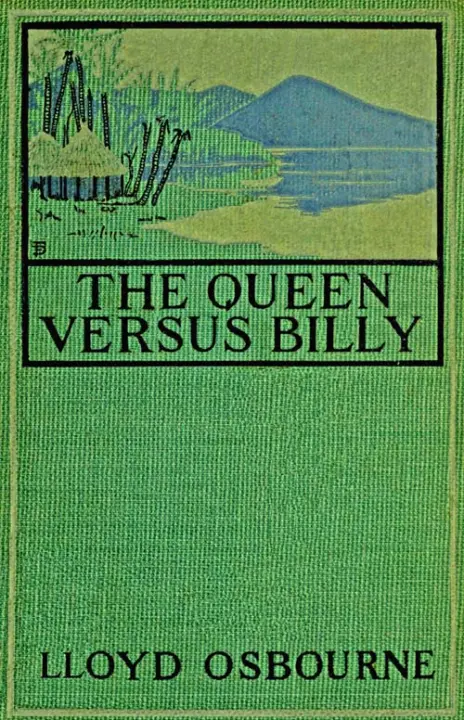
The Queen Versus Billy, and Other Stories
Lloyd Osbourne
THE CLASSIC COLLECTION · 1906
"Wild Justice: Stories of the South Seas" by Lloyd Osbourne is a collection of short stories written in the early 20th century. The book presents a vivid portrayal of life in the South Seas, focusing on the interactions between Polynesians and the European characters that traverse their realm. It captures themes of love, culture clash, and personal transformation, often revolving around the relationships between white men and native women, as hinted in the preface. At the start of the book, the author introduces Jack Wilson, a sailor reflecting on his pitiful existence while painting a ship in a remote South Sea bay. Obsessed with his lower status among seamen and yearning for a more meaningful life, he becomes envious of the carefree natives. Upon witnessing a group of joyful Polynesians preparing for a journey, he impulsively decides to abandon his tedious life aboard the ship. Inspired by the affection of a young native woman named Fetuao and the warmth of the community, Jack embraces a new life in the village, where he is not only welcomed but gradually transforms into a part of their world. This sets the stage for a narrative rich in cultural exploration and personal redemption, intertwining Jack's journey with the complexities of love and identity.
Introduction adapted from the source catalogue; source summaries may be automatically generated.
Free to read · English · 87,817 words · No account needed
MAKE TIME FOR A GOOD BOOK
On by default. Untick to stop anonymous reading totals. Each page counts after 10 seconds in view. How this works.
Anonymous counting is on unless you have switched it off.
Well, here they all were in the Land We Live In, together with Tom Holderson, Peter Extrum, Eddy Newnes, and Long Joe Kelly, all of Apiang; Papa Benson, of Tarawa; Jones and Peabody, of Big Muggin; and crazy old Jimmy Mathison, of nowhere in particular--unless it were the nearest gin bottle; and it was a rip-roaring Christmas, and no mistake, with bottled beer flowing like water, and songs and choruses and clog dances and hornpipes; and Papa Benson (in earrings and pink pajamas) a-blowing enough wind through his concertina to have sailed a ship. And there were girls, too, seven or eight of them, in bright trade-cotton Mother Hubbards--a bevy of black-eyed little heathen savages, who bore a hand with the trays, and added their saucy laughter to the general gayety, helping out Larry the barkeep as he drew unending corks or stopped to wipe the sweat off his forehead, saying, "Genelmen, the drinks is on Billy," or Tommy, or Long Joe, or whoever it was that was treating.
Suddenly, at the door, which had been kept shut to prevent the natives from assembling and peering in--suddenly, at the door, there was heard a faint, faint knock. The concertina stopped. Fritz, the Dutchman, said "Hoosh!" and raised his pipe for silence. The knock was repeated. Quiet descended on the Land We Live In. Larry looked up from his bottles, and in a rough and belligerent voice called out, "Come in!"
The invitation was hesitatingly obeyed, and there stood Daisy Kirke on the threshold, a sweet, faltering figure, with her guard, boots and all, lined up in the roadway. Hardly a soul in the room knew there was a little white girl on the island; and the sight of Daisy, with the red ribbon in her hair, her dimity frock, her long stockings and pinafore, was as startling as it was unexpected.
"Howdy-do, evver'body?" said she.
There was an embarrassed silence.
"I know you better than you do me," went on Daisy confidentially, proving it with her forefinger. "That's Tommy, the cabin boy; and yonder's Mr. Mathison, the beach-comber; and you"--indicating a giant of a man with an aquiline nose and a square-cut beard--"you are Mr. Bob Fletcher, the ringleader!"
A giggle of subdued merriment ran round the room. An instinctive respect kept it within bounds, or perhaps it was Bob Fletcher's fierce and warning look that cowed any incipient rowdyism. The brawny mutineer set her on his knee, and, in a voice harshened by thirty years' service before the mast, asked her deferentially if she fancied a glass of syrup?
"No, thank you," said Daisy politely; and then, addressing everybody in general, "papa and mamma's gone to Tarawa!"
Your reading position is saved on this browser. Take it to another device with a library code. Reading pages adapt to text, rather than matching a printed edition.
Lloyd Osbourne
Lloyd Osbourne
Lloyd Osbourne
Robert Louis Stevenson & Lloyd Osbourne
BEHIND THE BOOK
This eBook is for the use of anyone anywhere in the United States and most other parts of the world at no cost and with almost no restrictions whatsoever. You may copy it, give it away or re-use it under the terms of the Project Gutenberg License included with this eBook or online at www.gutenberg.org. If you are not located in the United States, you will have to check the laws of the country where you are located before using this eBook. Read the source licence.
The original source file, including credits and licence, is retained by this library. Request an original-format copy at no charge. Please include the book title and Project Gutenberg identifier #29621.
KEEP YOUR CURIOSITY GOING
Coulson Kernahan

Maurice Baring
Frances Wright
Cécile Tormay

Frederic Jesup Stimson

W. H. P. (William Henry Pope) Jarvis