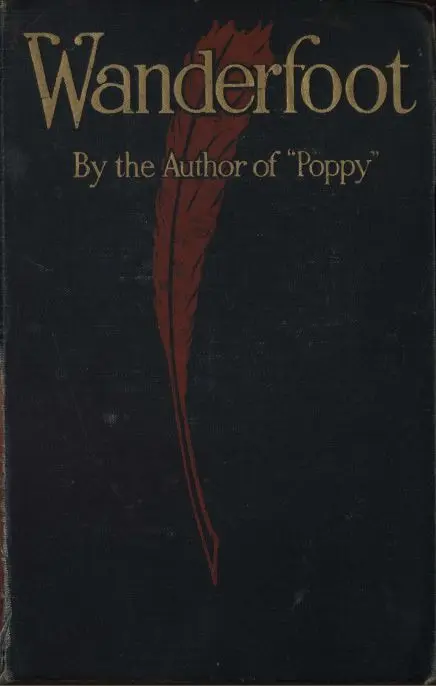
Wanderfoot (The Dream Ship)
Cynthia Stockley
THE CLASSIC COLLECTION · 1914
"Wild Honey: Stories of South Africa" by Cynthia Stockley is a collection of stories written in the early 20th century. This work presents a fictional exploration of life in South Africa, focusing particularly on the experiences of Vivienne Carlton, a young woman navigating societal changes and personal struggles. The themes of class, femininity, and ambition intertwine as Vivienne seeks to reclaim her lost status amidst the backdrop of the South African landscape. At the start of the book, Vivienne is introduced as a discontented passenger on a mule mail-coach traveling to Buluwayo, expressing her disdain for the company she keeps. Through her reflections, we learn of her recent fall from grace, as her family's fortunes have declined dramatically, leaving her alone to forge her path in journalism. As the journey continues, she becomes increasingly absorbed in her memories of loss, ambition, and a yearning for social power. When the mail-coach stops for the night at a native village, a tragic story about a lost child disturbs her, triggering a deeper reflection on her own sense of loneliness and societal alienation. The opening establishes statistical discomforts, a longing for dignity, and hints at an upcoming transformation for Vivienne as she navigates both physical hardships and the emotional toll of her circumstances.
Introduction adapted from the source catalogue; source summaries may be automatically generated.
Free to read · English · 80,340 words · No account needed
MAKE TIME FOR A GOOD BOOK
On by default. Untick to stop anonymous reading totals. Each page counts after 10 seconds in view. How this works.
Anonymous counting is on unless you have switched it off.
Nevertheless, he walked beside her as she moved quickly away.
"Chrissie!" he said quietly. "What has all this trouble about the land and about war to do with you and me?"
She did not answer, only walked faster.
"I am only an employee of the Government," he continued. "How is it my fault if they take your father's land?"
"I do not say that it is your fault," she said. "But it turns you into
his enemy--and mine."
"And yours?" he repeated reproachfully, "I thought you were more just
than that!"
"I am the daughter of a Boer."
"And I am an Englishman. But that does not prevent me from loving you."
He caught hold of her hands and made her stand still. They had reached a spot where the pomegranates hid them from view of the stoep.
"Do you hear, Chrissie? I love you, and I want to marry you."
"Marry an Englishman?" she cried violently. "Never. It would break my father's heart--and mine too." With a quick movement she wrenched her hands away and fled from him. He turned very pale and stood staring after her, his mouth set in a grim line.
Returned to the stoep, Chrissie found Carol Uys seated there talking to her father. It transpired that they had already arranged a deal by which Carol was to take back the pair of bays (with a mule thrown in) at the same price as he had sold. The old man said he no longer needed them to take him to kerk. He would never enter a kerk again he avowed.
Carol and Chrissie shook hands and she went indoors where he presently followed her, for old Retief had fallen once more into absorbed reverie.
"Chrissie," said the young Dutchman, "the war will soon be on now. Old Oom Paul Kruger has defied the rooi-neks, and we are to fight."
"Yes, Carol," said she, listlessly arranging the coffee cups.
"I shall be off on commands, at the first call."
"You think there will be fighting in this district too?"
"If there isn't, I shall make for the Transvaal."
The girl fell into a moment's brooding silence.
"War is horrible!" she said slowly.
"Horrible, yes, maar afterwards we shall be the baases, and call our
country our own."
"I am not sure, Carol; they say these English are good fighters."
"Mastag! and what about the Boers? We will show them, you wait a
little."
After another silence, he spoke again in a different voice.
"Chrissie--"
Looking up she saw his bashful purpose in his eyes, and strove to avoid
the issue.
"Do you see how sick my Poppa is, Carol?"
Your reading position is saved on this browser. Take it to another device with a library code. Reading pages adapt to text, rather than matching a printed edition.
Cynthia Stockley
Cynthia Stockley
Cynthia Stockley
Cynthia Stockley
BEHIND THE BOOK
This eBook is for the use of anyone anywhere in the United States and most other parts of the world at no cost and with almost no restrictions whatsoever. You may copy it, give it away or re-use it under the terms of the Project Gutenberg License included with this eBook or online at www.gutenberg.org. If you are not located in the United States, you will have to check the laws of the country where you are located before using this eBook. Read the source licence.
The original source file, including credits and licence, is retained by this library. Request an original-format copy at no charge. Please include the book title and Project Gutenberg identifier #37259.
KEEP YOUR CURIOSITY GOING
Coulson Kernahan

Maurice Baring
Frances Wright
Cécile Tormay

Frederic Jesup Stimson

W. H. P. (William Henry Pope) Jarvis