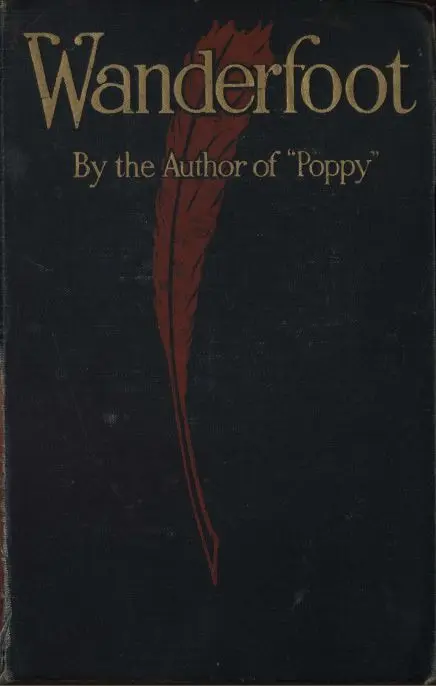
Wanderfoot (The Dream Ship)
Cynthia Stockley
THE CLASSIC COLLECTION · 1914
"Wild Honey: Stories of South Africa" by Cynthia Stockley is a collection of stories written in the early 20th century. This work presents a fictional exploration of life in South Africa, focusing particularly on the experiences of Vivienne Carlton, a young woman navigating societal changes and personal struggles. The themes of class, femininity, and ambition intertwine as Vivienne seeks to reclaim her lost status amidst the backdrop of the South African landscape. At the start of the book, Vivienne is introduced as a discontented passenger on a mule mail-coach traveling to Buluwayo, expressing her disdain for the company she keeps. Through her reflections, we learn of her recent fall from grace, as her family's fortunes have declined dramatically, leaving her alone to forge her path in journalism. As the journey continues, she becomes increasingly absorbed in her memories of loss, ambition, and a yearning for social power. When the mail-coach stops for the night at a native village, a tragic story about a lost child disturbs her, triggering a deeper reflection on her own sense of loneliness and societal alienation. The opening establishes statistical discomforts, a longing for dignity, and hints at an upcoming transformation for Vivienne as she navigates both physical hardships and the emotional toll of her circumstances.
Introduction adapted from the source catalogue; source summaries may be automatically generated.
Free to read · English · 80,340 words · No account needed
MAKE TIME FOR A GOOD BOOK
On by default. Untick to stop anonymous reading totals. Each page counts after 10 seconds in view. How this works.
Anonymous counting is on unless you have switched it off.
The haunting of the mountain dated from many years back. When Mary Russel heard the story, she knew that the horrible tragedy in which it originated must have occurred about the time she was born, for it was in that year that the Basutoes fought in the Free State, surrounding and putting many a town into a state of siege. Brandersberg had been among the beleaguered towns, and the inhabitants of several farms near by had been put to the assegai by the fierce Basuto warriors.
Now, on the other side of the mountain, about thirty miles from the town, there had stood a little stone farmhouse which an old Boer had built with an eye to defence in case of war. Its windows were small and high, its doors and shutters of iron, and there was nothing inflammable anywhere in its outer structure. When the Boer died, the place was bought by an Englishman with a pretty wife and little daughter. Just before the trouble with the Basutoes, another woman came to supplement the little family, a certain Janet Fink, middle-aged, well-educated, and recently arrived in Africa on an emigrant ship. She had been engaged by an agent at the Cape to come to the farm as a sort of combined nursery governess and mother's Help. The people of Brandersberg who knew the Englishman and his wife and liked them, had not had time to make the acquaintance of the Help before the war with the natives broke out and the town went into laager. Unfortunately this family was one of those cut off from the town. The Englishman had indeed been warned, but he pooh-poohed the idea of war, or only heeded it enough to postpone going in as usual to the town to get the monthly supply of provisions. But eventually supplies ran so low that he was obliged one day to set forth after giving careful instructions for the defence of the farm in case of attack. He had, however, delayed too long, and on his way into the town he was met by the Basutoes out for killing, and put to the assegai. A contingent of the main impi then went to the farmhouse and tried to take it, but the women had seen them coming, and received them so resolutely, and with such well-aimed shots from the high windows that having more important things on hand than the taking of two women they presently proceeded on their way, leaving two men behind with instructions to watch the house and kill the women if possible; if not, to starve them out. Being well informed (as Kaffirs always are at such times), they were aware that though there was water in the house there was no meat or meal to speak of, and that the little garrison could not hold out for more than a few days. It held out, however, for ten days, during which time smoke went up every morning from the chimney, and whenever the Basutoes made a feint of approaching they were received with rifle fire. On the eleventh day, however, there was no smoke, and towards evening the two Basutoes feeling pretty sure of their prey crept close, meaning to try for the chimney. Within ten yards of the house one of them was picked off with a bullet through his head, and the other turning to ran got a shot in his leg that put him out of business, but in spite of which he managed to crawl away into the bush, where a day or two later he was found by a troop of Dutch Artillery. Under the lash of the sjambok he was induced to tell all he knew about the farmhouse, and the Dutchmen, at length convinced that the place was not an ambush but really contained the two white women and child, rode up to it and found, not what they expected, but many surprising things. First of all, instead of signs of famine there was every evidence that many meals had been eaten; plates with remains of meat and gravy were scattered about, and a saucepan contained the leavings of a stew that had been curried and flavoured with onions. Plainly fuel had given out, for every wooden thing in the scantily furnished kitchen had been chopped up and burned. The Boers were deeply puzzled until in an adjoining room the body of the farmer's wife was found lying in a corner covered with old sacks. She had been dead for many days, and the manner of her dying was swift and sudden; there was a knife deeply imbedded in her back. When later the charred skull and thigh bones of a little child were raked out of the ashes in the fireplace the dark tragedy was made clearer still, and the rough men turned from the scene with sick hearts and grim mouths. There were husbands and fathers amongst them, and it would have gone hard with her if in that hour they had come across the mother's Help who in so hideous a fashion had helped herself. But they never found her. Whether after escaping from the house she was caught and killed by the Basutoes, or, lost in the bush had been eaten by wild beasts, or wandering on had reached some town and under an assumed name told a plausible tale and been taken in and cared for, had never been discovered. Only, presently in some strange way a story got about that she had fled to Thaba Inkosisan, and was living there in a cave, subsisting on wild roots and rock rabbits.
Your reading position is saved on this browser. Take it to another device with a library code. Reading pages adapt to text, rather than matching a printed edition.
Cynthia Stockley
Cynthia Stockley
Cynthia Stockley

Cynthia Stockley
BEHIND THE BOOK
This eBook is for the use of anyone anywhere in the United States and most other parts of the world at no cost and with almost no restrictions whatsoever. You may copy it, give it away or re-use it under the terms of the Project Gutenberg License included with this eBook or online at www.gutenberg.org. If you are not located in the United States, you will have to check the laws of the country where you are located before using this eBook. Read the source licence.
The original source file, including credits and licence, is retained by this library. Request an original-format copy at no charge. Please include the book title and Project Gutenberg identifier #37259.
KEEP YOUR CURIOSITY GOING
Coulson Kernahan

Maurice Baring
Frances Wright
Cécile Tormay

Frederic Jesup Stimson

W. H. P. (William Henry Pope) Jarvis