
The Writing of News A Handbook with Chapters on Newspaper Correspondence and Copy Reading
Charles G. (Charles Griffith) Ross
THE CLASSIC COLLECTION · 1895
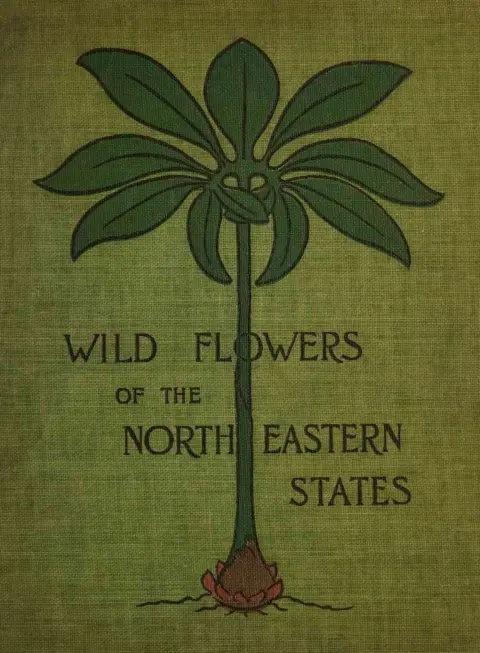
"Wild Flowers of the North-Eastern States" by Ellen Miller and Margaret Christine Whiting is a botanical guidebook written in the late 19th century. This work offers a detailed collection of three hundred and eight wildflower species native to the North-Eastern United States, emphasizing their unique characteristics through life-size illustrations and descriptions. The book aims to make the world of flora accessible to non-scientific readers, providing a resource for nature lovers to engage with and appreciate the beauty and individuality of each flower. The opening of this publication sets a welcoming tone, explaining the authors' goals to present flowers in an approachable manner, avoiding complex scientific terminology. They encourage readers to appreciate the flowers for their personal qualities rather than their botanical classifications. The introduction highlights the authors' efforts in gathering diverse specimens while acknowledging the limits of their selection; they dedicate their work to promoting a "floral portrait-gallery" that encourages exploration and admiration of nature's nuances. Furthermore, the text describes the significance of each plant, including their habitats, flowering times, and distinctive features that contribute to their allure and aesthetics in the natural landscape.
Introduction adapted from the source catalogue; source summaries may be automatically generated.
Free to read · English · 68,255 words · No account needed
MAKE TIME FOR A GOOD BOOK
On by default. Untick to stop anonymous reading totals. Each page counts after 10 seconds in view. How this works.
Anonymous counting is on unless you have switched it off.
The round, leafy stem is stout and tall, sometimes reaching to the height of 6 feet; it is rough-downy, or hairy, to the touch, and of a light yellowish-gray color.
The oval leaf is long, tapering at both ends; usually notched on the edge, slightly rough above, and downy beneath; it is coarse in texture, and in the quality of its green color.
The flower-heads are small, and bright yellow; they grow on curving branchlets in a many-sided plume, on the top of the stalk.
*Noble Goldenrod.* Solidago speciosa.
Found during September growing in dry soil, near the woods often.
The smooth, round, single stalk varies from 3 to 6 feet in height. Its
color is a fine dark red.
The leaf is long and narrow, and tapers at both ends; its margin is entire, the edge being a little rough, and the midrib is strong and curving, and a trifle taut, which fulls the blade; the texture is fine and thick, and the surface is smooth. The color is yellow-green. The leaves are set alternately upon the stalk.
The stamens of the disc flowers are long; the rays 5 or 6 in number; full-toned yellow in color. The heads are rather large, and are arranged in a large pyramid-shaped terminal spike.
A strikingly handsome plant, with its strong red stems, which color also tempers the green of its foliage into an excellent harmony with the numerous flowers. Its manner of growth in circular settlements of many plants together is a very individual trait.
*Small Spike Goldenrod.* Solidago nemoralis.
Found in September along dry roadsides and in sandy fields.
The stalk, which seldom grows higher than 2 feet, is single, and very leafy, of a strong fibre, and slightly rough, or not quite smooth to the touch. It is grayish green in color.
Disc flowers are few, the rays are seldom more than 8 in number, arranged in little one-sided spires to form a close, leafy, spike-like plume. The color is very clear in hue.
Common to all localities favorable to the Goldenrods, and, as observed, reaching its fullness of bloom in September rather than in August.
*Broad-leaved Goldenrod.* Solidago latifolia.
Found in September and October on the edges of woods, and moist copses.
The stalk grows from 1 to 3 feet high; it is often zigzag in gesture or angular, is leafy, smooth to the touch, and woody-fibred. Its color is green.
The broadly-oval leaf tapers at both ends, the margin is cut in sharp slender teeth, ribs are marked, and the surface is rough to the touch. Color, yellowish green.
Your reading position is saved on this browser. Take it to another device with a library code. Reading pages adapt to text, rather than matching a printed edition.
BEHIND THE BOOK
This eBook is for the use of anyone anywhere in the United States and most other parts of the world at no cost and with almost no restrictions whatsoever. You may copy it, give it away or re-use it under the terms of the Project Gutenberg License included with this eBook or online at www.gutenberg.org. If you are not located in the United States, you will have to check the laws of the country where you are located before using this eBook. Read the source licence.
The original source file, including credits and licence, is retained by this library. Request an original-format copy at no charge. Please include the book title and Project Gutenberg identifier #73825.
KEEP YOUR CURIOSITY GOING
Charles G. (Charles Griffith) Ross
Hannah Webster Foster

Emily Lawless
Edwin Hamlin Carr

Charles De Lano Hine
Andrew Ure