
The Writing of News A Handbook with Chapters on Newspaper Correspondence and Copy Reading
Charles G. (Charles Griffith) Ross
THE CLASSIC COLLECTION · 1895
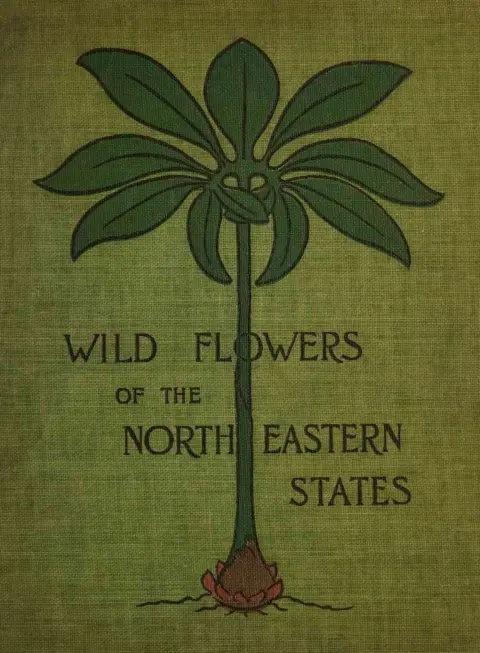
"Wild Flowers of the North-Eastern States" by Ellen Miller and Margaret Christine Whiting is a botanical guidebook written in the late 19th century. This work offers a detailed collection of three hundred and eight wildflower species native to the North-Eastern United States, emphasizing their unique characteristics through life-size illustrations and descriptions. The book aims to make the world of flora accessible to non-scientific readers, providing a resource for nature lovers to engage with and appreciate the beauty and individuality of each flower. The opening of this publication sets a welcoming tone, explaining the authors' goals to present flowers in an approachable manner, avoiding complex scientific terminology. They encourage readers to appreciate the flowers for their personal qualities rather than their botanical classifications. The introduction highlights the authors' efforts in gathering diverse specimens while acknowledging the limits of their selection; they dedicate their work to promoting a "floral portrait-gallery" that encourages exploration and admiration of nature's nuances. Furthermore, the text describes the significance of each plant, including their habitats, flowering times, and distinctive features that contribute to their allure and aesthetics in the natural landscape.
Introduction adapted from the source catalogue; source summaries may be automatically generated.
Free to read · English · 68,255 words · No account needed
MAKE TIME FOR A GOOD BOOK
On by default. Untick to stop anonymous reading totals. Each page counts after 10 seconds in view. How this works.
Anonymous counting is on unless you have switched it off.
*One-seeded Bur-cucumber.* Sicyos angulatus. *One-seeded Star-cucumber.*
Found in blossom from July to September, on moist ground, and along
river banks.
A vine, with a coarse, rough stem, climbing by aid of little spirally
twisted tendrils.
The broad leaf is more or less 5-pointed, or lobed, with a heart-shaped base, and a long tapering tip; the surface is roughened by small hairs, and the texture is loose and coarse; it has a short foot-stem, and is bright green.
The small 5-pointed flowers are of two kinds; the stamen-bearing ones, in clusters of 4 or 5 on a long foot-stem, spring from the angles of the leaves, while the seed-bearing blossoms are in almost stemless clusters close in the angles: they are greenish white, with yellow stamens.
A single large seed is enclosed in a flattened, pointed pod, which is armed with many fine, tough, bristles, that are easily detached in plucking and are irritating to the skin. The vine has a great number of tendrils.
*Sweet Cicely.* Osmorrhiza longistylis.
Found northward, in rich, moist woods, blossoming in May and June.
The round, smooth stalk bears leaves at long intervals, and is in color green, running into dull purple. It is 1 to 3 feet in height.
The large compound leaf is 3 times divided, and has the general aspect of a fern leaf; the taper-pointed leaflets have strongly notched margins, and noticeable ribs; the texture is thin, and the color green.
The small flower has 5 somewhat unequal, heart-shaped, white petals, 5 stamens, and a long calyx.
The anise-like flavor of the large root renders it attractive to the palate of the herb-browser. The long seeds are armed with backward pointing prickles, and snatch rides on the wayfarer’s garments after the manner of the plebeian Beggar-ticks. Cicely is sweet, tall, and graceful in gesture, fine in the finish of its leaf joints, and distinguished by a few fern-like leaves; apparently a plant of good breeding. Where could its seeds have learned such a beggarly trick!
*Meadow Parsnip.* Zizia aurea.
Found in meadow grass lands, in May and June.
The sparingly branched stalk, from 2 to 3 feet high, is tough-fibred, and smooth, though channeled with many fine grooves; it is hollow, with an aromatic smell, and usually tends to a dull red color.
The 2- or 3-times divided leaf has narrow leaflets, tapering to the tip, and sharply toothed on the edge; the surface is smooth, and the texture firm; the color a strong, full-toned green. The leaves are few, at long intervals, on short foot-stems that widen into a leafly membrane, partly clasping the main stalk.
Your reading position is saved on this browser. Take it to another device with a library code. Reading pages adapt to text, rather than matching a printed edition.
BEHIND THE BOOK
This eBook is for the use of anyone anywhere in the United States and most other parts of the world at no cost and with almost no restrictions whatsoever. You may copy it, give it away or re-use it under the terms of the Project Gutenberg License included with this eBook or online at www.gutenberg.org. If you are not located in the United States, you will have to check the laws of the country where you are located before using this eBook. Read the source licence.
The original source file, including credits and licence, is retained by this library. Request an original-format copy at no charge. Please include the book title and Project Gutenberg identifier #73825.
KEEP YOUR CURIOSITY GOING
Charles G. (Charles Griffith) Ross
Hannah Webster Foster

Emily Lawless
Edwin Hamlin Carr

Charles De Lano Hine
Andrew Ure