
The Writing of News A Handbook with Chapters on Newspaper Correspondence and Copy Reading
Charles G. (Charles Griffith) Ross
THE CLASSIC COLLECTION · 1895
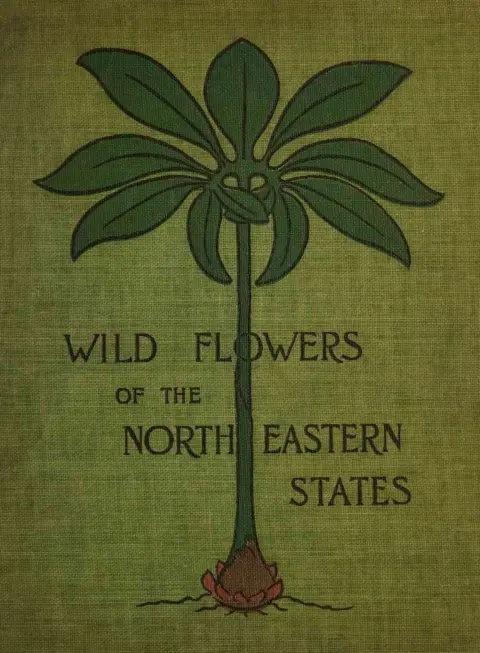
"Wild Flowers of the North-Eastern States" by Ellen Miller and Margaret Christine Whiting is a botanical guidebook written in the late 19th century. This work offers a detailed collection of three hundred and eight wildflower species native to the North-Eastern United States, emphasizing their unique characteristics through life-size illustrations and descriptions. The book aims to make the world of flora accessible to non-scientific readers, providing a resource for nature lovers to engage with and appreciate the beauty and individuality of each flower. The opening of this publication sets a welcoming tone, explaining the authors' goals to present flowers in an approachable manner, avoiding complex scientific terminology. They encourage readers to appreciate the flowers for their personal qualities rather than their botanical classifications. The introduction highlights the authors' efforts in gathering diverse specimens while acknowledging the limits of their selection; they dedicate their work to promoting a "floral portrait-gallery" that encourages exploration and admiration of nature's nuances. Furthermore, the text describes the significance of each plant, including their habitats, flowering times, and distinctive features that contribute to their allure and aesthetics in the natural landscape.
Introduction adapted from the source catalogue; source summaries may be automatically generated.
Free to read · English · 68,255 words · No account needed
MAKE TIME FOR A GOOD BOOK
On by default. Untick to stop anonymous reading totals. Each page counts after 10 seconds in view. How this works.
Anonymous counting is on unless you have switched it off.
Found commonly in great masses the plant serves to hide the ugly remnants man casts into the fields it chooses for its habitation.
*----* Polygonum amphibium.
Found in swamps in September and October.
The single stem, 3 or 4 inches high, bears a few leaves, and is large, round, hollow, and juicy; a dull-reddish-green color, that is dark near the foot.
The leaf (varying from 2 to 5 inches in length) is oblong with a pointed tip and wedge- or heart-shaped base, an entire margin, and prominent midrib; it has a thin, leathery texture, and a very smooth shining surface; in color it is dark green, much toned with dull red, the midrib lighter. The leaves, on short stout stems, clasp the stalk with a dry, red-brown sheath enfolding the joint; they are placed alternately.
The flowers are 5-parted, the tips of the divisions seldom spreading, of a bright rose-pink, coarse hue. They are gathered in a close club, set on a short, terminal, green stem.
The lower of the three or four leaves float upon the surface of the water or lie on the mud of this plant’s miry home.
*Wild Ginger.* Asarum Canadense.
Found in rich soil in woodlands, blossoming during May.
The very short stalk barely shows above the ground; it is large and stout and fibrous, bearing two or three sheaths and terminating in the flower, and the leaf-stems which are from 4 to 8 inches in length.
The large wide leaf is heart-shaped or rounded, with an entire margin, and strongly marked by the ribs and veins; the upper surface is velvety to the touch, while it is rough and woolly underneath, and the color is a strong green, whitish beneath. The stem is stout, erect, and slightly woolly. Two or three leaves only are borne on the summit of the stalk.
The flower has no petals; the calyx is shaped like a deep, round cup, 3-parted at the top, with curling margins. It is coarse and firm in texture, with a hairy surface; the outside dull purplish, the divisions reddish-brown or bronze, and the inside of the cup creamy white curiously marked in the bottom by a hexagonal design in purple; the 12 stamens are gathered close about the 6-parted pistil. The single flower is set on a short, bristly stem, that springs from between the leaves, and turns downward, the blossom resting its face upon the earth and burying itself so carefully in the leaf mold that only search reveals it.
Later in the season the leaves attain a considerable size, four or five inches across; they are always decorative in shape and color. The root is aromatic, and sharp to the taste,--whence the folk-name.
Your reading position is saved on this browser. Take it to another device with a library code. Reading pages adapt to text, rather than matching a printed edition.
BEHIND THE BOOK
This eBook is for the use of anyone anywhere in the United States and most other parts of the world at no cost and with almost no restrictions whatsoever. You may copy it, give it away or re-use it under the terms of the Project Gutenberg License included with this eBook or online at www.gutenberg.org. If you are not located in the United States, you will have to check the laws of the country where you are located before using this eBook. Read the source licence.
The original source file, including credits and licence, is retained by this library. Request an original-format copy at no charge. Please include the book title and Project Gutenberg identifier #73825.
KEEP YOUR CURIOSITY GOING
Charles G. (Charles Griffith) Ross
Hannah Webster Foster

Emily Lawless
Edwin Hamlin Carr

Charles De Lano Hine
Andrew Ure