
The Writing of News A Handbook with Chapters on Newspaper Correspondence and Copy Reading
Charles G. (Charles Griffith) Ross
THE CLASSIC COLLECTION · 1895
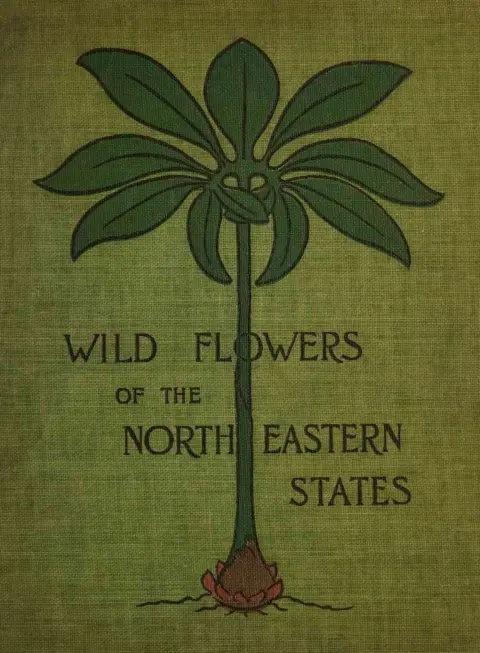
"Wild Flowers of the North-Eastern States" by Ellen Miller and Margaret Christine Whiting is a botanical guidebook written in the late 19th century. This work offers a detailed collection of three hundred and eight wildflower species native to the North-Eastern United States, emphasizing their unique characteristics through life-size illustrations and descriptions. The book aims to make the world of flora accessible to non-scientific readers, providing a resource for nature lovers to engage with and appreciate the beauty and individuality of each flower. The opening of this publication sets a welcoming tone, explaining the authors' goals to present flowers in an approachable manner, avoiding complex scientific terminology. They encourage readers to appreciate the flowers for their personal qualities rather than their botanical classifications. The introduction highlights the authors' efforts in gathering diverse specimens while acknowledging the limits of their selection; they dedicate their work to promoting a "floral portrait-gallery" that encourages exploration and admiration of nature's nuances. Furthermore, the text describes the significance of each plant, including their habitats, flowering times, and distinctive features that contribute to their allure and aesthetics in the natural landscape.
Introduction adapted from the source catalogue; source summaries may be automatically generated.
Free to read · English · 68,255 words · No account needed
MAKE TIME FOR A GOOD BOOK
On by default. Untick to stop anonymous reading totals. Each page counts after 10 seconds in view. How this works.
Anonymous counting is on unless you have switched it off.
Found during July in woods, and along the edges of woods.
The creeping stalk sends up an erect stem, leafy at the top, about 4 or 5 inches high, woody-fibred and tough, and smooth to the touch. Its color is green,--red toward the root.
The leaf is a broad oval, with a rounded tip, an obscurely notched margin, of a tough and thick fibre, and smooth, polished surface. It is evergreen: when old a dark green, often bronzy; more yellow-green, tinged with dull red, when young. The alternate leaves, on very short stems, are clustered at the top of the stalk.
The small bell-shaped flower is minutely 5-parted, and all white. The flowers, on short curving stems, grow singly from the angles of the leaves, hanging their bells downward.
The fruit is round and small, a bright cherry red in color; it ripens in the fall and remains throughout snow-time, always ready to lend its glowing color, with the bronzy leaves that surround it, to a winter bouquet from the woods. The new shoots put forth from the ground in June, and are called “youngsters” in the country; they have an aromatic, pungent flavor, and going “youngstering” is a favorite diversion of childhood. The plant is a great colonist, and year after year its plantations thrive in the same localities.
*False Beech Drops.* Monotropa Hypopitys.
*Pine Sap.*
Found growing upon the roots of pine or oak trees, from June to
September.
The single and erect stalk is about 6 or 8 inches high; thick, fleshy, and smooth, or downy. It is pale at the foot, deepening to a crimson-red near the flowers.
The small and sheath-like bracts are indeterminate in shape, thin and dry. In color yellow-red, turning blackish when withered. A few only occur upon the stalk.
The small flowers are irregularly vase-shaped, and composed of 8 or 10 narrow fleshy parts with crinkled tips; they are set on short stems, in the clasp of a bract, and arranged in terminal groups of 2 to 5 in number. The color is rosy-red, with yellow tips,--flowers, bracts, and the top of the stalk following the same scheme of color.
A parasite, growing upon the roots, and, though not unpleasing in general aspect when perfectly fresh, betraying the base quality of its nature when mature, for an unwholesome mould spreads over its parts as it grows old. When first opened the flowers turn down, but become erect with age.
*Indian Pipe.* Monotropa uniflora.
*Corpse Plant.*
Found in dark, damp woods, from June to August.
The thick, round, flower-stem varies from 3 to 8 inches in height, and is fleshy, smooth, and clammy. Its color is white, or faintly flesh-tinted.
The small, scaly bracts, which serve for leaves, are white.
Your reading position is saved on this browser. Take it to another device with a library code. Reading pages adapt to text, rather than matching a printed edition.
BEHIND THE BOOK
This eBook is for the use of anyone anywhere in the United States and most other parts of the world at no cost and with almost no restrictions whatsoever. You may copy it, give it away or re-use it under the terms of the Project Gutenberg License included with this eBook or online at www.gutenberg.org. If you are not located in the United States, you will have to check the laws of the country where you are located before using this eBook. Read the source licence.
The original source file, including credits and licence, is retained by this library. Request an original-format copy at no charge. Please include the book title and Project Gutenberg identifier #73825.
KEEP YOUR CURIOSITY GOING
Charles G. (Charles Griffith) Ross
Hannah Webster Foster

Emily Lawless
Edwin Hamlin Carr

Charles De Lano Hine
Andrew Ure