
The Writing of News A Handbook with Chapters on Newspaper Correspondence and Copy Reading
Charles G. (Charles Griffith) Ross
THE CLASSIC COLLECTION · 1894
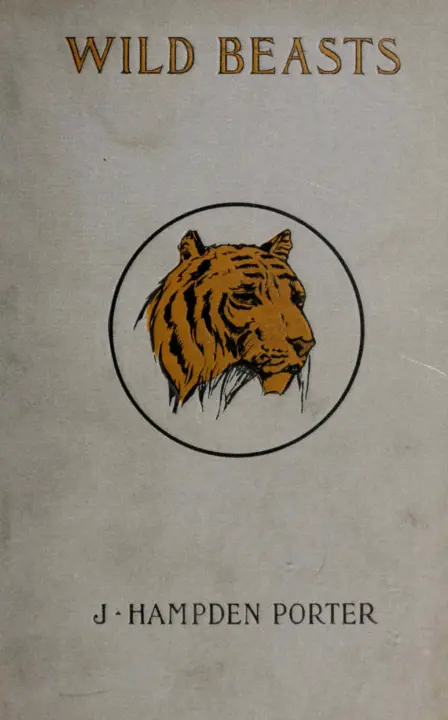
"WILD BEASTS: A STUDY OF THE CHARACTERS AND HABITS OF THE ELEPHANT, LION, LEOPARD, PANTHER, JAGUAR, TIGER, PUMA, WOLF, AND GRIZZLY BEAR" by J. Hampden Porter is a scientific publication written in the late 19th century. This work delves into the behaviors and characteristics of various wild animals, with a primary focus on elephants. The author draws from historical accounts, observations, and studies to provide a comprehensive understanding of the animals' social structures, temperament, and interactions with humans. The opening of the publication focuses extensively on the elephant, presenting it as a complex creature deserving of admiration yet not without ferocity. It discusses various attributes including social behavior, family structures, misconceptions about their nature, and their potential for aggression. Porter emphasizes that while elephants are often revered, their unpredictable and dangerous tendencies can be alarming, illustrating the dichotomy of their character. Throughout this initial section, the author provides a mix of historical anecdotes and contemporary observations, setting the stage for a broader exploration of wild beasts in subsequent chapters.
Introduction adapted from the source catalogue; source summaries may be automatically generated.
Free to read · English · 107,390 words · No account needed
MAKE TIME FOR A GOOD BOOK
On by default. Untick to stop anonymous reading totals. Each page counts after 10 seconds in view. How this works.
Anonymous counting is on unless you have switched it off.
So much as this may be said with confidence, but on what grounds, biological or psychological, is it possible for Professor Romanes to assert that the elephant seems usually to be “actuated by the most magnanimous of feelings”? Magnanimity belongs to the rarest and loftiest type of human character: how did an elephant come by it? The obligations of mental and moral congruity are not less binding than those of physical fitness. No one nowadays draws an elephant with a human head; but a beast with self-respect, courage, refinement, sympathy, and charity enough to be magnanimous, does not seem to outrage any sense of propriety. Works like those of Watson (“Reasoning Power of Animals”), Broderip (“Zoölogical Recreations”), Bingley (“Animal Biography”), Swainson (“Habits and Instincts of Animals”), too often interpret facts so that they will fit preconceived opinions. There is a story, for example, by Captain Shipp, of how, during the siege of Bhurtpore, an elephant pushed another one into a well because he had appropriated his bucket. Tales like this resemble pictures in which the design and execution are both weak, and which depend for their effect upon accessories illegitimately introduced into the composition. Probably a large part of the present inhabitants of the earth have seen animals who, while contending for some possession, acted in a similar manner; but they were not elephants, nor were the circumstances of a well and a siege at hand to set them off, and produce an impression that the actual incident does not justify. The grief of captive elephants over their situation is a subject upon which many fine remarks have been made. Colonel Yule (“Embassy to Ava”) states that numbers die from this cause alone; but yaarba’hd, either in its dropsical or atrophic form, is what chiefly proves fatal to them, and this is brought on by the sudden and violent interruption of their natural way of life. According to Strachan, Sanderson, and other experts, the disorder is due to an overthrow of functional balance; something which is sure to induce disease whenever it occurs. Sterility, temporary failure of milk in females with calves, together with the various effects already mentioned, may be referred to the same cause. It is not said that elephants never die of grief; still less, that this is impossible. Any animal highly organized enough to feel intense and persistent sorrow may perish. Pain, either physical or mental, is intimately connected with waste of tissue and paralysis of reparative action. Bain’s formula that “states of pleasure are concomitant with an increase, and states of pain with a decrease, of some, or all, of the vital functions,” is not strictly correct as it stands; still the truth it is intended to convey remains indisputable. Grant-Allen (“Physiological Æsthetics”) defines pleasure as a “concomitant of the healthy action of any or all of the organs or members supplied with afferent cerebro-spinal nerves, to an extent not exceeding the ordinary powers of reparation possessed by the system.” Grief, when intense, reverses this, makes normal function impossible, palsies the viscera, and impairs or perverts those nutritive processes upon which life directly depends. But the profound and abiding sorrow this race cherishes in servitude is a romance. There is nothing to show the regret and longing which have been imagined. Elephants struggle for a while against coercion, and then forget. They fail to take advantage of opportunities for escape, and when they do, the fugitives are recaptured more easily than they were taken in the first place. Instances have often occurred of their voluntary return after a long absence. In the beginning, it is the finest animals who perish. They kill themselves in their struggles, or die of disease. Subsequently, it is said that domestication lengthens average life. This must, however, be one of those blank assertions made so commonly about wild beasts; since, independently of any other objection, it is evident that the statement, in order to be worth anything, should rest upon the basis of a wide comparison between the relative longevities of free and captive animals, and vital statistics of this kind, not only have not been tabulated, but it is impossible that they should have been collected.
Your reading position is saved on this browser. Take it to another device with a library code. Reading pages adapt to text, rather than matching a printed edition.
BEHIND THE BOOK
This eBook is for the use of anyone anywhere in the United States and most other parts of the world at no cost and with almost no restrictions whatsoever. You may copy it, give it away or re-use it under the terms of the Project Gutenberg License included with this eBook or online at www.gutenberg.org. If you are not located in the United States, you will have to check the laws of the country where you are located before using this eBook. Read the source licence.
The original source file, including credits and licence, is retained by this library. Request an original-format copy at no charge. Please include the book title and Project Gutenberg identifier #71639.
KEEP YOUR CURIOSITY GOING
Charles G. (Charles Griffith) Ross
Hannah Webster Foster

Emily Lawless
Edwin Hamlin Carr

Charles De Lano Hine
Andrew Ure