THE CLASSIC COLLECTION✦Indian Scout Talks: A Guide for Boy Scouts and Camp Fire GirlsCLASSIC FREE BOOKS
Indian Scout Talks: A Guide for Boy Scouts and Camp Fire Girls
Charles A. Eastman
THE CLASSIC COLLECTION · 1909
"Wigwam Evenings: Sioux Folk Tales Retold" by Charles A. Eastman and Elaine Goodale Eastman is a collection of folk tales written in the early 20th century. This anthology seeks to preserve and adapt Sioux stories for contemporary children, blending traditional narratives with morals that resonate across cultures. The tales reflect the values and beliefs of the Sioux, showcasing the connection between humans and nature through various adventures and lessons involving animals. The beginning of the book sets a picturesque scene in a Sioux winter camp, where children gather around Smoky Day, the village storyteller, eager to hear ancient tales. The initial story features a battle of wits and pride between a Field-Mouse and a Buffalo, ultimately teaching a moral lesson about pride and the consequences of underestimating others. Smoky Day frames these stories within the context of genuine respect for the environment and the teachings of their culture, creating a warm, engaging atmosphere for young listeners. Through these narratives, readers are invited to explore the enchanting world of Sioux mythology.
Introduction adapted from the source catalogue; source summaries may be automatically generated.
Free to read · English · 23,572 words · No account needed
MAKE TIME FOR A GOOD BOOK
On by default. Untick to stop anonymous reading totals. Each page counts after 10 seconds in view. How this works.
Anonymous counting is on unless you have switched it off.
"My mother gave a feast to-day," murmurs Tanagela, in her soft voice. "There were so many people for us to serve--I could not come any sooner! But see, grandmother! I have brought you some boiled rice and venison," she ends, proudly bringing out the heavy kettle from under her skin robe as they enter the well-smoked lodge.
"Ah, ah!" exclaims the story-teller, whose old eyes brighten at the sight of the good food. "We are to feast to-night, it seems; therefore I shall tell you of a feast and what came after."
The big voice of the Bumble-Bee was heard in every nook and corner of the wood, and from end to end of the deep valley, for Unktomee, the generous, was giving a feast, and the Bee was his herald, the crier of the day.
"Ho, every creeper, every buzzer, all ye little people who fly without feathers, come this day to the festival!" boomed the Bee. "All must prepare to exhibit their best skill; the Toad, who can neither fly nor run, his brother the Bullfrog, with his band of musicians, and even the Flying-squirrel with the rest. Tanagela, the Humming-bird, will be the judge of beauty, and the Bat will judge your skilful performance in the air. That wise medicine-man, the Serpent, will also be there!"
So Unktomee's herald made the cedar-fringed gulches and pine-scented hilltops fairly hum with his call.
It was in July, the Moon of Black Cherries, and the Little People gathered in great numbers at the place of the Singing Waterfall, which had been chosen for the meeting-place. The happy valley buzzed with their million voices.
Then Unktomee, the prudent, saw fit to appoint certain warriors to keep order at the festival. For many were present, therefore mishap or injustice might be.
The Wolf was ordered to watch upon the surrounding hills, so that no enemy should come near; and the Owl was appointed to keep order within the camp, and especially to see that neither the Bat, the Night-hawk nor the Swallow tribe were permitted to disturb the little insect people.
The day opened well, with a chorus of praise from the great orchestra--a sunrise song, opened by Ta-she-ya-ka, the Meadow-lark, in which even the crickets joined, with their slender instruments.
Then came the contest of beauty, in which the Butterflies, in their gauzy dresses of every color, won the first prize. The Bat, however, who was to judge of feats on the wing, had slyly made a meal of some of the lesser contestants. The Owl swooped down upon him to punish him, and there was great confusion.
Your reading position is saved on this browser. Take it to another device with a library code. Reading pages adapt to text, rather than matching a printed edition.
Charles A. Eastman
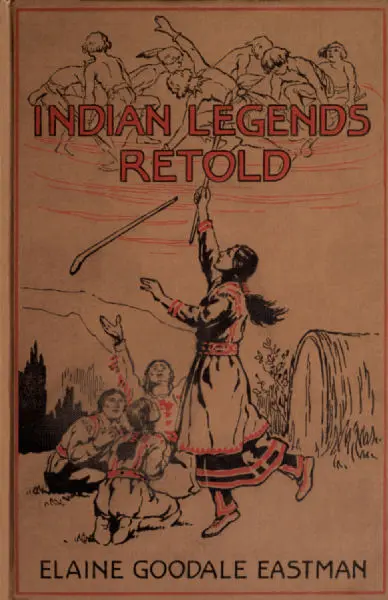
Elaine Goodale Eastman
Charles A. Eastman
Charles A. Eastman
BEHIND THE BOOK
This eBook is for the use of anyone anywhere in the United States and most other parts of the world at no cost and with almost no restrictions whatsoever. You may copy it, give it away or re-use it under the terms of the Project Gutenberg License included with this eBook or online at www.gutenberg.org. If you are not located in the United States, you will have to check the laws of the country where you are located before using this eBook. Read the source licence.
The original source file, including credits and licence, is retained by this library. Request an original-format copy at no charge. Please include the book title and Project Gutenberg identifier #28099.
KEEP YOUR CURIOSITY GOING

Maurice Baring
Francis Greenleaf Allinson & Anne C. E. (Anne Crosby Emery) Allinson

Abby Morton Diaz
Helen Hunt Jackson
Mary Frances Blaisdell
Stuart Dodgson Collingwood