THE CLASSIC COLLECTION✦South Australia and Western AustraliaCLASSIC FREE BOOKS
South Australia and Western Australia
Anthony Trollope
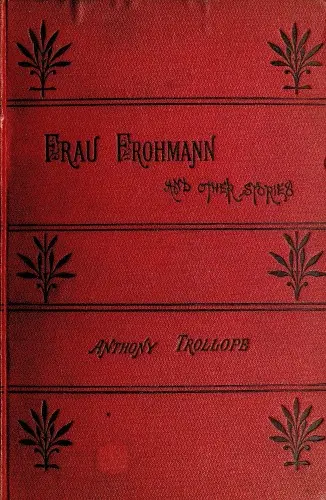
THE CLASSIC COLLECTION · 1882
"Why Frau Frohmann Raised Her Prices, and Other Stories" by Anthony Trollope is a collection of short stories written during the late 19th century. The opening tale introduces Frau Frohmann, a strong-willed widow who operates a picturesque hotel called the Peacock in the Brunnenthal valley of Tyrol, as she navigates the challenges of maintaining her establishment amid changing economic conditions. The narrative explores her struggles with business decisions, the influence of her family, and the tension with her loyal guests, which raises questions of tradition versus modernity. The opening of the book sets the stage for the central conflict involving the Frau's steadfast refusal to raise prices despite rising costs and changing societal norms. We learn about her character: a fierce yet caring matriarch who prides herself on providing for her guests and community while grappling with the pressures to conform to modern trade practices. The story begins with her disdain for change, highlighting her old-fashioned values and her deep emotional ties to the valley and the people she serves. As discussions unfold between her, her family, a young lawyer, and local townsfolk, the complexity of balancing personal beliefs with the realities of running a profitable business is vividly portrayed, foreshadowing deeper dilemmas as the narrative progresses.
Introduction adapted from the source catalogue; source summaries may be automatically generated.
Free to read · English · 109,775 words · No account needed
MAKE TIME FOR A GOOD BOOK
On by default. Untick to stop anonymous reading totals. Each page counts after 10 seconds in view. How this works.
Anonymous counting is on unless you have switched it off.
Thompson Hall was an old brick mansion, standing within a huge iron gate, with a gravel sweep before it. It had stood there before Stratford was a town, or even a suburb, and had then been known by the name of Bow Place. But it had been in the hands of the present family for the last thirty years, and was now known far and wide as Thompson Hall,--a comfortable, roomy, old-fashioned place, perhaps a little dark and dull to look at, but much more substantially built than most of our modern villas. Mrs. Brown jumped with alacrity from the carriage, and with a quick step entered the home of her forefathers. Her husband followed her more leisurely, but he, too, felt that he was at home at Thompson Hall. Then Mr. Jones walked in also;--but he looked as though he were not at all at home. It was still very early, and no one of the family was as yet down. In these circumstances it was almost necessary that something should be said to Mr. Jones.
“Do you know Mr. Thompson?” asked Mr. Brown.
“I never had the pleasure of seeing him,--as yet,” answered Mr. Jones,
very stiffly.
“Oh,--I didn’t know;--because you said you were coming here.”
“And I have come here. Are you friends of Mr. Thompson?”
“Oh, dear, yes,” said Mrs. Brown. “I was a Thompson myself before I
married.”
“Oh,--indeed!” said Mr. Jones. “How very odd,--very odd, indeed.”
During this time the luggage was being brought into the house, and two old family servants were offering them assistance. Would the new comers like to go up to their bedrooms? Then the housekeeper, Mrs. Green, intimated with a wink that Miss Jane would, she was sure, be down quite immediately. The present moment, however, was still very unpleasant. The lady probably had made her guess as to the mystery; but the two gentlemen were still altogether in the dark. Mrs. Brown had no doubt declared her parentage, but Mr. Jones, with such a multitude of strange facts crowding on his mind, had been slow to understand her. Being somewhat suspicious by nature, he was beginning to think whether possibly the mustard had been put by this lady on his throat with some reference to his connexion with Thompson Hall. Could it be that she, for some reason of her own, had wished to prevent his coming, and had contrived this untoward stratagem out of her brain? or had she wished to make him ridiculous to the Thompson family,--to whom, as a family, he was at present unknown? It was becoming more and more improbable to him that the whole thing should have been an accident. When, after the first horrid torments of that morning in which he had in his agony invoked the assistance of the night-porter, he had begun to reflect on his situation, he had determined that it would be better that nothing further should be said about it. What would life be worth to him if he were to be known wherever he went as the man who had been mustard-plastered in the middle of the night by a strange lady? The worst of a practical joke is that the remembrance of the absurd condition sticks so long to the sufferer! At the hotel that night-porter, who had possessed himself of the handkerchief and had read the name, and had connected that name with the occupant of 333 whom he had found wandering about the house with some strange purpose, had not permitted the thing to sleep. The porter had pressed the matter home against the Browns, and had produced the interview which has been recorded. But during the whole of that day Mr. Jones had been resolving that he would never again either think of the Browns or speak of them. A great injury had been done to him,--a most outrageous injustice;--but it was a thing which had to be endured. A horrid woman had come across him like a nightmare. All he could do was to endeavour to forget the terrible visitation. Such had been his resolve,--in making which he had passed that long day in Paris. And now the Browns had stuck to him from the moment of his leaving his room! he had been forced to travel with them, but had travelled with them as a stranger. He had tried to comfort himself with the reflection that at every fresh stage he would shake them off. In one railway after another the vicinity had been bad,--but still they were strangers. Now he found himself in the same house with them,--where of course the story would be told. Had not the thing been done on purpose that the story might be told there at Thompson Hall?
Your reading position is saved on this browser. Take it to another device with a library code. Reading pages adapt to text, rather than matching a printed edition.
Anthony Trollope

Anthony Trollope

Anthony Trollope

Anthony Trollope
BEHIND THE BOOK
This eBook is for the use of anyone anywhere in the United States and most other parts of the world at no cost and with almost no restrictions whatsoever. You may copy it, give it away or re-use it under the terms of the Project Gutenberg License included with this eBook or online at www.gutenberg.org. If you are not located in the United States, you will have to check the laws of the country where you are located before using this eBook. Read the source licence.
The original source file, including credits and licence, is retained by this library. Request an original-format copy at no charge. Please include the book title and Project Gutenberg identifier #55212.
KEEP YOUR CURIOSITY GOING
Coulson Kernahan

Maurice Baring
Frances Wright
Cécile Tormay

Frederic Jesup Stimson

W. H. P. (William Henry Pope) Jarvis