THE CLASSIC COLLECTION✦Accepting the universeCLASSIC FREE BOOKS
Accepting the universe
John Burroughs
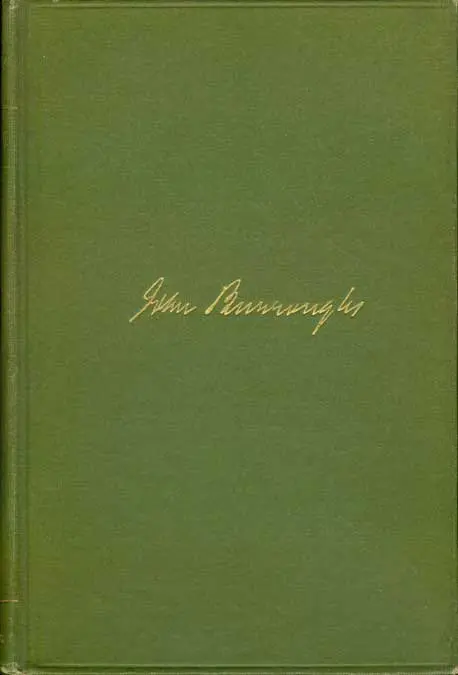
THE CLASSIC COLLECTION · 1896
"Whitman: A Study" by John Burroughs is a literary critique and analysis written in the late 19th century. The work focuses on the poetry and philosophies of Walt Whitman, exploring his life, influences, and the significance of his contributions to American literature. Burroughs presents Whitman as an unconventional and seminal figure, highlighting his unique approach to poetry that departs from traditional norms. The opening of the study sets the stage for Burroughs’s admiration of Whitman, as he reflects on the environment he associates with the poet—wild and elemental landscapes that evoke a sense of raw beauty and vitality. Burroughs recounts his initial encounters with Whitman's work, expressing fascination coupled with confusion. He acknowledges the challenge Whitman's style poses to conventional readers and emphasizes the poet's disarming presence, which enhances his literary output. This examination invites readers to appreciate Whitman not only as a writer but as a prophetic voice that embodies the spirit of democracy and humanity.
Introduction adapted from the source catalogue; source summaries may be automatically generated.
Free to read · English · 67,242 words · No account needed
MAKE TIME FOR A GOOD BOOK
On by default. Untick to stop anonymous reading totals. Each page counts after 10 seconds in view. How this works.
Anonymous counting is on unless you have switched it off.
"Divine instinct, breadth of vision, the law of reason, health, rudeness of body, withdrawnness, Gayety, sun-tan, air-sweetness, such are some of the words of poems, The sailor, the traveler, underlie the maker of poems, the Answerer, The builder, geometer, chemist, anatomist, phrenologist, artist, all these underlie the maker of poems, the Answerer. The words of the true poems give you more than poems; They give you to form for yourself poems, religions, politics, war, peace, behavior, histories, essays, daily life, and everything else. They balance ranks, colors, races, creeds, and the sexes; They do not seek beauty, they are sought, Forever touching them or close upon them follows beauty, longing, fain, love-sick. They prepare for death, yet are they not the finish, but rather the outset, They bring none to his or her terminus or to be contented and full, Whom they take they take into space to behold the birth of stars, to learn one of the meanings, To launch off with absolute faith, to sweep through the ceaseless rings and never be quiet again.
"Of these States the poet is the equable man, Not in him but off from him things are grotesque, eccentric, fail of their full returns, Nothing out of its place is good, nothing in its place is bad, He bestows on every object or quality its fit proportion, neither more nor less, He is the arbiter of the diverse, he is the key, He is the equalizer of his age and land, He supplies what wants supplying, he checks what wants checking, In peace out of him speaks the spirit of peace, large, rich, thrifty, building populous towns, encouraging agriculture, arts, commerce, lighting the study of man, the soul, health, immortality, government, In war he is the best backer of the war, he fetches artillery as good as the engineer's, he can make every word he speaks draw blood, The years straying toward infidelity he withholds by his steady faith, He is no arguer, he is judgment (nature accepts him absolutely), He judges not as the judge judges, but as the sun falling round a helpless thing, As he sees the farthest he has the most faith, His thoughts are the hymns of the praise of things, In the dispute on God and eternity he is silent, He sees eternity less like a play with a prologue and denouement, He sees eternity in men and women, he does not see men and omen as dreams or dots.
"Rhymes and rhymers pass away, poems distill'd from other poems pass away, The swarms of reflectors and the polite pass, and leave ashes, Admirers, impostors, obedient persons, make but the soil of literature."
Your reading position is saved on this browser. Take it to another device with a library code. Reading pages adapt to text, rather than matching a printed edition.
BEHIND THE BOOK
This eBook is for the use of anyone anywhere in the United States and most other parts of the world at no cost and with almost no restrictions whatsoever. You may copy it, give it away or re-use it under the terms of the Project Gutenberg License included with this eBook or online at www.gutenberg.org. If you are not located in the United States, you will have to check the laws of the country where you are located before using this eBook. Read the source licence.
The original source file, including credits and licence, is retained by this library. Request an original-format copy at no charge. Please include the book title and Project Gutenberg identifier #30342.
KEEP YOUR CURIOSITY GOING

David Patterson (Spirit) Hatch

David Patterson (Spirit) Hatch

David Patterson (Spirit) Hatch

Ralph Waldo Emerson

Maurice Baring

Oscar Wilde & James McNeill Whistler