THE CLASSIC COLLECTION✦Quinneys’CLASSIC FREE BOOKS
Quinneys’
Horace Annesley Vachell
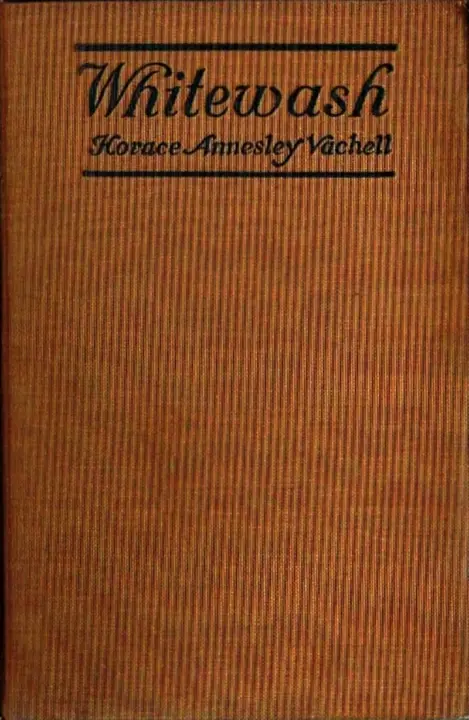
THE CLASSIC COLLECTION · 1920
"Whitewash" by Horace Annesley Vachell is a novel written in the early 20th century. The story revolves around Lady Selina Chandos, the strong-willed widow of a squire as she manages her estate and navigates the complexities of her relationships with tenants and local gentry. The initial chapters introduce us to Lady Selina, her family dynamics, and the socio-political tensions in her community concerning her decisions as a landowner. The opening of "Whitewash" presents Lady Selina at her manor, reflecting on her responsibilities post her husband's death. While preparing for a local fête, she engages in discussions about an eviction notice she feels compelled to issue to her long-time tenant, Ephraim Exton, due to his negligence in maintaining his property. This scene establishes her character as someone who is both benevolent yet firm in her management of the estate. Lady Selina's interactions with her children, Brian and Cicely, as well as the village clergyman, Mr. Goodrich, reveal the communal expectations of her position, foreshadowing tensions that may arise as new ideas challenge traditional practices. The narrative hints at the underlying social pressures and moral dilemmas she encounters in a changing world.
Introduction adapted from the source catalogue; source summaries may be automatically generated.
Free to read · English · 89,679 words · No account needed
MAKE TIME FOR A GOOD BOOK
On by default. Untick to stop anonymous reading totals. Each page counts after 10 seconds in view. How this works.
Anonymous counting is on unless you have switched it off.
“I be soft along o’ my lady.”
Grimshaw asked Pawley to explain. With some reluctance, Pawley repeated what he had said to Cicely, with these additions:
“Nick’s mother, just before he was born, lost her two little girls of diphtheria. The boy was born wanting. Timothy Farleigh has never got over it. Lady Selina had just buried the Squire. In your opinion, Grimshaw, could mental suffering so affect and afflict an unborn child?”
“It might,” Grimshaw replied.
“Ever since Timothy Farleigh has smouldered with resentment.”
Grimshaw nodded. He had heard about Agatha Farleigh from John Exton. Agatha was now working in London, earning good wages, but Timothy, at the ale-house, accused Lady Selina of hounding a clever girl out of her village.
“I smell foul weather,” said Grimshaw.
Within a week the Great War had broken out.
Upworthy remained perfectly calm.
Brian Chandos came home on short leave. His regiment would be one of the first to go. He smoked many pipes with Grimshaw, picking up the old friendship easily, just where he had left it, apparently the same ingenuous youth whom Grimshaw remembered at Winchester. Really a Pacific of essential differences rolled between them, differences of experience. Grimshaw listened to Brian on the coming “show.” As a soldier he seemed to know something about his “job.” As the prospective heir to a fine property his ignorance was immeasurable. He viewed it, as it were, from the wrong end of the telescope. What appeared big to him—the future of foxhunting, for instance, game-preserving, and polo—was negligible to Grimshaw in comparison with decent housing and a better wage for land-workers. Brian cut him short when, tentatively, such reforms were barely outlined:
“Cottages in the rural districts don’t pay, never did. We can’t raise wages without hostilising the farmers—and I ask you, where are we if we do that?” Again and again he silenced argument in Grimshaw by repeating filially: “Mother knows; you talk to her; she’d do anything in reason, anything.”
And at the first dinner at the Manor, rather to Grimshaw’s dismay, Brian said, in a loud voice, as if it were a good joke: “I say, Mums, Old Grimmer is a bit of a Rad. You must take him in hand. He’s an out-and-out reformer.”
Cicely didn’t improve matters by adding:
“And a jolly good thing too. Dr. Pawley says we are antediluvians.”
Pawley was not present, having departed on his holiday. Lady Selina
looked down her nose.
“Are you quite sure Dr. Pawley said that, my dear?”
“Absolutely,” Cicely replied. “We are only modern in our frocks; and that doesn’t apply to you, Mums.”
Your reading position is saved on this browser. Take it to another device with a library code. Reading pages adapt to text, rather than matching a printed edition.
Horace Annesley Vachell
Horace Annesley Vachell
Horace Annesley Vachell
Horace Annesley Vachell
BEHIND THE BOOK
This eBook is for the use of anyone anywhere in the United States and most other parts of the world at no cost and with almost no restrictions whatsoever. You may copy it, give it away or re-use it under the terms of the Project Gutenberg License included with this eBook or online at www.gutenberg.org. If you are not located in the United States, you will have to check the laws of the country where you are located before using this eBook. Read the source licence.
The original source file, including credits and licence, is retained by this library. Request an original-format copy at no charge. Please include the book title and Project Gutenberg identifier #56827.
KEEP YOUR CURIOSITY GOING
Coulson Kernahan

Maurice Baring
Frances Wright
Cécile Tormay

Frederic Jesup Stimson

W. H. P. (William Henry Pope) Jarvis