THE CLASSIC COLLECTION✦Quinneys’CLASSIC FREE BOOKS
Quinneys’
Horace Annesley Vachell
THE CLASSIC COLLECTION · 1920
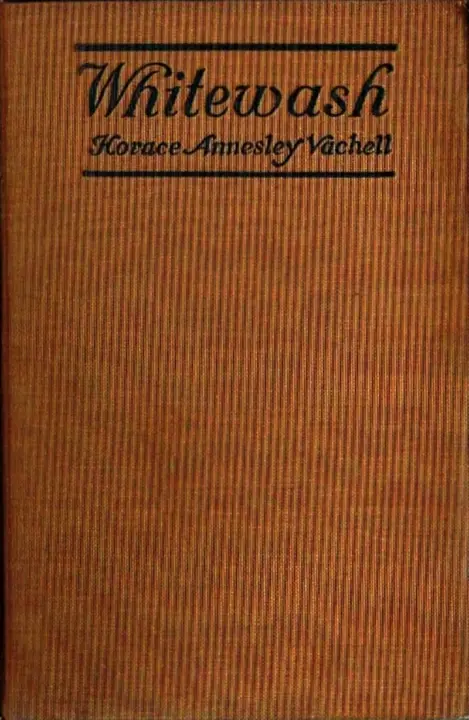
"Whitewash" by Horace Annesley Vachell is a novel written in the early 20th century. The story revolves around Lady Selina Chandos, the strong-willed widow of a squire as she manages her estate and navigates the complexities of her relationships with tenants and local gentry. The initial chapters introduce us to Lady Selina, her family dynamics, and the socio-political tensions in her community concerning her decisions as a landowner. The opening of "Whitewash" presents Lady Selina at her manor, reflecting on her responsibilities post her husband's death. While preparing for a local fête, she engages in discussions about an eviction notice she feels compelled to issue to her long-time tenant, Ephraim Exton, due to his negligence in maintaining his property. This scene establishes her character as someone who is both benevolent yet firm in her management of the estate. Lady Selina's interactions with her children, Brian and Cicely, as well as the village clergyman, Mr. Goodrich, reveal the communal expectations of her position, foreshadowing tensions that may arise as new ideas challenge traditional practices. The narrative hints at the underlying social pressures and moral dilemmas she encounters in a changing world.
Introduction adapted from the source catalogue; source summaries may be automatically generated.
Free to read · English · 89,679 words · No account needed
MAKE TIME FOR A GOOD BOOK
On by default. Untick to stop anonymous reading totals. Each page counts after 10 seconds in view. How this works.
Anonymous counting is on unless you have switched it off.
“Well, yes.”
“Why didn’t you tell me?”
He replied quietly:
“Because you are my patient.”
“What has caused this?”
“John Exton’s arrest.”
“I must go at once.”
She stood up. Grimshaw said firmly:
“Forgive me—it isn’t safe.”
Lady Selina smiled incredulously. At the same time she was sensible of Grimshaw’s sympathy, of his unmistakable solicitude, expressed not so much by his voice, but by his eyes. She thought to herself: “This young man is considerate; he has the old-fashioned protective instincts about women.”
“Not safe, you mean, for your patient?”
Grimshaw never answered the question, because Goodrich came in through the French window, closing it after him; but significant sounds entered with him. Obviously some of the unruly were trespassing upon the Vicarage lawn, stamping down the moss.
“This is a revolt,” said the Lady of the Manor.
Goodrich might have replied: “No, madame; it’s revolution,” but he was beyond quotation. In a troubled voice he delivered a message.
“Timothy Farleigh wants to see you.”
“Don’t see him, Mother,” entreated Cicely. “You’re not up to it.”
“Not up to it? What an idea! I will see any of my people, or all of
them, at any time.”
“He is on my lawn,” said Goodrich. “My privet fence is broken down.”
“Can I see him here, Mr. Goodrich?”
“Certainly, if you insist.”
He went out, carrying a head out of which distressed and congested eyes bulged prominently. When he came back, Timothy accompanied him. Agatha and the softy followed. Nobody noticed them. The parson shut the window. Timothy approached Lady Selina, very erect in her chair.
“What do you want?” she asked quietly.
Timothy confronted her with a dignity quite as impressive, in its way, as hers. The despairing fury had burnt itself out, partly, possibly, because his Mary was mending, partly, also, because it had served its purpose, whether designed or not—it had fired others.
“I want justice.”
Lady Selina replied scornfully:
“You shall have it, I promise you. So you, you have raised my own
people against me?”
“Aye.”
He spoke impersonally, as if he were aware that he had but served as an instrument. And he continued in a low voice, pathetically apathetic:
“I ha’ waited fifteen year for this hour—fifteen year.”
Agatha stood beside him, still defiant. Nick, unnoticed, save by Grimshaw, crept furtively to the fireplace, apparently astonished and distressed to find no fire in it. Grimshaw leapt to the conclusion that the softy had been brought to the Vicarage purposely. Presently he would serve as an object-lesson, a notable part of Timothy’s indictment.
Your reading position is saved on this browser. Take it to another device with a library code. Reading pages adapt to text, rather than matching a printed edition.
Horace Annesley Vachell
Horace Annesley Vachell
Horace Annesley Vachell
Horace Annesley Vachell
BEHIND THE BOOK
This eBook is for the use of anyone anywhere in the United States and most other parts of the world at no cost and with almost no restrictions whatsoever. You may copy it, give it away or re-use it under the terms of the Project Gutenberg License included with this eBook or online at www.gutenberg.org. If you are not located in the United States, you will have to check the laws of the country where you are located before using this eBook. Read the source licence.
The original source file, including credits and licence, is retained by this library. Request an original-format copy at no charge. Please include the book title and Project Gutenberg identifier #56827.
KEEP YOUR CURIOSITY GOING
Coulson Kernahan

Maurice Baring
Frances Wright
Cécile Tormay

Frederic Jesup Stimson

W. H. P. (William Henry Pope) Jarvis