THE CLASSIC COLLECTION✦Quinneys’CLASSIC FREE BOOKS
Quinneys’
Horace Annesley Vachell
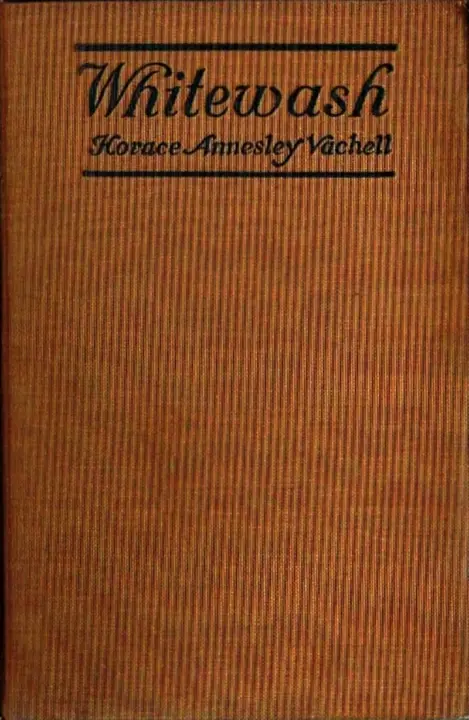
THE CLASSIC COLLECTION · 1920
"Whitewash" by Horace Annesley Vachell is a novel written in the early 20th century. The story revolves around Lady Selina Chandos, the strong-willed widow of a squire as she manages her estate and navigates the complexities of her relationships with tenants and local gentry. The initial chapters introduce us to Lady Selina, her family dynamics, and the socio-political tensions in her community concerning her decisions as a landowner. The opening of "Whitewash" presents Lady Selina at her manor, reflecting on her responsibilities post her husband's death. While preparing for a local fête, she engages in discussions about an eviction notice she feels compelled to issue to her long-time tenant, Ephraim Exton, due to his negligence in maintaining his property. This scene establishes her character as someone who is both benevolent yet firm in her management of the estate. Lady Selina's interactions with her children, Brian and Cicely, as well as the village clergyman, Mr. Goodrich, reveal the communal expectations of her position, foreshadowing tensions that may arise as new ideas challenge traditional practices. The narrative hints at the underlying social pressures and moral dilemmas she encounters in a changing world.
Introduction adapted from the source catalogue; source summaries may be automatically generated.
Free to read · English · 89,679 words · No account needed
MAKE TIME FOR A GOOD BOOK
On by default. Untick to stop anonymous reading totals. Each page counts after 10 seconds in view. How this works.
Anonymous counting is on unless you have switched it off.
The crowd, inarticulate with astonishment, buzzed like a swarm of bees. Grimshaw, thinking first of his patient, anxious to keep her quiet, suggested an immediate withdrawal to the Vicarage.
“Not yet,” replied Lady Selina firmly. Perhaps she was conscious of latent sympathy from her people. In a very few she may have divined hostility. She addressed the parson.
“You know, Mr. Goodrich, what was said by Sergeant Exton when I had to give his father notice to leave his farm?”
“I grieve to say I do,” answered Goodrich.
“Agatha Farleigh, here, whom Sergeant Exton is going to marry, lays the death of the two Farleigh children at my door. And now my house is burnt.”
She betrayed no excitement, no animosity. Slowly she held up the
match-box.
“Is this yours?”
John stared at it.
Lady Selina continued impassively:
“It was picked up near the garage. An hour ago it was in your
possession.”
“It was,” John admitted. “But I haven’t been near the garage.”
Goodrich said impatiently:
“All this is irregular. At the same time, matters having gone so far, I will take it upon myself to ask you a question, sergeant: Will you tell us exactly where you happened to be when the fire broke out?”
“I happened to be near the house.”
“Alone?”
“Alone.”
The villagers were tremendously impressed. Of all now present, and many others had sauntered up, possibly Exton and Lady Selina alone remained self-possessed. Agatha said emotionally:
“Miss Cicely—you—you don’t accuse my John? You—can’t!”
A sob broke from her. As Cicely, on the edge of tears, did not answer quickly, Agatha turned impetuously to Grimshaw.
“I appeal to you, Mr. Grimshaw.”
Lady Selina nodded majestically:
“I shall be glad to hear what you think, Mr. Grimshaw.”
“I think, Lady Selina, that John Exton is innocent of this charge.”
“Thank you, sir,” said John.
“Is that thought,” said Goodrich, “grounded on some evidence not yet
forthcoming?”
Grimshaw replied quietly: “You see, I know the man. Does not character weigh with you, Mr. Goodrich?”
“Of course.”
Lady Selina, looking earnestly at Grimshaw, continued:
“But, unhappily, this young man’s character as—as an agitator, as a stirrer-up of strife, is against him.”
“To my knowledge,” Grimshaw replied firmly, “he has been a good son and a good soldier. Doesn’t that appeal to you, Lady Selina?”
“It does. You say, Mr. Grimshaw, that you know Sergeant Exton. Has he, in talk with you, ever shown any personal animus against me?”
Your reading position is saved on this browser. Take it to another device with a library code. Reading pages adapt to text, rather than matching a printed edition.
Horace Annesley Vachell
Horace Annesley Vachell
Horace Annesley Vachell
Horace Annesley Vachell
BEHIND THE BOOK
This eBook is for the use of anyone anywhere in the United States and most other parts of the world at no cost and with almost no restrictions whatsoever. You may copy it, give it away or re-use it under the terms of the Project Gutenberg License included with this eBook or online at www.gutenberg.org. If you are not located in the United States, you will have to check the laws of the country where you are located before using this eBook. Read the source licence.
The original source file, including credits and licence, is retained by this library. Request an original-format copy at no charge. Please include the book title and Project Gutenberg identifier #56827.
KEEP YOUR CURIOSITY GOING
Coulson Kernahan

Maurice Baring
Frances Wright
Cécile Tormay

Frederic Jesup Stimson

W. H. P. (William Henry Pope) Jarvis