THE CLASSIC COLLECTION✦Quinneys’CLASSIC FREE BOOKS
Quinneys’
Horace Annesley Vachell
THE CLASSIC COLLECTION · 1920
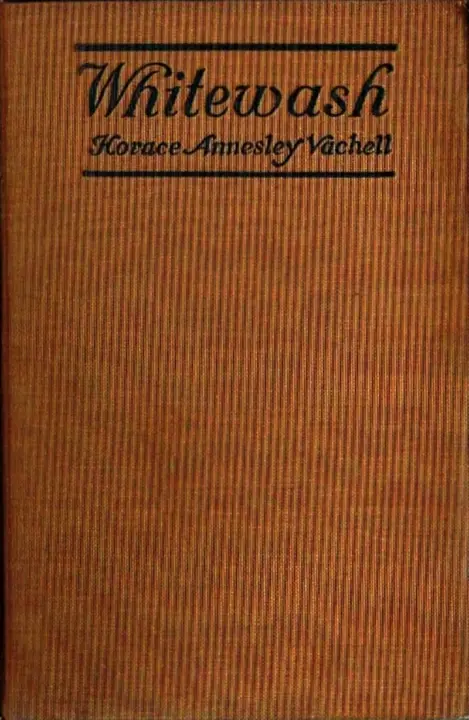
"Whitewash" by Horace Annesley Vachell is a novel written in the early 20th century. The story revolves around Lady Selina Chandos, the strong-willed widow of a squire as she manages her estate and navigates the complexities of her relationships with tenants and local gentry. The initial chapters introduce us to Lady Selina, her family dynamics, and the socio-political tensions in her community concerning her decisions as a landowner. The opening of "Whitewash" presents Lady Selina at her manor, reflecting on her responsibilities post her husband's death. While preparing for a local fête, she engages in discussions about an eviction notice she feels compelled to issue to her long-time tenant, Ephraim Exton, due to his negligence in maintaining his property. This scene establishes her character as someone who is both benevolent yet firm in her management of the estate. Lady Selina's interactions with her children, Brian and Cicely, as well as the village clergyman, Mr. Goodrich, reveal the communal expectations of her position, foreshadowing tensions that may arise as new ideas challenge traditional practices. The narrative hints at the underlying social pressures and moral dilemmas she encounters in a changing world.
Introduction adapted from the source catalogue; source summaries may be automatically generated.
Free to read · English · 89,679 words · No account needed
MAKE TIME FOR A GOOD BOOK
On by default. Untick to stop anonymous reading totals. Each page counts after 10 seconds in view. How this works.
Anonymous counting is on unless you have switched it off.
“Does anybody present,” continued Lady Selina, “know anything that would throw light on this dreadful charge of arson? If so, I ask him or her to speak.”
Stimson stepped forward. He was hardly recognisable. The staid, respectable butler had covered himself with glory and grime in a beloved mistress’s service.
She smiled graciously upon him.
“Yes, my lady. I saved all the plate, every bit of it, my lady.”
“Oh, Stimson! We could have spared that ugly Early-Victorian tea-service. Well, well, you faithful soul, do you know anything?”
“There is this clue, my lady. We found it on the grass near the garage.”
He held out a silver match-box.
“A match-box?”
“Yes, my lady.”
She examined it carefully. The parson, pince-nez on nose, took it gently from her hand. Then, with the air of Sherlock Holmes, he said portentously:
“It bears a German inscription. I draw the obvious inference—it was
made in Germany.”
The crowd sighed with relief as the parson continued in the tones ordinarily sacrosanct to the lectern and pulpit:
“I infer more. One of our enemies, some alien, possibly, who has escaped internment, must have committed this terrible crime.”
The crowd hummed approval. Lady Selina, more alert than ever, observed
derisively:
“Your inference will hold water, Mr. Goodrich, if any alien has been seen about my premises.”
Goodrich replied hastily:
“’M’yes—a question pat to the point.”
“Many persons,” continued Lady Selina, “carry objects like match-boxes, made in Germany.”
At this Agatha came forward. Timothy had gone back into his cottage as soon as he saw Lady Selina approaching. Agatha had remained near the cottage gate, looking anxiously for her lover.
“May I look at the match-box?” she asked quietly.
“Certainly.”
It was handed to her. The crowd edged in closer. Agatha said positively:
“This match-box belongs to John Exton. I struck a match on it not an hour ago, here, on this very spot. I—I had it in my hand. I must have dropped it or left it on this bench. I can’t remember returning it to—to its owner.”
A dramatic silence followed, broken by Goodrich, no longer the parson
but the magistrate.
“You testify to that, Agatha Farleigh?”
“Testify?” she repeated blankly.
“It is my duty to warn you that anything said by you now may be used
against you later.”
“What does this all mean?” groaned Cicely.
Her mother answered grimly: “It means something very terrible, child.”
As she spoke, Grimshaw, mounted upon the constable’s bicycle, was seen
approaching.
“Mr. Grimshaw at last!” exclaimed Cicely. As he dismounted she said to him nervously: “Mother has been burnt.”
“Scorched, my dear; scorched.”
Your reading position is saved on this browser. Take it to another device with a library code. Reading pages adapt to text, rather than matching a printed edition.
Horace Annesley Vachell
Horace Annesley Vachell
Horace Annesley Vachell
Horace Annesley Vachell
BEHIND THE BOOK
This eBook is for the use of anyone anywhere in the United States and most other parts of the world at no cost and with almost no restrictions whatsoever. You may copy it, give it away or re-use it under the terms of the Project Gutenberg License included with this eBook or online at www.gutenberg.org. If you are not located in the United States, you will have to check the laws of the country where you are located before using this eBook. Read the source licence.
The original source file, including credits and licence, is retained by this library. Request an original-format copy at no charge. Please include the book title and Project Gutenberg identifier #56827.
KEEP YOUR CURIOSITY GOING
Coulson Kernahan

Maurice Baring
Frances Wright
Cécile Tormay

Frederic Jesup Stimson

W. H. P. (William Henry Pope) Jarvis