THE CLASSIC COLLECTION✦Quinneys’CLASSIC FREE BOOKS
Quinneys’
Horace Annesley Vachell
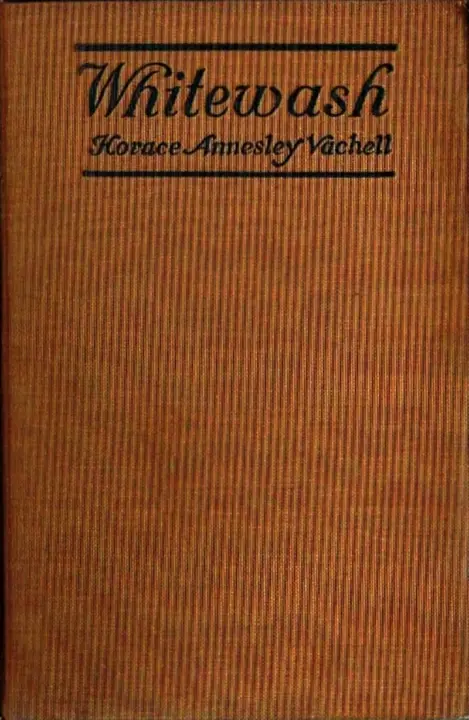
THE CLASSIC COLLECTION · 1920
"Whitewash" by Horace Annesley Vachell is a novel written in the early 20th century. The story revolves around Lady Selina Chandos, the strong-willed widow of a squire as she manages her estate and navigates the complexities of her relationships with tenants and local gentry. The initial chapters introduce us to Lady Selina, her family dynamics, and the socio-political tensions in her community concerning her decisions as a landowner. The opening of "Whitewash" presents Lady Selina at her manor, reflecting on her responsibilities post her husband's death. While preparing for a local fête, she engages in discussions about an eviction notice she feels compelled to issue to her long-time tenant, Ephraim Exton, due to his negligence in maintaining his property. This scene establishes her character as someone who is both benevolent yet firm in her management of the estate. Lady Selina's interactions with her children, Brian and Cicely, as well as the village clergyman, Mr. Goodrich, reveal the communal expectations of her position, foreshadowing tensions that may arise as new ideas challenge traditional practices. The narrative hints at the underlying social pressures and moral dilemmas she encounters in a changing world.
Introduction adapted from the source catalogue; source summaries may be automatically generated.
Free to read · English · 89,679 words · No account needed
MAKE TIME FOR A GOOD BOOK
On by default. Untick to stop anonymous reading totals. Each page counts after 10 seconds in view. How this works.
Anonymous counting is on unless you have switched it off.
She struck a match and lit his pipe, which John smoked as if he enjoyed it. Agatha stepped back and regarded him attentively. He was just right, in her opinion: a man who had done “his bit,” the man of her delicate choice, likely to make a sober, hard-working husband, clever enough and not too clever, one to be gently pushed by capable hands on to fortune. Smiling complacently, she seated herself beside him. John slipped his one available arm round her shapely waist. She held the match-box in her hand.
“Put your dear head on my shoulder,” he commanded.
“On the village green?”
“On my shoulder, I said.”
“I’ll risk it.”
She had glanced round, not seeing Nick, who had wandered out of his father’s garden, and was now behind the tree grinning broadly. John kissed the lips so near to his.
“Short o’ these rations, I am,” he declared with fervour. “Snug, I call
it.”
Agatha, half-closing her eyes, murmured:
“I feel as if I was floating in heaven.”
“Blighty!” ejaculated the lover.
At this happy moment, Nick, crawling close up to Agatha, gripped her leg above the ankle, growling like a dog. Agatha screamed and jumped up.
“You blithering idiot!” said John. “Hop it—hop it!”
“Yes, I be village idiot, I be.”
“Not half the fool you look. Shift, I tell you.”
“I’ll make Aggie another fool’s-cap, I will. I can make anythin’ wi’
paper.”
He laughed shrilly and hopped off, as enjoined. John stared at his retreating figure, observing sapiently:
“He can make anything with paper. Fools make paper laws. Papers rule us
in England.”
Agatha sat down again, nodding her intelligent head.
“That’s right. Papers do rule us. Why don’t you write to them, Johnnie?”
John betrayed slight astonishment.
“What about, dear?”
Agatha answered tartly:
“Conditions here.”
“Napoo,” replied John lazily.
Agatha was revolving this refusal in her mind when Grimshaw came out of the cottage carrying his bag. He was smiling, thinking of Cicely and her tryst with him.
Agatha nudged the somnolent John.
“Mr. Grimshaw is coming.”
John rose, and saluted stiffly as Grimshaw approached.
“Good day, sergeant. Going down the old, old trail, eh?”
John answered perfunctorily: “Yes, sir.”
Grimshaw looked at Agatha, who had not risen. This abstention was part
of her new creed.
“I’ve no new instructions for you, Miss Farleigh. Keep your aunt quiet.”
Agatha replied as formally as John:
“Yes, sir. Is it typhoid, Mr. Grimshaw?”
“I did a Widal last night.” He added quickly, “that is a blood test. I am inclined to think your aunt has paratyphoid.”
John, impressed by the long word, said dismally:
Your reading position is saved on this browser. Take it to another device with a library code. Reading pages adapt to text, rather than matching a printed edition.
Horace Annesley Vachell
Horace Annesley Vachell
Horace Annesley Vachell
Horace Annesley Vachell
BEHIND THE BOOK
This eBook is for the use of anyone anywhere in the United States and most other parts of the world at no cost and with almost no restrictions whatsoever. You may copy it, give it away or re-use it under the terms of the Project Gutenberg License included with this eBook or online at www.gutenberg.org. If you are not located in the United States, you will have to check the laws of the country where you are located before using this eBook. Read the source licence.
The original source file, including credits and licence, is retained by this library. Request an original-format copy at no charge. Please include the book title and Project Gutenberg identifier #56827.
KEEP YOUR CURIOSITY GOING
Coulson Kernahan

Maurice Baring
Frances Wright
Cécile Tormay

Frederic Jesup Stimson

W. H. P. (William Henry Pope) Jarvis