THE CLASSIC COLLECTION✦Quinneys’CLASSIC FREE BOOKS
Quinneys’
Horace Annesley Vachell
THE CLASSIC COLLECTION · 1920
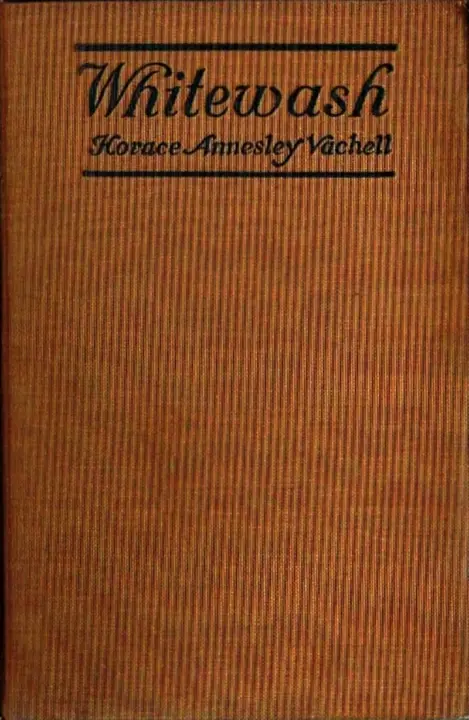
"Whitewash" by Horace Annesley Vachell is a novel written in the early 20th century. The story revolves around Lady Selina Chandos, the strong-willed widow of a squire as she manages her estate and navigates the complexities of her relationships with tenants and local gentry. The initial chapters introduce us to Lady Selina, her family dynamics, and the socio-political tensions in her community concerning her decisions as a landowner. The opening of "Whitewash" presents Lady Selina at her manor, reflecting on her responsibilities post her husband's death. While preparing for a local fête, she engages in discussions about an eviction notice she feels compelled to issue to her long-time tenant, Ephraim Exton, due to his negligence in maintaining his property. This scene establishes her character as someone who is both benevolent yet firm in her management of the estate. Lady Selina's interactions with her children, Brian and Cicely, as well as the village clergyman, Mr. Goodrich, reveal the communal expectations of her position, foreshadowing tensions that may arise as new ideas challenge traditional practices. The narrative hints at the underlying social pressures and moral dilemmas she encounters in a changing world.
Introduction adapted from the source catalogue; source summaries may be automatically generated.
Free to read · English · 89,679 words · No account needed
MAKE TIME FOR A GOOD BOOK
On by default. Untick to stop anonymous reading totals. Each page counts after 10 seconds in view. How this works.
Anonymous counting is on unless you have switched it off.
Agatha’s obvious exasperation was excusable. Her uncle’s telegram summoning her to nurse Mary Farleigh happened to arrive at a moment when she was expecting to spend a well-earned leave with the Extons. Also, it seemed to her that John accepted her disappointment too coolly. Surely he must know that she was “fed up” with work. The equanimity of the trained soldier, his acquiescence in misfortune, his good-temper under it, would have provoked admiration from Aggie at any other time. Let us make due allowance for her. John attempted to soothe her, not very successfully. And then Martha Giles poked in her comical old head explaining:
“Well, I never! . . . Johnny Exton—a gentleman officer!”
John took her hand heartily.
“Only a sergeant, Mrs. Giles.”
“With three wound-stripes,” added Agatha proudly. Her tone became aggrieved again, as she added: “Uncle Timothy wouldn’t let me in, Martha.”
“Let ’un bide wi’ the pore sick soul. She be tarr’ble low, dazed an’ mazed as never was; but Mary be tough, and the dear Lard well knows that she bain’t to be spared, no more than I be.”
“Is there proper food in the house?” asked Agatha.
“Yes; my cow-heel broth. Hark! Timothy be comin’ down.”
A heavy step was heard on a creaking stair. Martha whispered hurriedly:
“Now, don’t ’ee be miffed, if he acts flustratious, pore dear man!”
Timothy entered, carefully closing the door behind him. For an instant he stared questioningly at John Exton and Agatha, a mute, tragic figure bowed by years of toil. Agatha went up to him and kissed him.
“How is she?”
“She don’t know me. Aggie; she don’t know me. I ain’t no use to her.
Who’s that?”
“John Exton, whom I’m going to marry.”
“Aye, aye. You two do as I bids ye. Bring no childer into this world.
Where’s doctor?”
“He’ll be herealong soon,” said Martha.
“Doctor can’t do nothink. I might as well get coffin-stools out.”
“Shall I go?” said John to Agatha.
“Not yet.” She addressed her uncle: “You’ll be wanting your dinner,
dear?”
“No; I wants my old Mary. I be fair lost wi’out she.”
He sat down in the big worn arm-chair near the hearth. Mrs. Giles said
in a piping voice:
“I’ll bide wi’ Mary till Aggie be ready to take my place.”
“I’m ready now, Martha.”
Timothy growled out: “You bide wi me a bit, my girl. I’ve summat to say to ’ee.” As Martha slipped away he addressed John Exton: “Your father was allers my good friend.”
“Yes, yes; indeed he was—and is.”
Your reading position is saved on this browser. Take it to another device with a library code. Reading pages adapt to text, rather than matching a printed edition.
Horace Annesley Vachell
Horace Annesley Vachell
Horace Annesley Vachell
Horace Annesley Vachell
BEHIND THE BOOK
This eBook is for the use of anyone anywhere in the United States and most other parts of the world at no cost and with almost no restrictions whatsoever. You may copy it, give it away or re-use it under the terms of the Project Gutenberg License included with this eBook or online at www.gutenberg.org. If you are not located in the United States, you will have to check the laws of the country where you are located before using this eBook. Read the source licence.
The original source file, including credits and licence, is retained by this library. Request an original-format copy at no charge. Please include the book title and Project Gutenberg identifier #56827.
KEEP YOUR CURIOSITY GOING
Coulson Kernahan

Maurice Baring
Frances Wright
Cécile Tormay

Frederic Jesup Stimson

W. H. P. (William Henry Pope) Jarvis