The Devil
Leo, graf Tolstoy
THE CLASSIC COLLECTION · 1887
"Where Love is There God is Also" by graf Leo Tolstoy is a novella written in the late 19th century. This literary work reflects on themes of faith, compassion, and the importance of living for a higher purpose. Through the story of a humble shoemaker, Tolstoy explores the concept that true service to God is found in acts of kindness toward others, evoking a moral lesson relevant to humanity. The narrative revolves around Martuin Avdyeitch, a shoemaker in a humble basement who struggles with the loss of his only son, Kapitoshka. Overwhelmed by despair, Martuin questions the purpose of his existence until he meets an old man who nudges him toward the teachings of Christ. As Martuin begins to read the Gospel, he finds solace and transformation. One day, expecting Christ's visit, he opens his window to the world outside, ultimately engaging with various characters including a suffering soldier's wife and a remorseful child thief. In each encounter, Martuin exercises compassion and selflessness, ultimately realizing that in helping others, he discovers the true presence of God within himself, aligning with the message that every act of kindness towards the needy is akin to serving God.
Introduction adapted from the source catalogue; source summaries may be automatically generated.
Free to read · English · 5,229 words · No account needed
MAKE TIME FOR A GOOD BOOK
On by default. Untick to stop anonymous reading totals. Each page counts after 10 seconds in view. How this works.
Anonymous counting is on unless you have switched it off.
The little boy was screaming, the old woman was scolding. Avdyeitch lost no time in putting away his awl; he threw it upon the floor, sprang to the door,--he even stumbled on the stairs, and dropped his spectacles,--and rushed out into the street.
The old woman was pulling the youngster by his hair, and was scolding and threatening to take him to the policeman; the youngster was defending himself, and denying the charge.
"I did not take it," he said; "What are you licking me for? Let me go!"
Avdyeitch tried to separate them. He took the boy by his arm, and
said:--
"Let him go, babushka; forgive him, for Christ's sake."
"I will forgive him so that he won't forget it till the new broom grows. I am going to take the little villain to the police."
Avdyeitch began to entreat the old woman:--
"Let him go, babushka," he said, "he will never do it again. Let him go,
for Christ's sake."
The old woman let him loose; the boy started to run, but Avdyeitch kept
him back.
"Ask the babushka's forgiveness," he said, "and don't you ever do it again; I saw you take the apple."
The boy burst into tears, and began to ask forgiveness.
"There now! that's right; and here's an apple for you."
And Avdyeitch took an apple from the basket, and gave it to the boy.
"I will pay you for it, babushka," he said to the old woman.
"You ruin them that way, the good-for-nothings," said the old woman. "He ought to be treated so that he would remember it for a whole week."
"Eh, babushka, babushka," said Avdyeitch, "that is right according to our judgment, but not according to God's. If he is to be whipped for an apple, then what ought to be done to us for our sins?"
The old woman was silent.
And Avdyeitch told her the parable of the master who forgave a debtor all that he owed him, and how the debtor went and began to choke one who owed him.
The old woman listened, and the boy stood listening.
"God has commanded us to forgive," said Avdyeitch, "else we, too, may
not be forgiven. All should be forgiven, and the thoughtless
especially."
The old woman shook her head, and sighed.
"That's so," said she; "but the trouble is that they are very much
spoiled."
"Then we who are older must teach them," said Avdyeitch.
"That's just what I say," remarked the old woman. "I myself have had seven of them,--only one daughter is left."
Your reading position is saved on this browser. Take it to another device with a library code. Reading pages adapt to text, rather than matching a printed edition.
Leo, graf Tolstoy
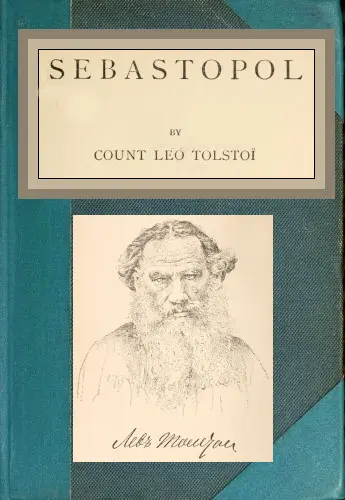
Leo, graf Tolstoy
Leo, graf Tolstoy
Leo, graf Tolstoy
BEHIND THE BOOK
This eBook is for the use of anyone anywhere in the United States and most other parts of the world at no cost and with almost no restrictions whatsoever. You may copy it, give it away or re-use it under the terms of the Project Gutenberg License included with this eBook or online at www.gutenberg.org. If you are not located in the United States, you will have to check the laws of the country where you are located before using this eBook. Read the source licence.
The original source file, including credits and licence, is retained by this library. Request an original-format copy at no charge. Please include the book title and Project Gutenberg identifier #38616.
KEEP YOUR CURIOSITY GOING

David Patterson (Spirit) Hatch

David Patterson (Spirit) Hatch

David Patterson (Spirit) Hatch
Coulson Kernahan

Maurice Baring
Frances Wright